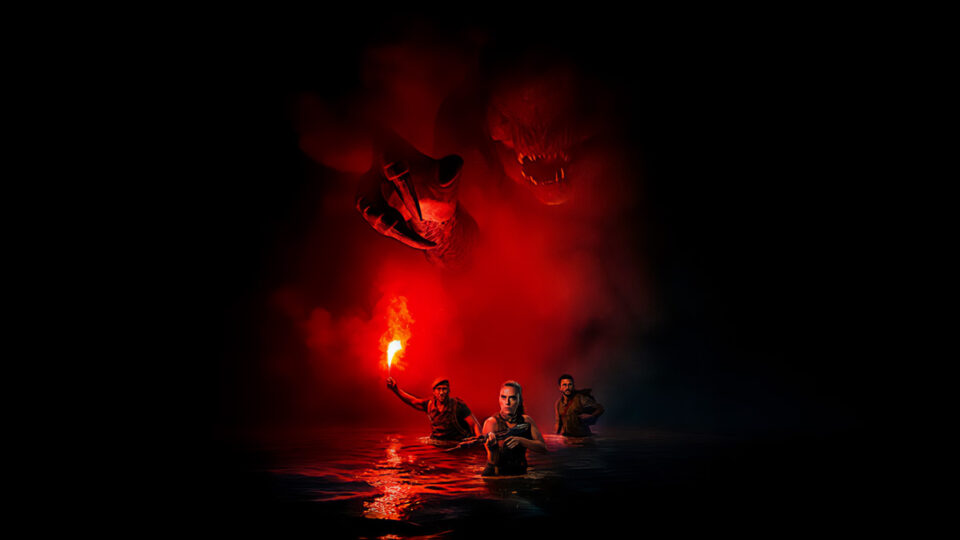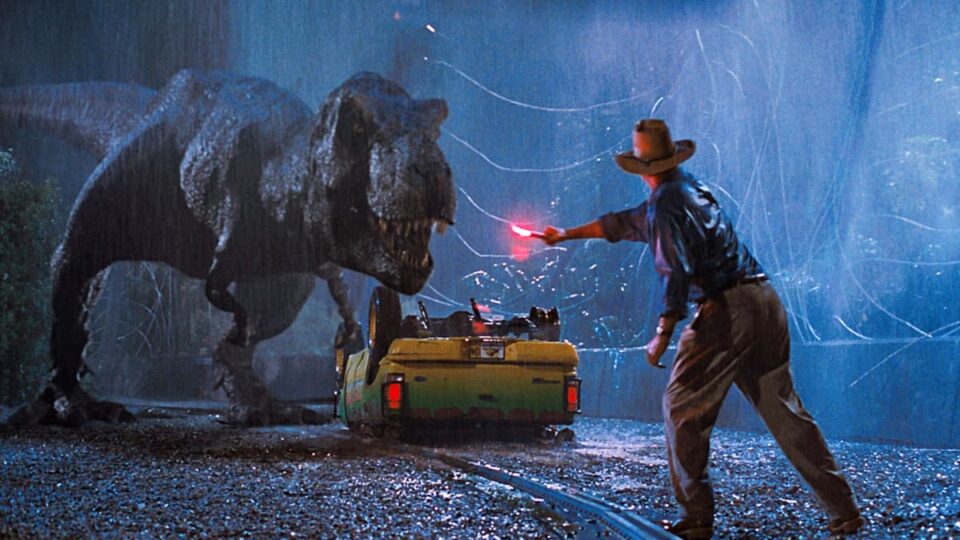
Jurassic Park (1993) — Read, Study & Download the Screenplay
A perfect park built on impossible science, a handful of people trapped inside it, and one enormous problem: life refuses to follow the plan.
Jurassic Park begins with billionaire John Hammond preparing to open an extraordinary biological preserve populated by genetically recreated dinosaurs. Before the park can welcome the public, however, its safety and viability must be evaluated by paleontologist Alan Grant, paleobotanist Ellie Sattler, mathematician Ian Malcolm, and attorney Donald Gennaro. What begins as an astonishing tour quickly becomes something far more dangerous when the park's technological systems fail, the animals escape their carefully designed boundaries, and everyone on the island is forced to survive a world that no longer behaves according to human expectations.
For writers and film students, David Koepp and Michael Crichton's screenplay is a masterclass in setup and payoff, escalating systems failure, thematic conflict, visual exposition, and character development through survival. The script carefully teaches us how Jurassic Park is supposed to work before allowing that machinery to collapse. Scientific explanations become future plot problems. Character disagreements become survival philosophies. Even Alan Grant's discomfort around children becomes part of the dramatic design once he is stranded with Tim and Lex. The result is a screenplay where spectacle grows directly out of ideas established long before the first Tyrannosaur steps through a broken fence.
Ready to enter the park? Check out the Study Notes just below. Major story and ending spoilers ahead. When you're ready, download the Jurassic Park (1993) screenplay.
Jurassic Park Study Notes
What writers and film students can learn from this screenplay
Jurassic Park is useful to study because almost every major disaster in the screenplay grows from something the audience has already been taught. The park is presented as a system: genetics, computers, automated vehicles, electrified fences, breeding controls, security procedures, and carefully separated animal populations. The screenplay spends considerable time explaining those systems not simply because the science is interesting, but because understanding how the park is supposed to work allows us to understand exactly what it means when it stops working. The deeper argument is equally clear: Hammond believes nature can be organized into a reliable attraction, while Malcolm, Grant, and Ellie increasingly recognize that living systems do not remain obedient merely because human beings designed the enclosure.
Craft Focus
- Exposition that creates future suspense: The hatchery, automated tour, electrified fences, control room, breeding program, and dinosaur behavior are all explained before they become dangerous. Information introduced as world-building later becomes survival information.
- Give competing characters competing worldviews: Hammond sees possibility and achievement. Malcolm sees instability. Grant respects the animals but distrusts the assumptions surrounding them. Ellie recognizes ecological relationships. Their disagreements are not decoration; the disaster gradually tests each philosophy.
- Design failure as a chain reaction: Nedry's sabotage does not directly create every later disaster. It removes key protections, which exposes weaknesses in transportation, containment, communications, power, and human decision-making. One deliberate disruption spreads through an interconnected system.
- Transform setup into payoff: The dinosaurs breeding in the park, Grant's discussion of dinosaur behavior, the raptors testing their enclosure, Lex's computer skills, the electrical fences, and even details of individual species all return when the characters need that knowledge to survive.
- Make character growth physical: Grant begins the screenplay openly uncomfortable around children. Once stranded with Tim and Lex, there is no speech announcing that he has changed. He protects them, reassures them, jokes with them, sleeps beside them, risks himself for them, and gradually becomes the person they trust.
- Alternate terror with wonder: The screenplay does not treat every dinosaur encounter as a threat. Quiet scenes with herbivores, dinosaur behavior, nests, eggs, and the natural world keep reminding us why these creatures inspire awe. Without wonder, the danger would eventually become monotonous.
- Let the monster climax resolve the idea: The final Tyrannosaur-versus-raptor confrontation is not merely a larger action beat. The engineered attraction has completely escaped its intended role. The animals now determine the hierarchy of the park while the humans can do little more than get out of the way.
Questions for Writers
- How much time does the screenplay spend teaching us how Jurassic Park works before the central breakdown begins? Which explanations later become payoffs?
- Why does Malcolm's argument about chaos matter structurally rather than merely philosophically?
- How does Hammond's confidence change once the park stops behaving like an attraction and begins behaving like an ecosystem?
- Why is Nedry's sabotage more effective dramatically than simply having a storm or mechanical failure release the animals?
- Track Grant's relationship with Tim and Lex from the dig site through the helicopter departure. At what point does protecting them stop feeling like an obligation and become personal?
- How does the Tyrannosaur sequence use previously established geography, vehicles, fences, darkness, sound, and character placement to build suspense before the animal fully attacks?
- Why does the screenplay continue introducing scientific discoveries after the park has already collapsed, including evidence that the dinosaurs are reproducing?
- How do the raptors create a different kind of suspense from the Tyrannosaur? What changes when the threat is intelligent, coordinated, and capable of testing obstacles?
- Why are scenes of awe and humor necessary between the screenplay's major survival sequences?
- What does the final helicopter image of Grant with Tim and Lex communicate about his character arc without requiring dialogue?
While reading, track the screenplay through control, disruption, adaptation, responsibility, acceptance. First identify something the humans believe they control: breeding, fences, computers, vehicles, animal behavior, or even other people. Then find the moment that assumption fails. Watch how the characters adapt once the system they depended on disappears, and notice which characters begin taking responsibility for problems they did not personally create. Finally, look at what they learn to stop trying to control. Jurassic Park works because its action and its theme are the same machine: human beings build an elaborate system to contain life, life breaks the system, and survival depends on learning quickly enough to respond to what actually exists rather than what was supposed to exist.
Looking for the screenplay? Jump to the download button.

Jurassic Park (1993)
An industrialist invites some experts to visit his theme park of cloned dinosaurs. After a power failure, the creatures run loose, putting everyone's lives, including his grandchildren's, in danger.
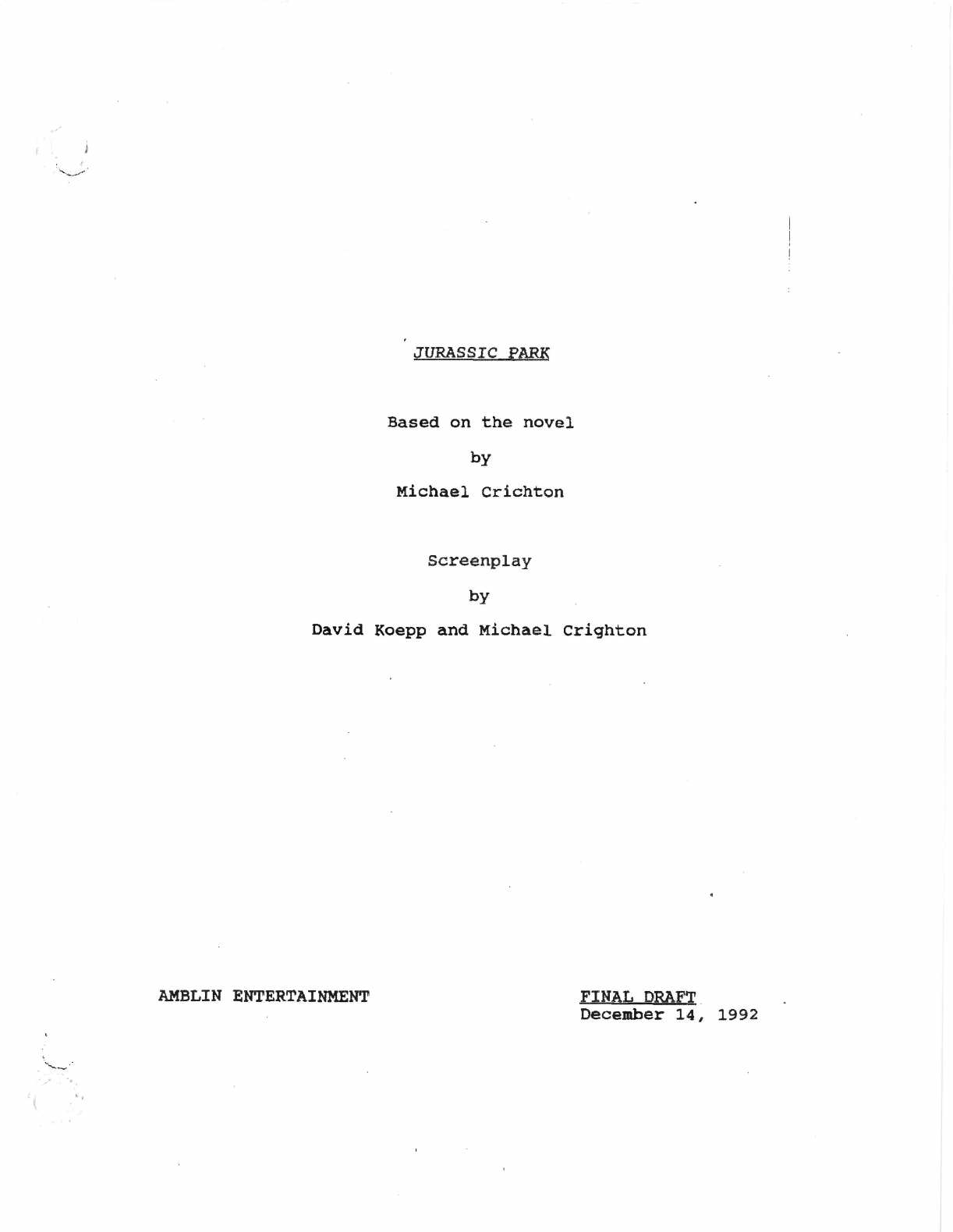
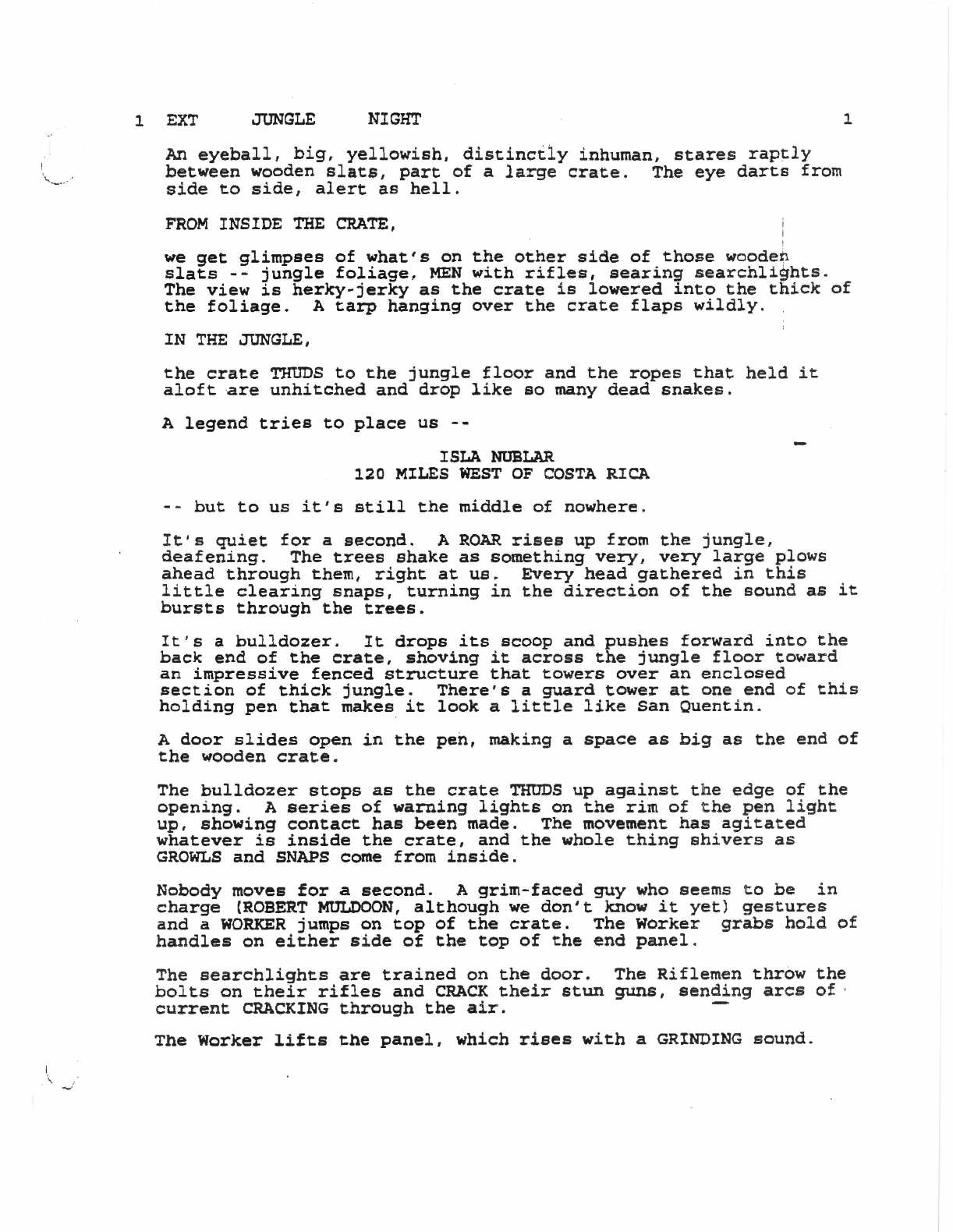
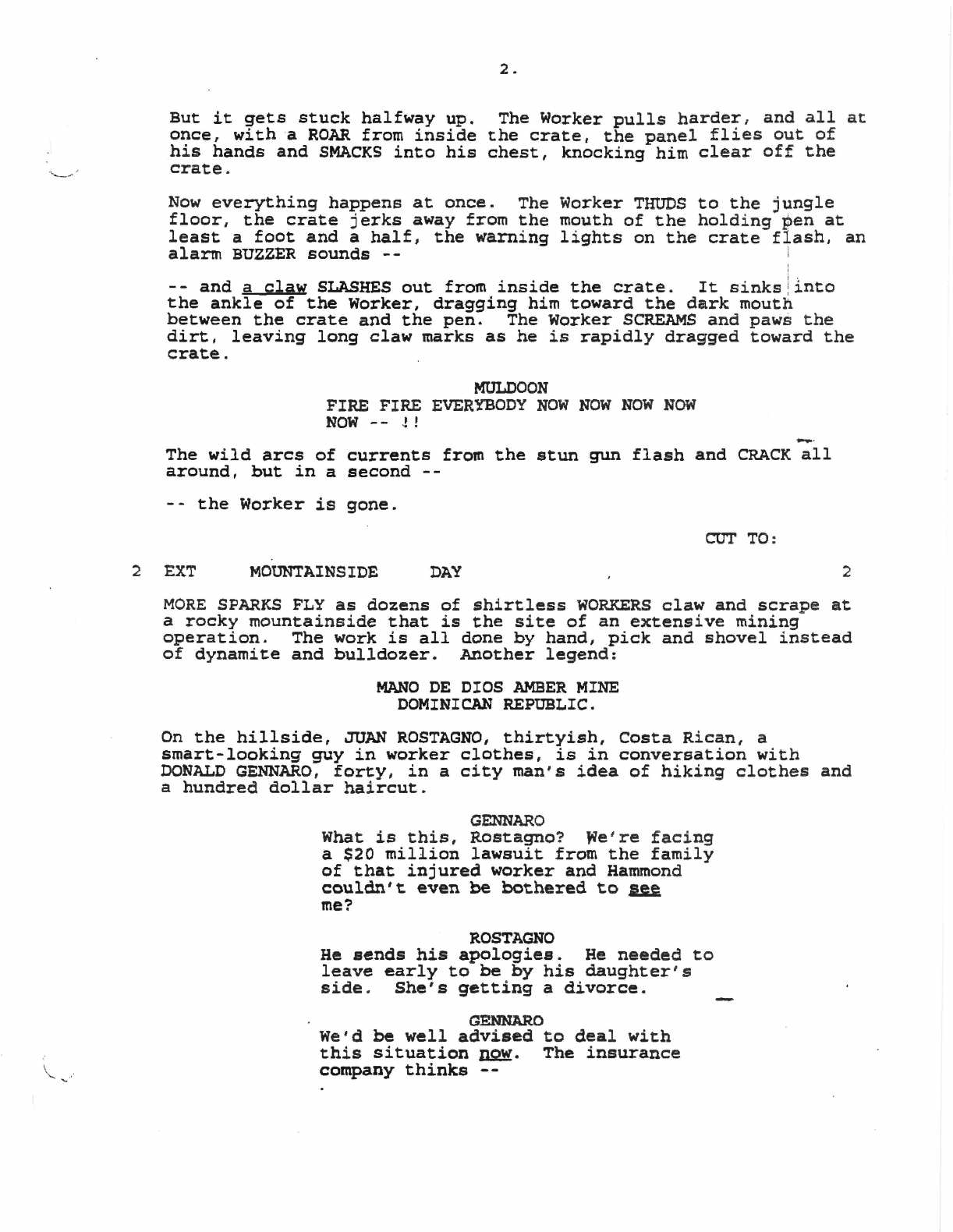
Reading is open to everyone. A free account is only required to download so we can protect the library and respect rights-holder requests. Already registered? Log in and you’re set.
Read and Watch
Compare the script and movie together with 8FLiX and JustWatch.
Now that you have the screenplay, stream Jurassic Park and compare. We've partnered with JustWatch so you can make that happen.
Looking For Something?
If you can't find what you need, send us an email.
Looking for a specific movie or TV script that isn't listed? Let us know. 8FLiX has thousands of scripts, and not all of them are indexed yet. We’re steadily adding more, but if you’d rather not wait for the catalog to catch up, send us an email. You may still have to wait, but it’ll usually be days, not geological time.