
Following (1998) — Read, Study & Download the Screenplay
A stripped-down neo-noir about obsession, identity theft, voyeurism, storytelling, and a lonely young writer who follows strangers until one follows him back.
Following follows a young, unemployed would-be writer in London who begins shadowing strangers through the city, partly out of loneliness, partly out of boredom, and partly because he tells himself he is collecting material for fiction. He makes rules to keep the habit under control, then breaks the most important one when he follows the same man twice. That man is Cobb, a burglar with a philosophy of intrusion, a taste for manipulation, and a talent for turning curiosity into complicity.
For writers and film students, Christopher Nolan’s screenplay is a terrific early blueprint because it shows many of his later obsessions in miniature: fractured chronology, unreliable confession, identity as performance, objects as psychological evidence, and structure as trap. Study how the script scrambles time through haircuts, bruises, clothing, interviews, burglaries, and repeated locations, forcing the audience to solve character before plot. It is low-budget noir as clockwork mousetrap, with a typewriter, a hammer, a stolen earring, and one amateur storyteller walking directly into someone else’s draft.
Ready to get to work? Check out the Study Notes just below. When you're ready, download the Following screenplay.
Following Study Notes
What writers and film students can learn from this screenplay
Following is useful to study because it contains the Nolan machine before the machine became enormous. The screenplay opens with a young man explaining himself, already bruised, already trapped in retrospect, already trying to turn guilt into narration. His habit begins as shadowing: he follows strangers through London and insists it is research, not obsession. Then he follows Cobb, who recognizes the game, names it, and expands it. Cobb does not simply teach him burglary. He teaches him how to read rooms, how to invade lives, how to turn objects into character evidence, and how to confuse intrusion with authorship. The result is a compact noir about a man who wants to be a writer but cannot tell when he has become someone else’s character.
Craft Focus
- Nonlinear structure as investigation: The script uses different versions of the Young Man, long hair, short hair, bruised face, suit, sunglasses, to make the audience assemble the timeline like evidence.
- Character through objects: Cobb’s theory of personal boxes, CDs, underwear, photographs, earrings, typewriters, and rooms turns ordinary belongings into psychological clues.
- Voyeurism as story engine: The Young Man tells himself he is observing people for fiction, but the screenplay keeps tightening the gap between looking, stealing, manipulating, and becoming complicit.
- Mentor as predator: Cobb is charismatic because he gives the Young Man language, confidence, rules, and purpose. He is dangerous because every lesson is also a hook.
- Identity as costume: Names, clothes, haircuts, credit cards, bruises, fake motives, and invented backstories all become tools for constructing or erasing a self.
Questions for Writers
- How does the opening confession shape our trust in the Young Man before we understand what happened?
- Why does Nolan introduce the habit of following as both creative research and moral trespass?
- How does Cobb’s “box” philosophy turn burglary into a twisted form of character study?
- Where does the fractured timeline create suspense that a chronological version would lose?
- How does the Blonde function as both noir temptation and part of the story’s larger design of manipulation?
- Why is the typewriter such a sharp object for this story’s ideas about wanting to write versus actually understanding people?
While reading, pay attention to how Following turns limited resources into formal power. The screenplay does not need huge set pieces, elaborate locations, or expensive spectacle. It uses faces, rooms, routines, repeated props, voiceover, and time jumps as its toolkit. That is the craft lesson in the stolen flat: constraint can become style when structure does more than organize scenes. Here, structure is the con. The audience follows the story the way the Young Man follows strangers, one step too close, convinced it is watching from a safe distance.
Looking for the screenplay? Jump to the download button.
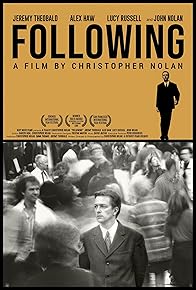
Following (1998)
A young writer who follows strangers for material meets a thief who takes him under his wing.
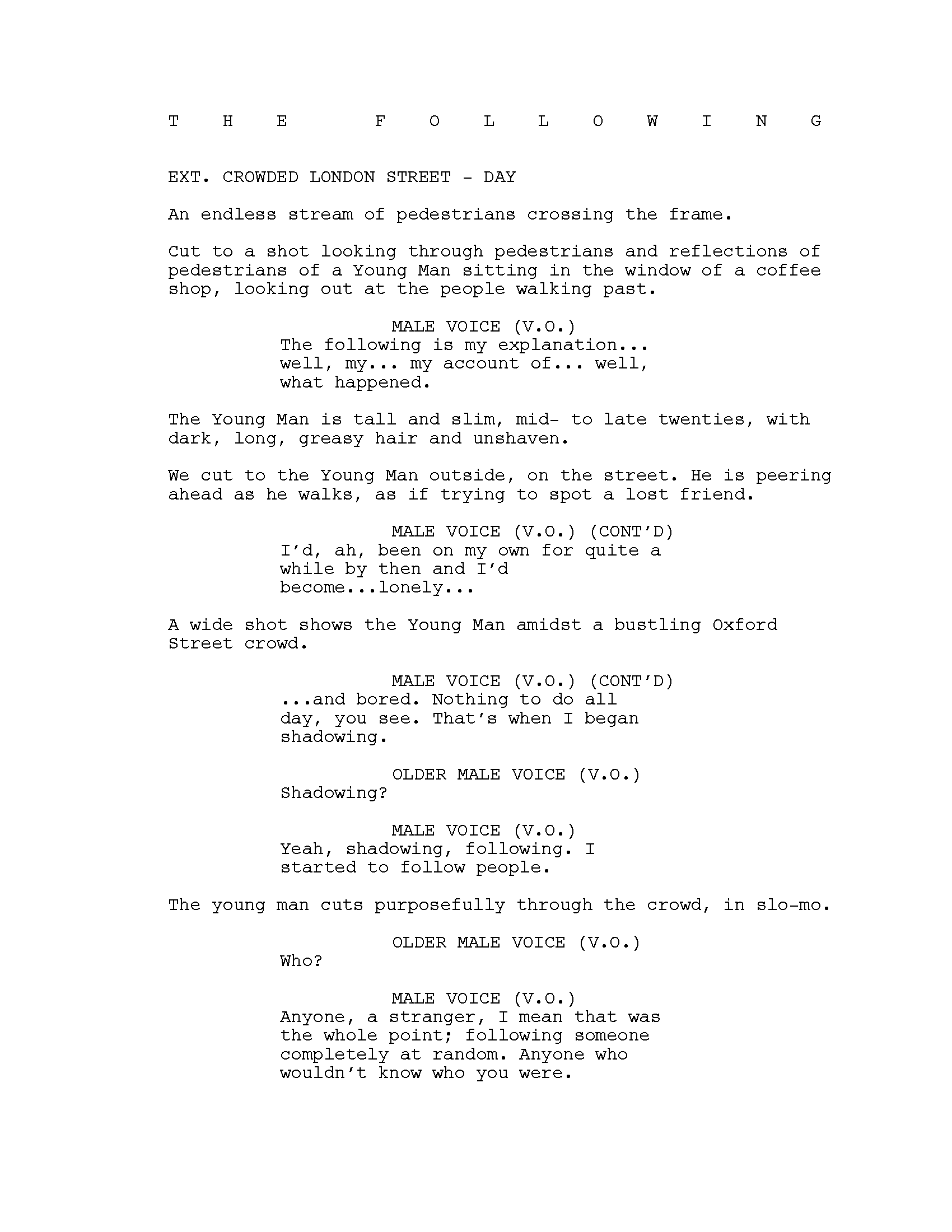
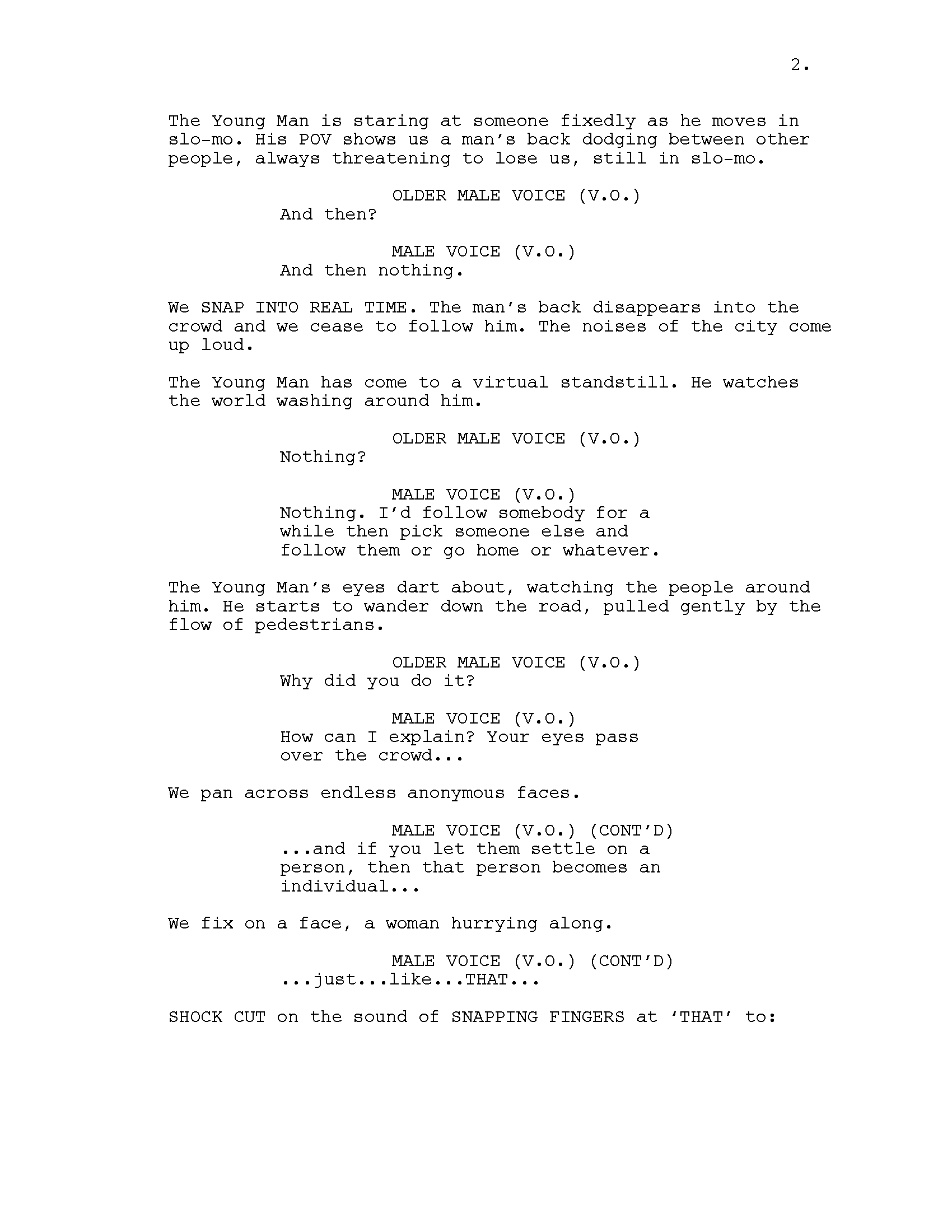
Screenplay download
Reading is open to everyone. A free account is only required to download so we can protect the library and respect rights-holder requests. Already registered? Log in and you’re set.
Read and Watch
Compare the script and movie together with 8FLiX and JustWatch.
Now that you have the screenplay, stream Following and compare. We've partnered with JustWatch so you can make that happen.
Looking For Something?
If you can't find what you need, send us an email.
Looking for a specific movie or TV script that isn't listed? Let us know. 8FLiX has thousands of scripts, and not all of them are indexed yet. We’re steadily adding more, but if you’d rather not wait for the catalog to catch up, send us an email. You may still have to wait, but it’ll usually be days, not geological time.

