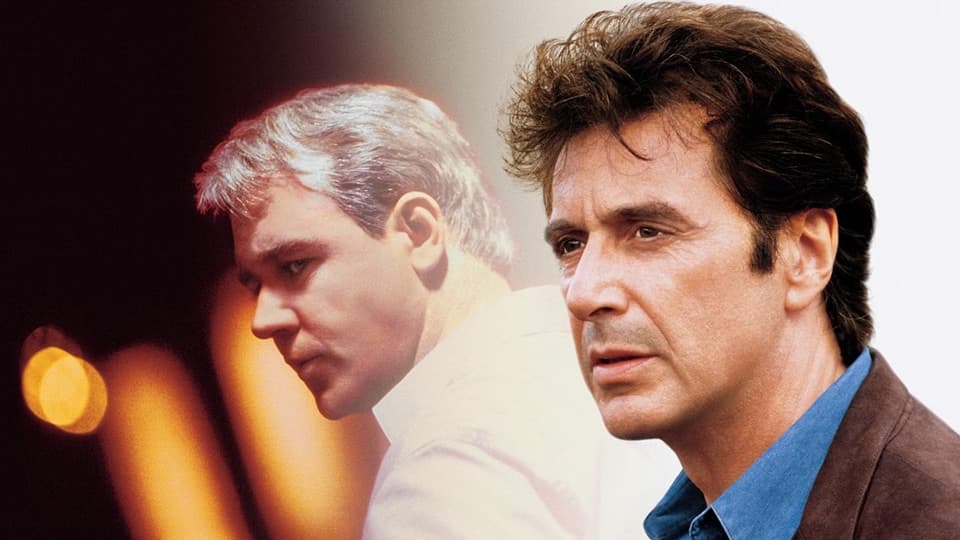
The Insider (1999) — Read, Study & Download the Screenplay
A pressure-cooker corporate thriller where truth becomes dangerous the moment someone agrees to say it out loud.
The Insider screenplay follows Jeffrey Wigand, a former tobacco executive whose knowledge of industry practices places him at the center of a brutal conflict between personal conscience, corporate power, media responsibility, and legal intimidation. When 60 Minutes producer Lowell Bergman recognizes the importance of Wigand’s story, the drama becomes less about discovering the truth than surviving the cost of revealing it. The screenplay builds suspense from phone calls, legal threats, newsroom arguments, family strain, confidentiality agreements, and the terrifying realization that institutions often protect themselves before they protect the public.
For writers and film students, this screenplay is an exceptional study in adult dramatic tension, procedural storytelling, and character under pressure. Eric Roth’s script does not rely on chase scenes or conventional thriller machinery. Instead, the danger lives in contracts, reputations, edited tapes, corporate memos, source relationships, and the gap between what people know and what they are permitted to say. The result is a moral thriller where the loudest explosions happen inside boardrooms, newsrooms, marriages, and the conscience of one very cornered man.
The Insider Study Notes
What writers and film students can learn from this screenplay
At its core, The Insider is about the unbearable weight of knowing. Jeffrey Wigand is not introduced as a conventional hero, and Lowell Bergman is not a crusader with a clean halo polished for television. Both men operate inside systems that demand compromise: tobacco, journalism, law, commerce, family, reputation, and institutional self-preservation. The screenplay’s great dramatic move is to make truth feel physically dangerous. Once Wigand begins talking, every ordinary space becomes pressurized: a hotel room, a car, a kitchen, a school office, a newsroom, a deposition room. The story’s suspense comes from watching private knowledge move toward public speech while powerful people try to stop it at every possible threshold.
Craft Focus
- Pressure instead of spectacle: The screenplay builds thriller tension through phone calls, legal warnings, surveillance anxiety, source protection, editorial conflict, and corporate retaliation.
- Dual-protagonist structure: Wigand and Bergman occupy different worlds, but their arcs become linked by trust, risk, and the question of whether truth can survive institutional pressure.
- Procedural detail: Journalism, legal exposure, confidentiality agreements, scientific testimony, network politics, and corporate strategy all become dramatic terrain.
- Character through contradiction: Wigand is principled, angry, frightened, proud, wounded, and difficult. Those contradictions make his courage feel costly rather than decorative.
- Institutional antagonism: The real villain is not only one executive or lawyer. The antagonist is a network of interests designed to make silence safer than disclosure.
- Dialogue as combat: Conversations often function like cross-examinations. Characters test motives, define risks, withhold information, and fight for control of the frame.
Questions for Writers
- How does the screenplay make legal language and corporate process feel suspenseful?
- Why is Wigand more compelling because he is difficult, guarded, and volatile?
- How does Lowell’s role as producer create tension between friendship, journalism, and professional ambition?
- Where does the script use silence, pauses, or withheld information to create dread?
- How does the story dramatize the difference between knowing the truth and being able to publish it?
- What makes family pressure as threatening to Wigand as corporate pressure?
- How does the newsroom become a battlefield between public interest and institutional fear?
Looking for the screenplay? Jump to the download button.
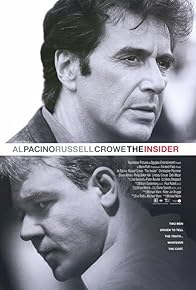
The Insider (1999)
A research chemist comes under personal and professional attack when he decides to appear in a 60 Minutes exposé on Big Tobacco.
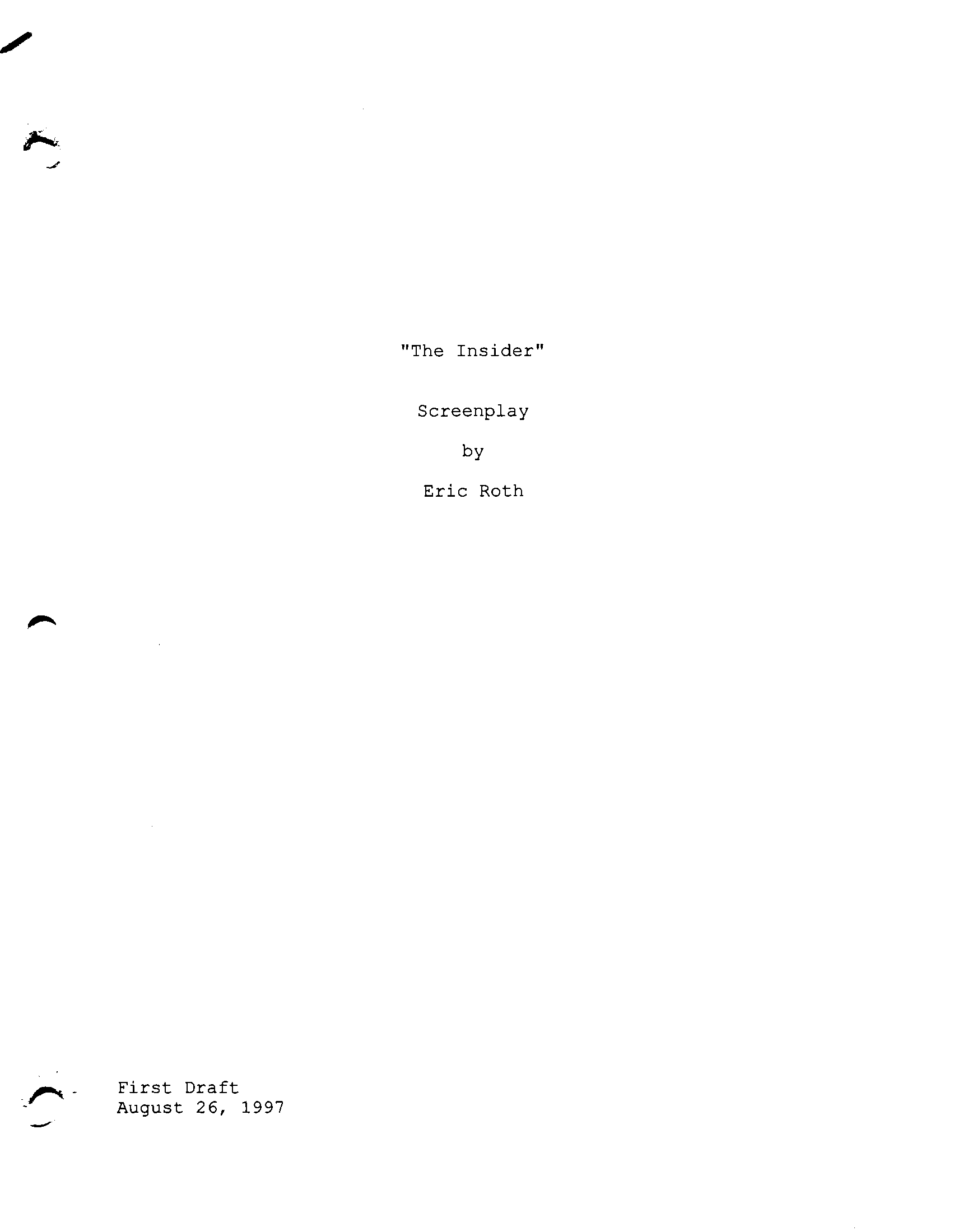
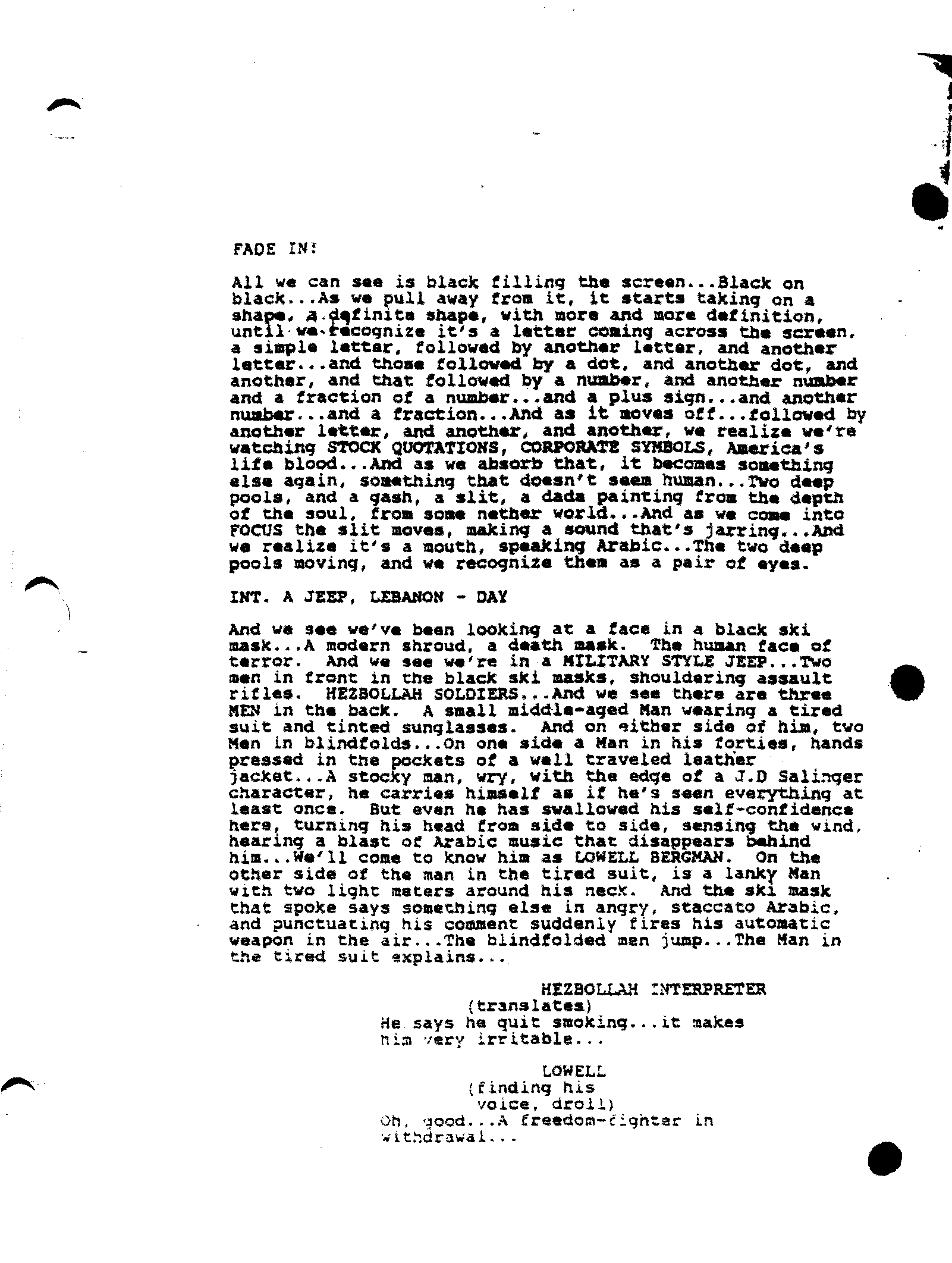
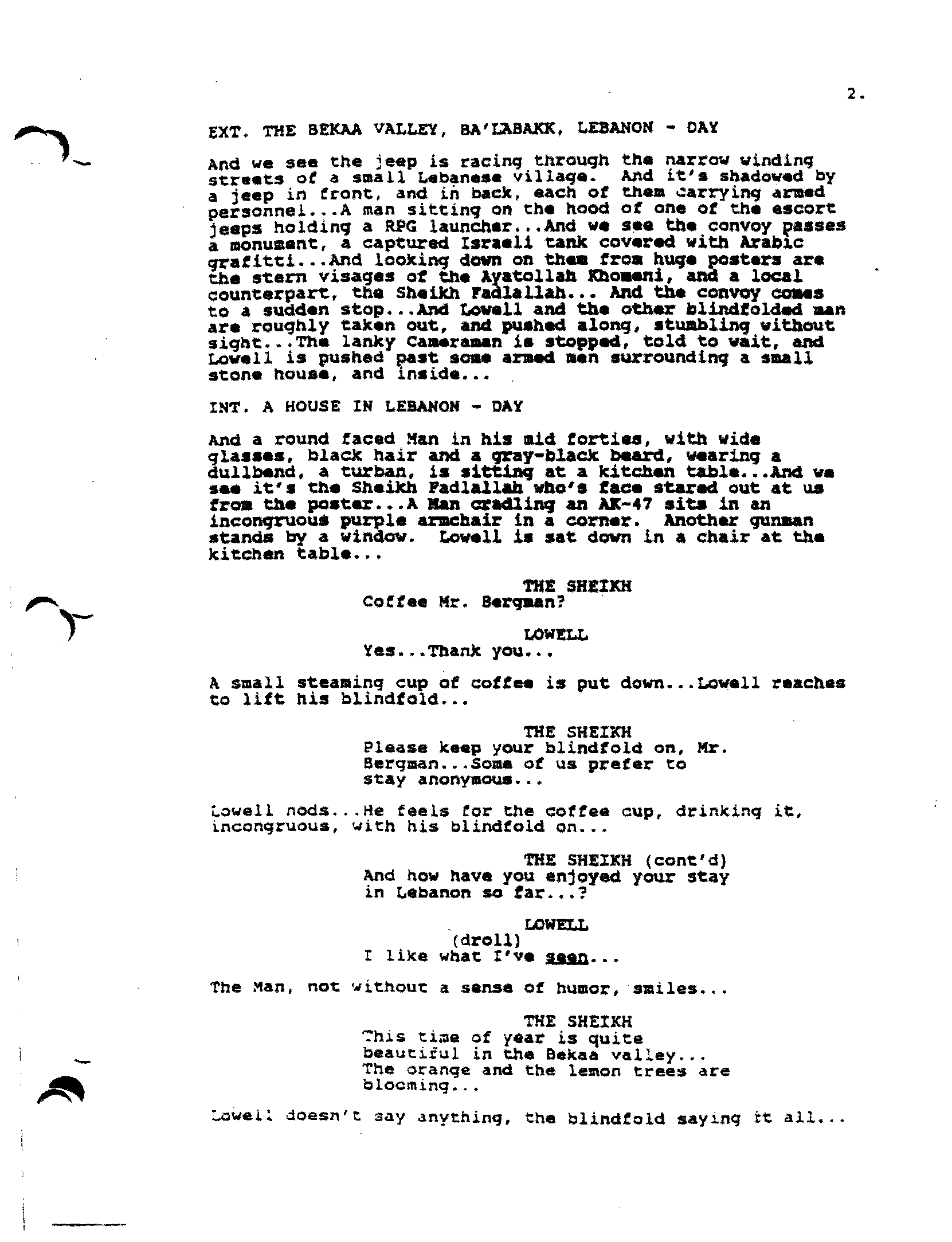
Screenplay download
Reading is open to everyone. A free account is only required to download so we can protect the library and respect rights-holder requests. Already registered? Log in and you’re set.
Read and Watch
Compare the script and movie together with 8FLiX and JustWatch.
Now that you have the screenplay, stream The Insider and compare. We've partnered with JustWatch so you can make that happen.
Looking For Something?
If you can't find what you need, send us an email.
Looking for a specific movie or TV script that isn't listed? Let us know. 8FLiX has thousands of scripts, and not all of them are indexed yet. We’re steadily adding more, but if you’d rather not wait for the catalog to catch up, send us an email. You may still have to wait, but it’ll usually be days, not geological time.