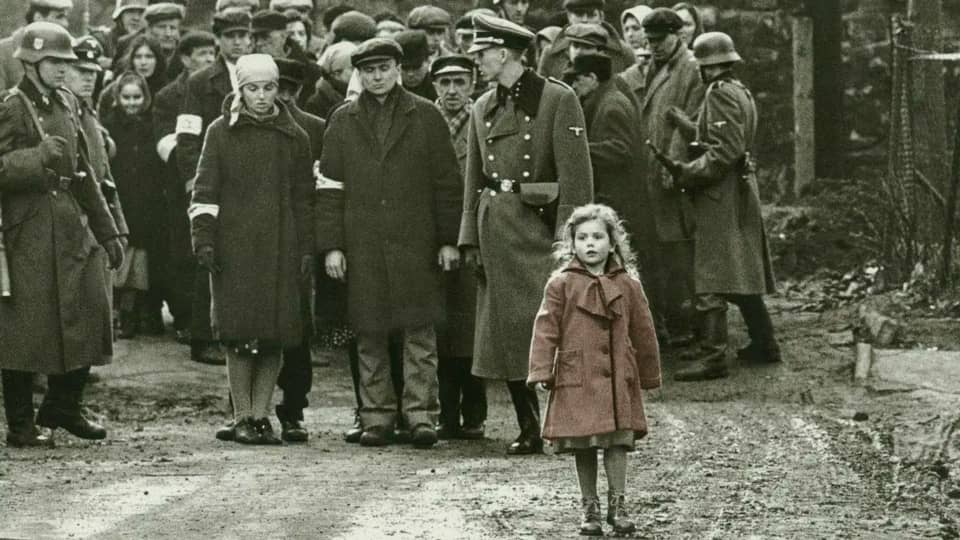
Schindler's List (1993) — Read, Study & Download the Screenplay
A historical drama about complicity, conscience, survival, and the fragile machinery of human rescue.
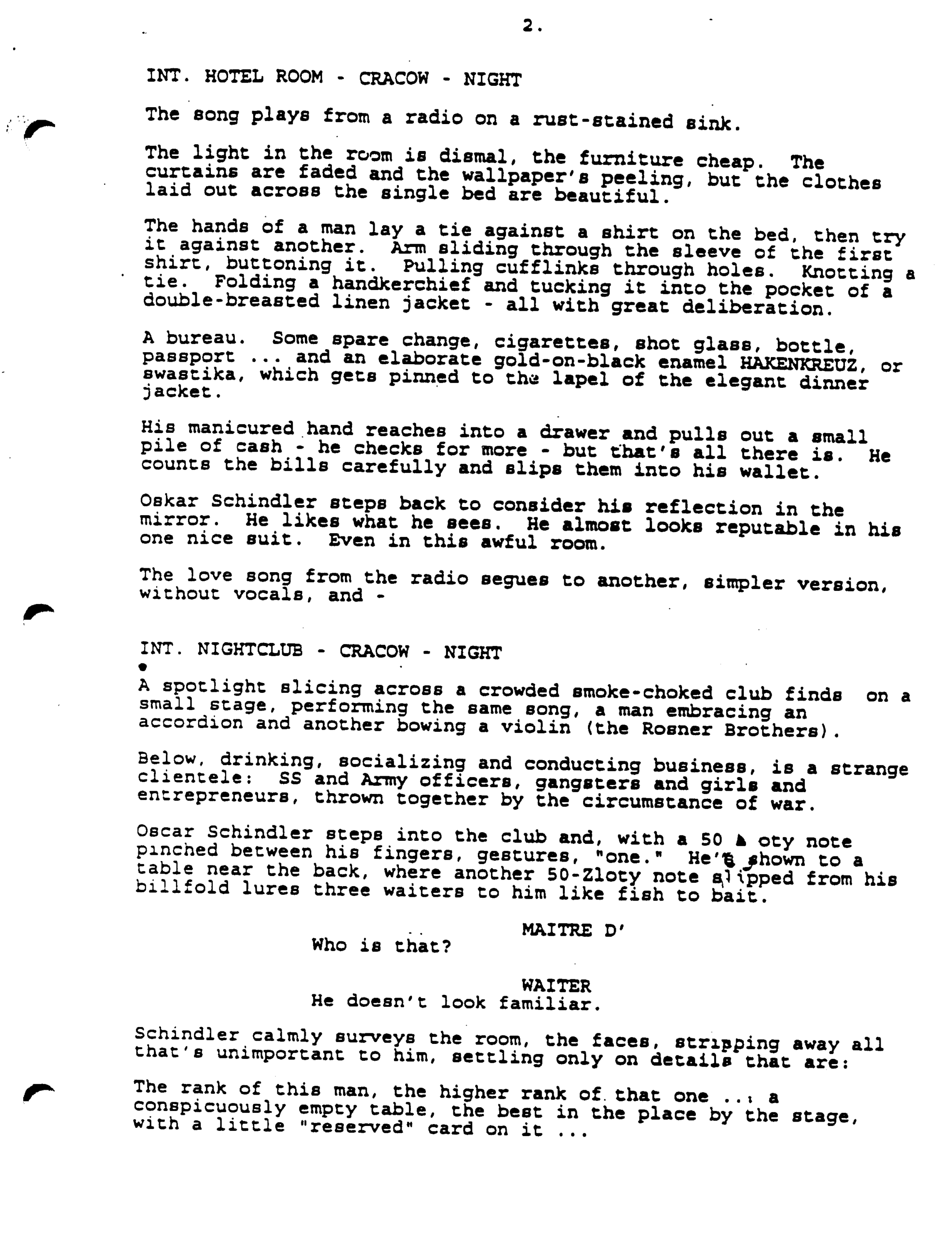
Schindler’s List follows Oskar Schindler, a German businessman who arrives in occupied Krakow looking for profit, influence, and social access, then gradually becomes responsible for saving the Jewish workers inside his factory. The screenplay begins with names, lists, clerks, train platforms, ledgers, bribes, rooms, uniforms, and transactions, establishing a world where human beings are reduced to paperwork while survival depends on who controls the forms, stamps, signatures, and doors.
For writers and film students, this screenplay is essential because it shows how moral transformation can be dramatized without simplifying history or flattening horror into sentiment. Zaillian builds the story through systems: Nazi bureaucracy, forced labor, ghettos, factories, camps, black-market bargaining, and the terrible logistics of extermination. Study how the script uses restraint, visual contrast, recurring objects, procedural detail, and Schindler’s shifting relationship with Itzhak Stern to turn one man’s compromised self-interest into an act of rescue.
Ready to get to work? Check out the Study Notes just below. When you're ready, download the Schindler's List screenplay.
Schindler’s List Study Notes
What writers and film students can learn from this screenplay
A Masterpiece with a capital 'M', the Schindler’s List screenplay is useful to study because it dramatizes conscience as something that forms under pressure, not as something Schindler possesses from the beginning. Early scenes present him as a social engineer: watching rank, buying drinks, arranging introductions, collecting favors, and learning how to turn occupation into opportunity. The same skills that first serve vanity and profit later become tools of rescue. That is the screenplay’s devastating structural turn. Schindler does not become good by abandoning systems. He learns how to bend the very machinery of power, money, influence, signatures, factory lists, and bribery toward keeping people alive.
Craft Focus
- Paperwork as life-or-death drama: Lists, registration cards, work permits, ledgers, signatures, and stamps become suspense objects. The screenplay makes bureaucracy terrifying because it decides who is counted, moved, protected, or erased.
- Transformation through action: Schindler’s change is shown through choices, costs, risks, and negotiations. The script avoids announcing morality before behavior earns it.
- Systems as antagonist: The horror is not only individual cruelty. It is trains, offices, uniforms, inventories, camps, labor categories, confiscated property, and administrative language used to disguise murder.
- Character contrast: Stern’s discipline, intelligence, and moral clarity quietly reshape Schindler’s priorities, while Goeth embodies power without conscience, turning whim into terror.
- Restraint and accumulation: The screenplay builds emotional force through repeated procedural detail, small acts of witness, and a growing awareness of what each name on a list means.
Questions for Writers
- How does the opening use names, clerks, trains, and registration to establish the story’s moral landscape?
- Where does Schindler’s charm function as opportunism, and where does it begin to function as protection?
- How does the screenplay make Stern essential without turning him into mere exposition or moral decoration?
- What changes in Schindler’s relationship to money as the story progresses?
- How does the script balance intimate human moments against the enormous scale of historical catastrophe?
- Where does the list shift from business document to sacred record, and how is that transformation dramatized?
While reading, pay attention to how Schindler’s List turns “names” into the screenplay’s deepest unit of meaning. A name can be typed, misheard, crossed off, hidden, traded, protected, or lost. The craft lesson is solemn and immense: when writing historical drama, specificity is not ornament. Specificity is dignity. Every name pushes back against abstraction.
Looking for the screenplay? Jump to the download button.
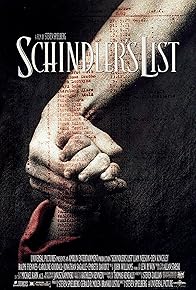
Schindler's List (1993)
In German-occupied Poland during World War II, industrialist Oskar Schindler gradually becomes concerned for his Jewish workforce after witnessing their persecution by the Nazis.
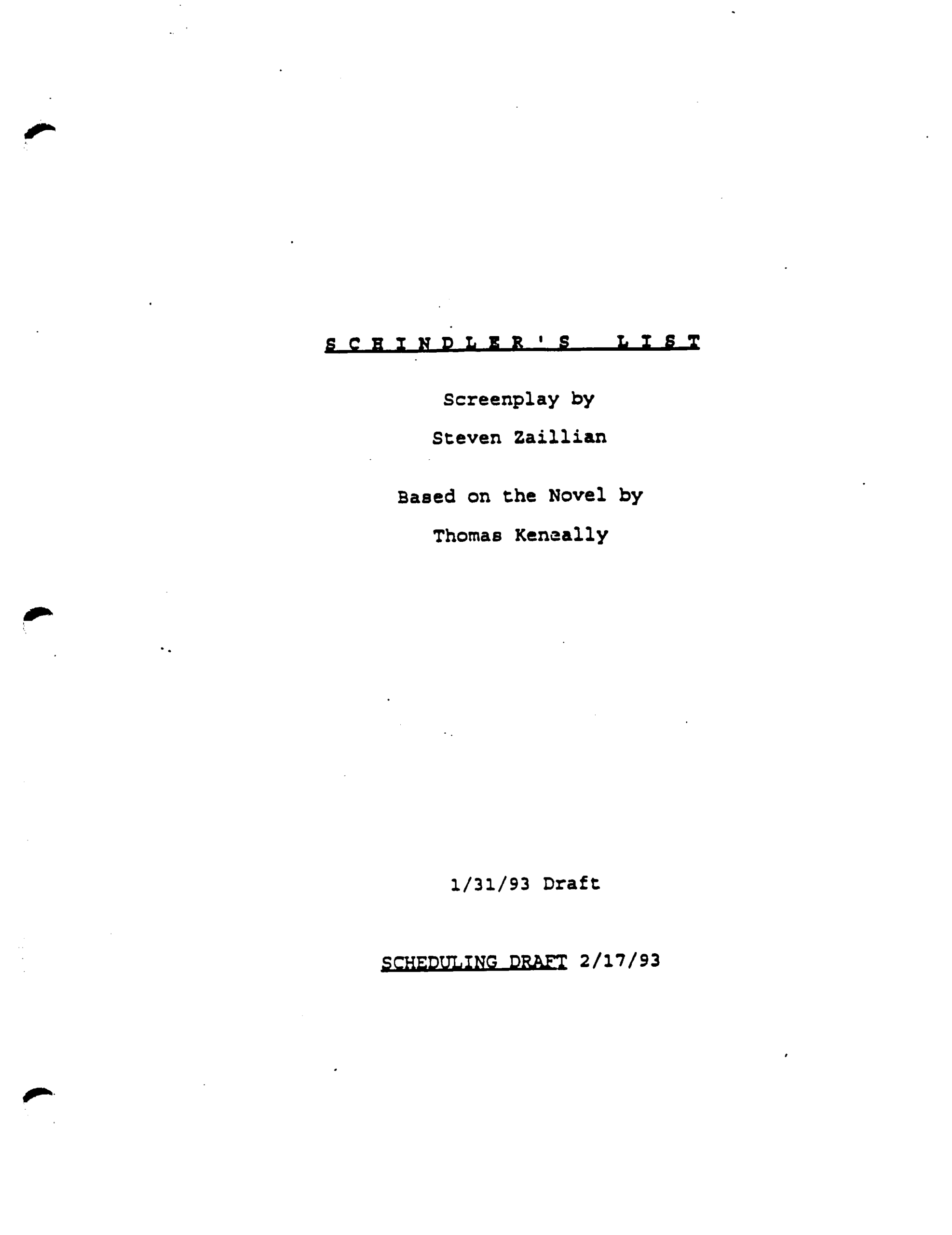
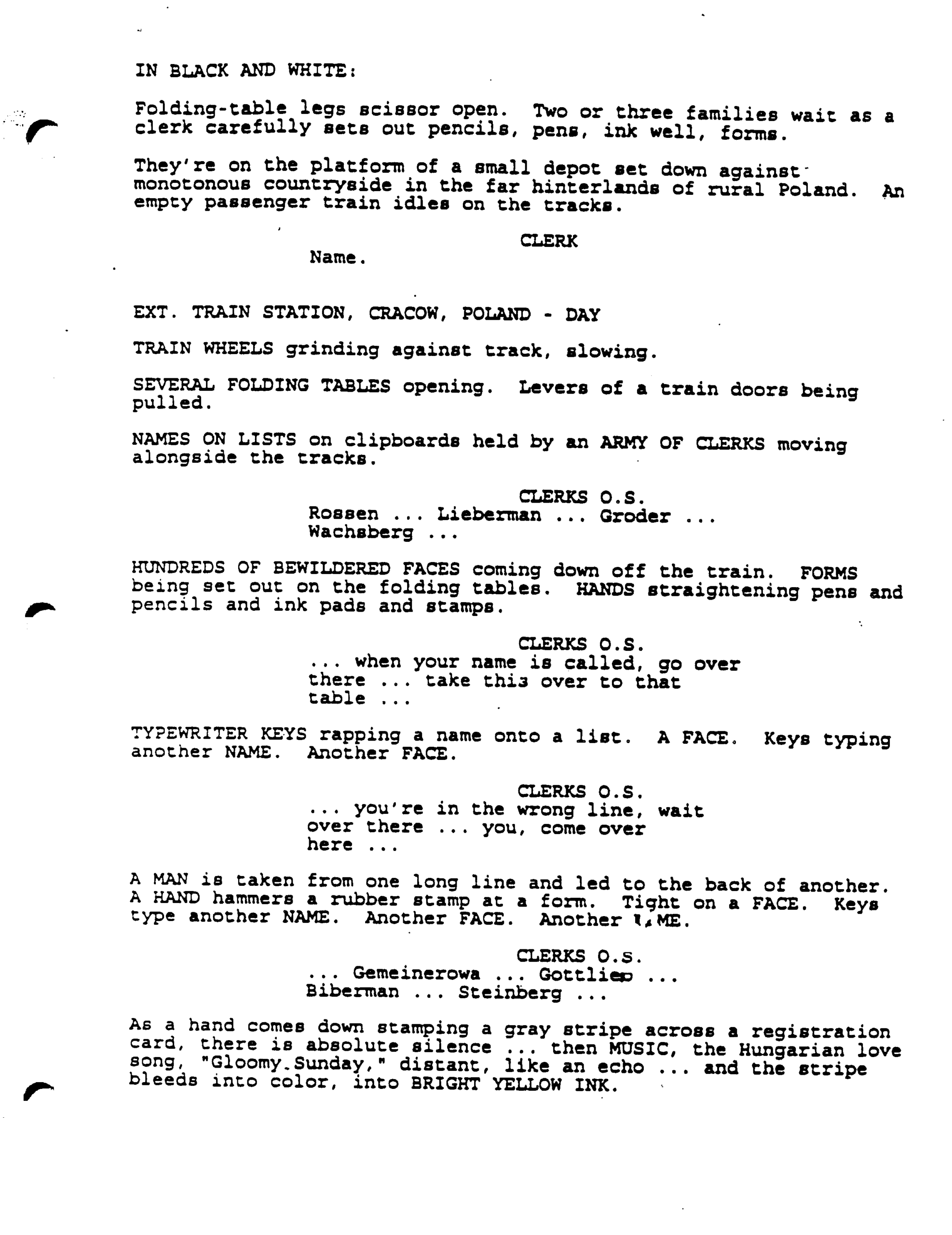
Screenplay download
Reading is open to everyone. A free account is only required to download so we can protect the library and respect rights-holder requests. Already registered? Log in and you’re set.
Read and Watch
Compare the script and movie together with 8FLiX and JustWatch.
Now that you have the screenplay, stream Top Gun and compare. We've partnered with JustWatch so you can make that happen.
Looking For Something?
If you can't find what you need, send us an email.
Looking for a specific movie or TV script that isn't listed? Let us know. 8FLiX has thousands of scripts, and not all of them are indexed yet. We’re steadily adding more, but if you’d rather not wait for the catalog to catch up, send us an email. You may still have to wait, but it’ll usually be days, not geological time.