Asteroid City (2023) — Read, Study & Download the Screenplay
A desert-set meta-comedy about grief, performance, science, alien contact, and people trying to understand a universe that refuses to explain itself.
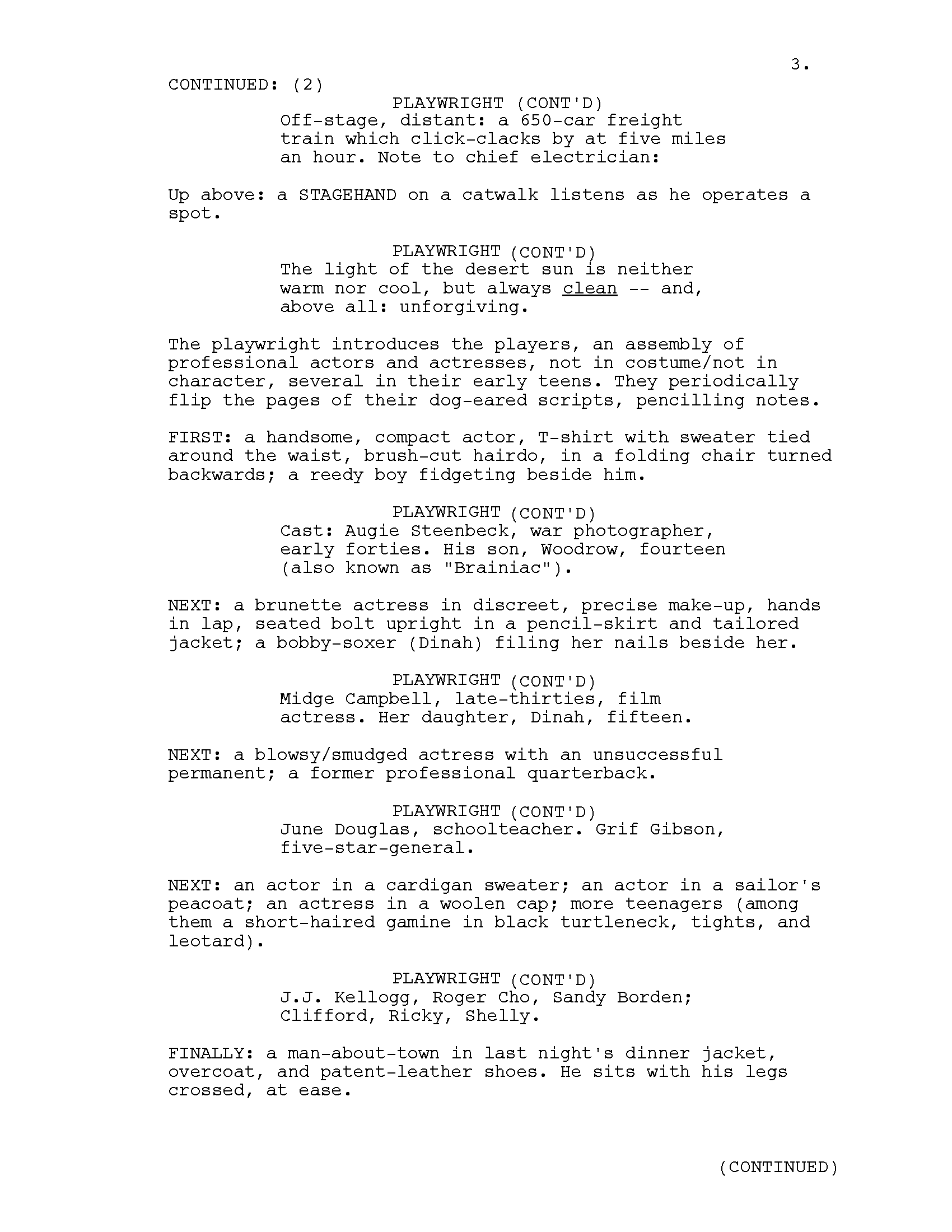
The Asteroid City screenplay unfolds as a story inside a story: a 1950s television broadcast about the making of a fictional stage play called Asteroid City, which itself follows families, scientists, soldiers, cowboys, and Junior Stargazers gathered in a tiny desert town for an annual space-science convention. When an alien appears and casually disrupts the ceremony, the town is quarantined, the children start forming theories, the adults lose their grip on certainty, and a grieving war photographer named Augie Steenbeck tries to tell his children their mother is gone.
For writers and film students, Wes Anderson’s screenplay is a jewel box with trapdoors. Study how it layers theatrical framing, television narration, deadpan comedy, grief, rehearsal language, science-fiction wonder, and emotional withholding into one precise machine. The script is not only about alien contact. It is about people acting their way through mystery because honest feeling arrives too large to hold barehanded. It is cosmic Americana with a prop department, a mushroom cloud, a Tupperware urn, and a universe that keeps declining to answer follow-up questions.
Ready to get to work? Check out the Study Notes just below. When you're ready, download the Asteroid City screenplay.
Asteroid City Study Notes
What writers and film students can learn from this screenplay
Asteroid City is useful to study because it turns artificiality into emotional truth. Wes Anderson’s screenplay begins in black-and-white television mode, where a host explains the creation of a fictional theatrical production, then opens into widescreen color as the play itself begins in a desert town built from diner counters, motel cabins, atomic testing, Junior Stargazer inventions, and a crater fenced like a municipal swimming pool. The structure is openly fabricated, even labeled as hypothetical and apocryphal, but the grief at its center is not decorative. Augie Steenbeck cannot find the right time to tell his children their mother has died. Woodrow cannot calculate his way around loss. Midge performs feeling because performance is the only safe room she knows. The alien may be the headline event, but the screenplay’s deeper subject is uncertainty: cosmic, parental, romantic, artistic, spiritual, and theatrical.
Craft Focus
- Frame story as meaning: The television host, playwright, rehearsal room, and staged production are not decorative wrappers. They make the act of storytelling part of the story itself.
- Artificial design, real emotion: The script uses highly arranged dialogue, precise visual detail, theatrical blocking, and formal chaptering to create distance, then lets grief leak through the geometry.
- Deadpan as pressure valve: Characters often speak in clipped, factual, or oddly practical language when confronting death, fear, love, or cosmic bewilderment. The comedy works because the feelings are volcanic underneath.
- Science fiction as existential comedy: The alien encounter does not solve the characters’ questions. It multiplies them. The unknown becomes a mirror for human confusion rather than a puzzle with a tidy answer.
- Children as intellectual equals: Woodrow and the Junior Stargazers are not merely cute observers. Their inventions, hypotheses, questions, and emotional bluntness challenge the adults’ evasions.
Questions for Writers
- How does the black-and-white television frame change the way we experience the desert story in color?
- Why does the screenplay announce that Asteroid City is imaginary before asking us to care about its characters?
- How does Augie’s delayed confession about his wife’s death create emotional suspense without conventional plot mechanics?
- Where does the dialogue turn grief into a practical problem, and why is that funnier and sadder than open melodrama?
- How do the Junior Stargazer inventions reveal character while also expanding the world’s comic science-fiction texture?
- Why does the alien’s arrival work better as an interruption than as an explanation?
While reading, pay attention to how Asteroid City separates what characters say from what they are surviving. Augie talks in facts, Woodrow talks in measurements, Stanley talks in blunt verdicts, Midge talks through roles, and the official institutions talk through ceremonies, speeches, quarantine rules, and badges. Underneath all that language sits the same giant question: what do we do when the universe gives us an event but no meaning? That is the craft lesson in the crater. Style does not have to hide emotion. In the right hands, style becomes the little observatory that lets us look straight at it.
Looking for the screenplay? Jump to the download button.
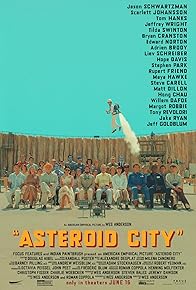
Asteroid City (2023)
World-changing events spectacularly disrupt the annual Asteroid Day celebration in an American desert town.
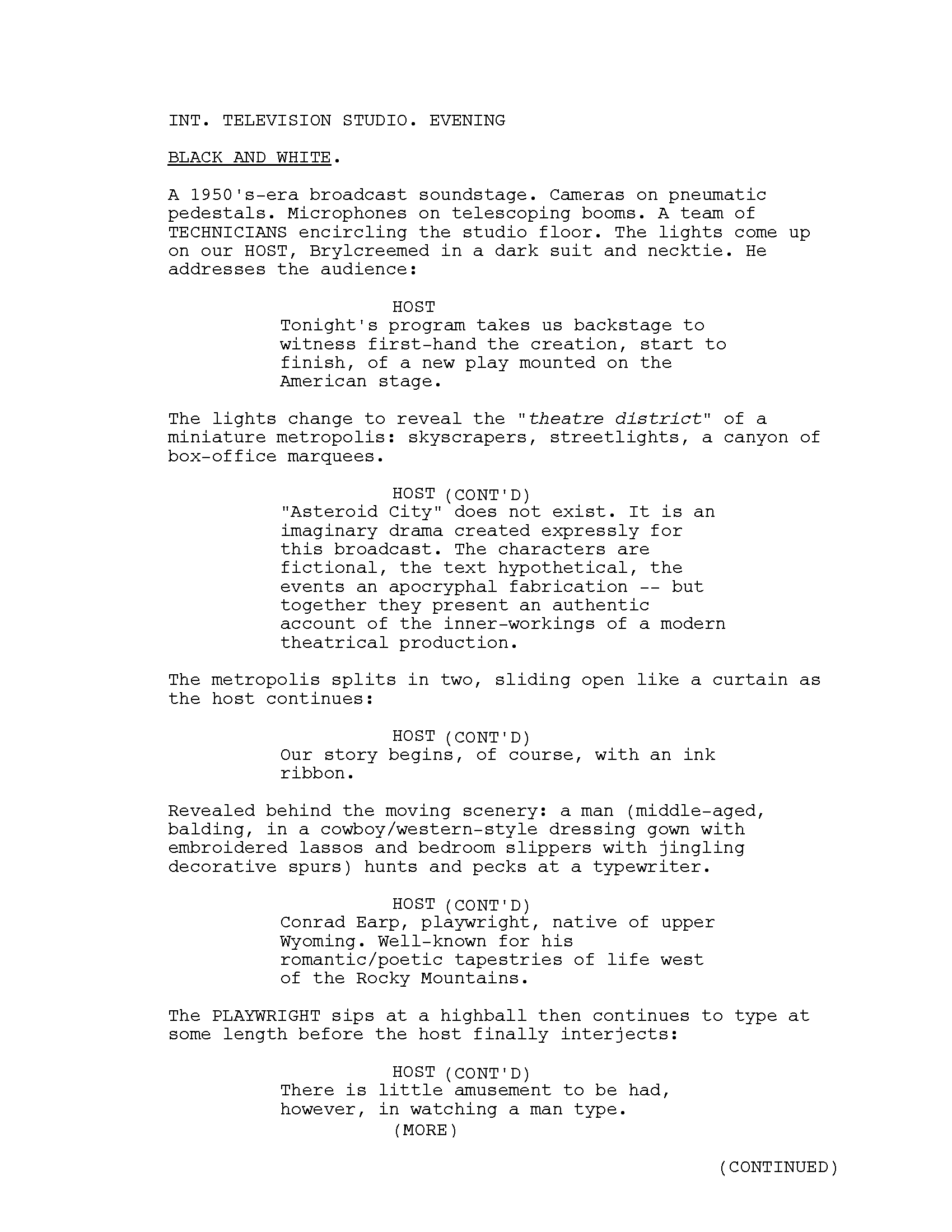
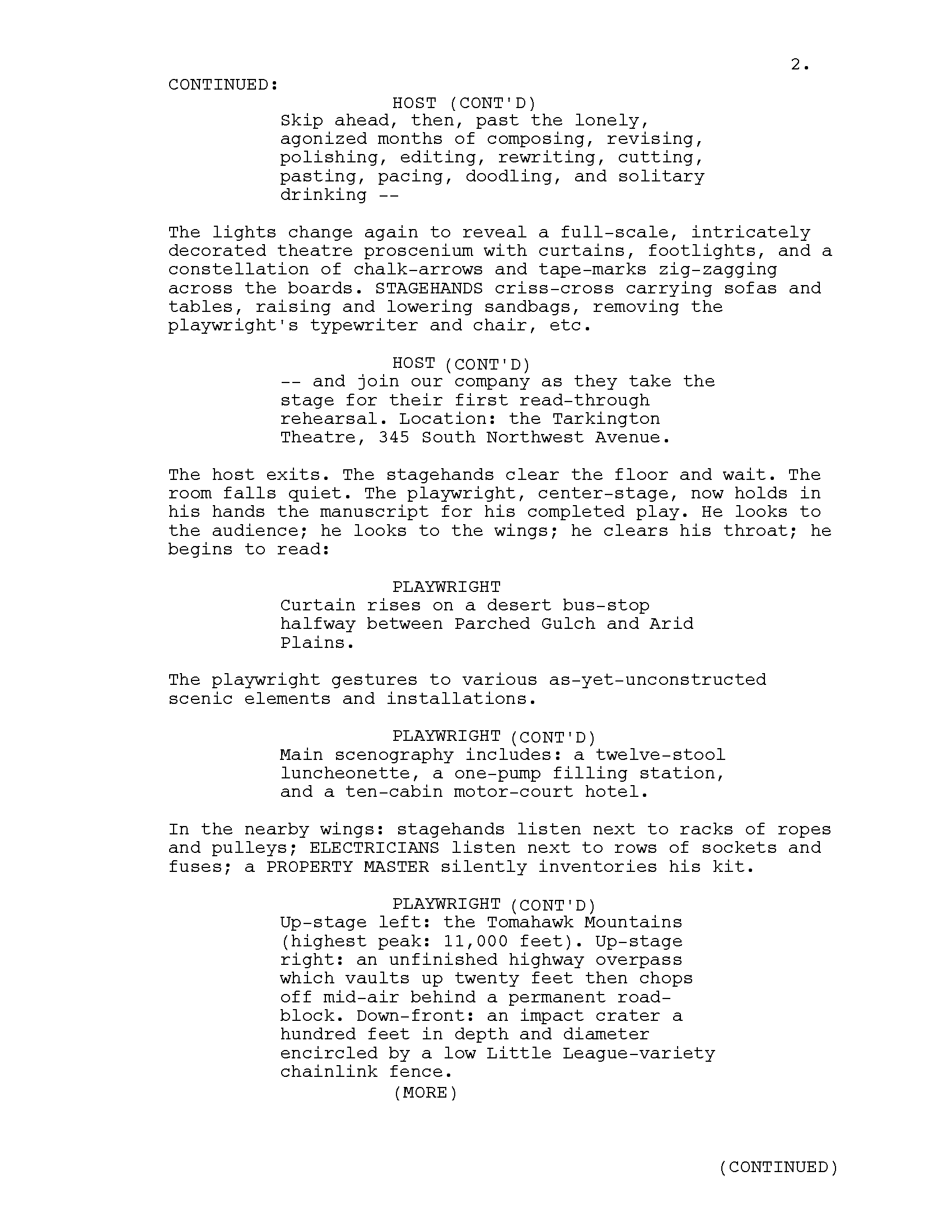
Screenplay download
Reading is open to everyone. A free account is only required to download so we can protect the library and respect rights-holder requests. Already registered? Log in and you’re set.
Read and Watch
Compare the script and movie together with 8FLiX and JustWatch.
Now that you have the screenplay, stream Asteroid City and compare. We've partnered with JustWatch so you can make that happen.
Looking For Something?
If you can't find what you need, send us an email.
Looking for a specific movie or TV script that isn't listed? Let us know. 8FLiX has thousands of scripts, and not all of them are indexed yet. We’re steadily adding more, but if you’d rather not wait for the catalog to catch up, send us an email. You may still have to wait, but it’ll usually be days, not geological time.