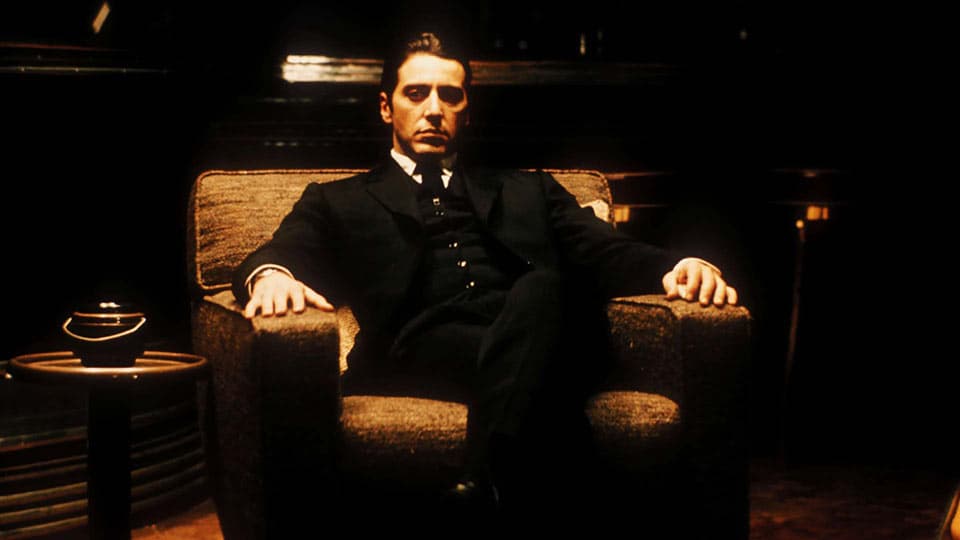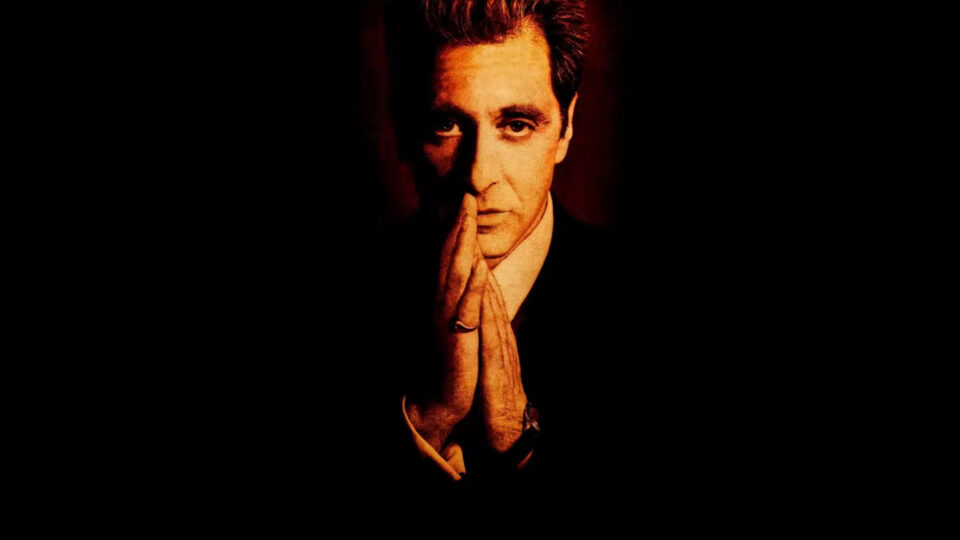
The Godfather: Part III (1990) — Read, Study & Download the Screenplay
A late-family tragedy about legitimacy, inheritance, and the sins that refuse retirement.
The Godfather Part III screenplay studies Michael Corleone at the end of empire: wealthy, honored, spiritually exhausted, and still unable to separate family from power. This 1989 first draft places Michael inside a world of philanthropy, Vatican finance, old enemies, and younger heirs who cannot escape the gravitational pull of the Corleone name. The crime story has changed clothes, but the old machinery is still humming under the floorboards.
For writers, this draft is useful study material for legacy sequels, late-stage character reckoning, family succession, institutional corruption, and the danger of trying to buy absolution with clean money.
Ready to get to work? Check out the Study Notes just below. When you're ready, download The Godfather: Part III screenplay.
The Godfather Part III Study Notes
What writers and film students can learn from this screenplay
The Godfather Part III screenplay is useful to study because it treats legacy as both inheritance and punishment. In this 1989 first draft, Michael Corleone is no longer trying to build power. He is trying to sanitize it, protect it, transfer it, and survive it. The screenplay surrounds him with religious ceremony, foundation money, Vatican banking, family obligation, and violent younger men who still believe the old rules apply. Michael wants legitimacy, but the story keeps asking whether a life built on blood can ever be laundered into grace.
Craft Focus
- Legacy sequel as moral audit: The draft does not simply restart the Corleone machine. It examines what remains after decades of power, compromise, exile, and family damage.
- Legitimacy as conflict: Michael’s foundation, papal honor, casino sale, and Vatican-linked business deal all dramatize the same question: can criminal power become respectable, or only better dressed?
- Succession pressure: Vincent functions as the dangerous next-generation Corleone: loyal, impulsive, charismatic, and drawn to violence in ways Michael recognizes but cannot fully control.
- Family wounds as plot engines: Kay, Tony, Mary, Connie, Vincent, and Hagen are not just orbiting Michael. Each one pressures a different part of his identity: father, ex-husband, patriarch, brother, boss, sinner.
Questions for Writers
- How does the opening papal honor ceremony frame Michael as both respected public figure and morally compromised private man?
- Where does the screenplay use business language to disguise fear, guilt, or violence?
- How does Vincent’s presence force Michael to confront the younger, more instinctive version of Corleone power?
- How do Tony and Mary reveal the personal cost of Michael’s lifelong belief that family protection requires control?
While reading, pay attention to how The Godfather Part III turns respectability into suspense. Michael is surrounded by donations, foundations, Church officials, bankers, ceremonies, and polished hotel rooms, but the old Corleone logic keeps leaking through the marble. The useful craft lesson is that a late sequel works best when it is not only about what happens next. It should ask what the earlier victories did to the soul of the story.
Looking for the screenplay? Jump to the download button.
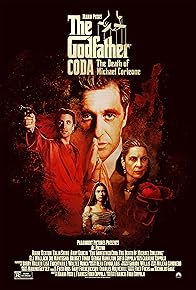
The Godfather: Part III (1990)
Follows Michael Corleone, now in his 60s, as he seeks to free his family from crime and find a suitable successor to his empire.
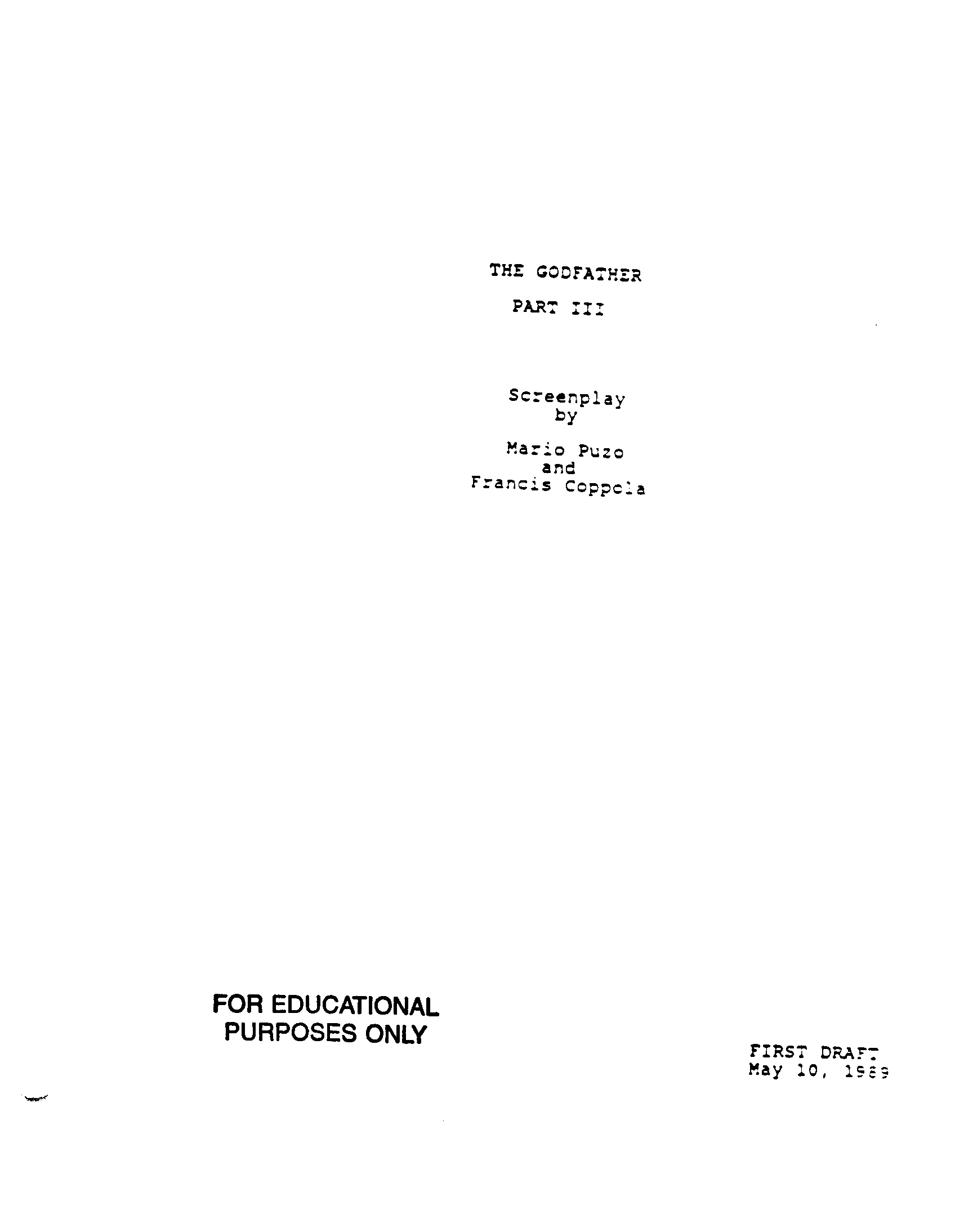
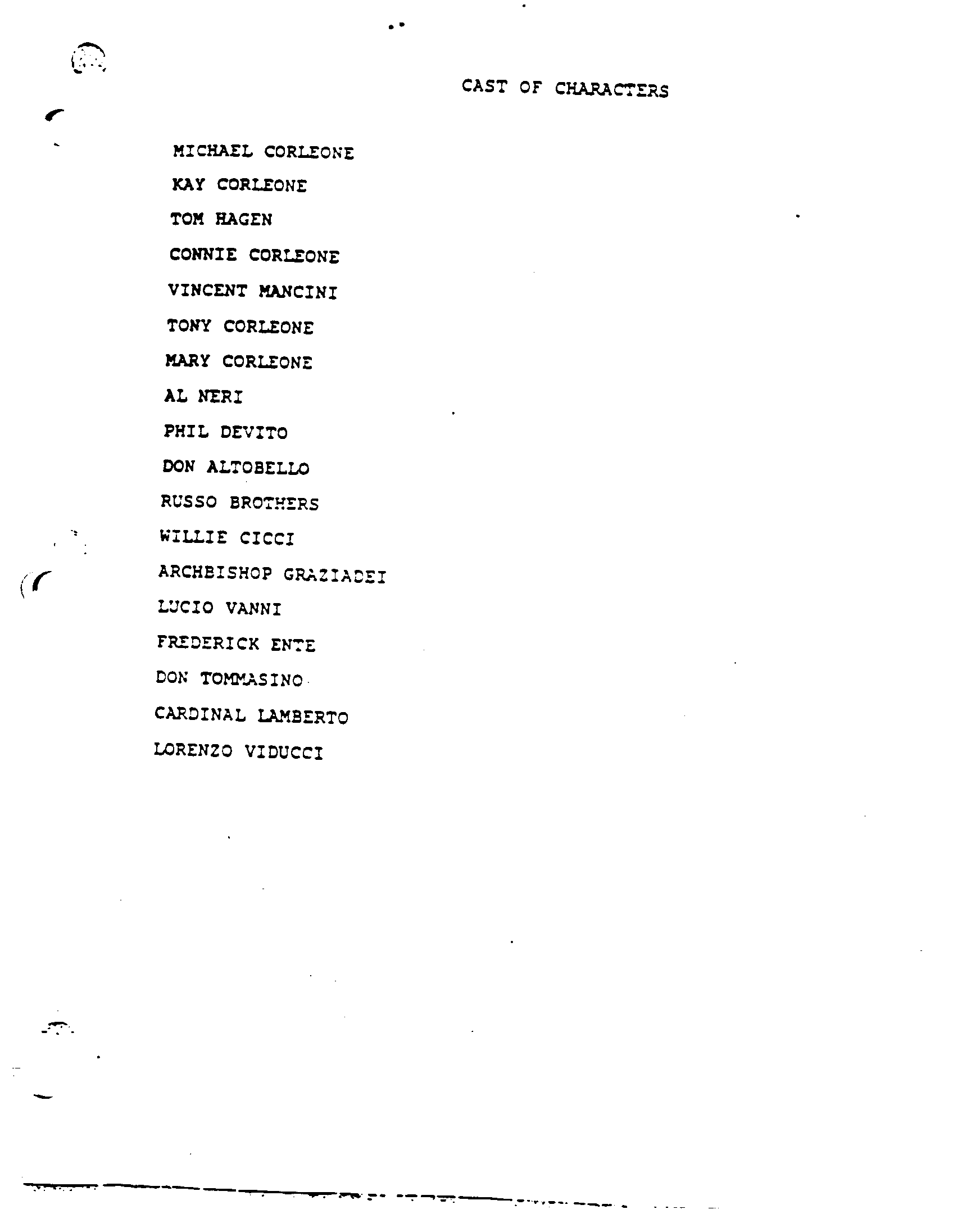
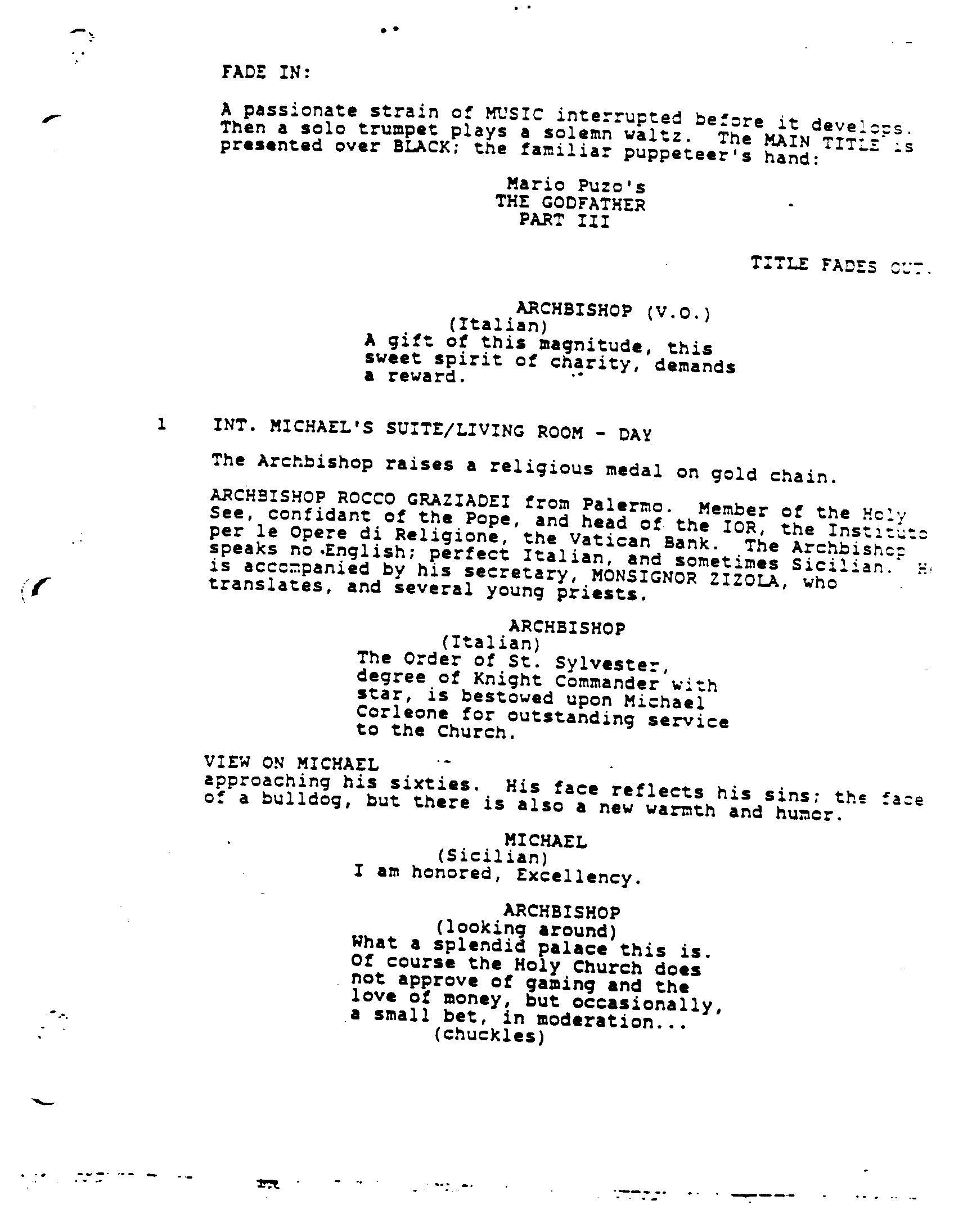
Screenplay download
Reading is open to everyone. A free account is only required to download so we can protect the library and respect rights-holder requests. Already registered? Log in and you’re set.
Read and Watch
Compare the script and movie together with 8FLiX and JustWatch.
Now that you have the screenplay, stream The Godfather: Part III and compare. We've partnered with JustWatch so you can make that happen.
Looking For Something?
If you can't find what you need, send us an email.
Looking for a specific movie or TV script that isn't listed? Let us know. 8FLiX has thousands of scripts, and not all of them are indexed yet. We’re steadily adding more, but if you’d rather not wait for the catalog to catch up, send us an email. You may still have to wait, but it’ll usually be days, not geological time.