The Monkey (2025) — Read, Study & Download the Screenplay
A murderous toy, two damaged brothers, and one family that's spent decades trying to outrun the things it never learned how to grieve.
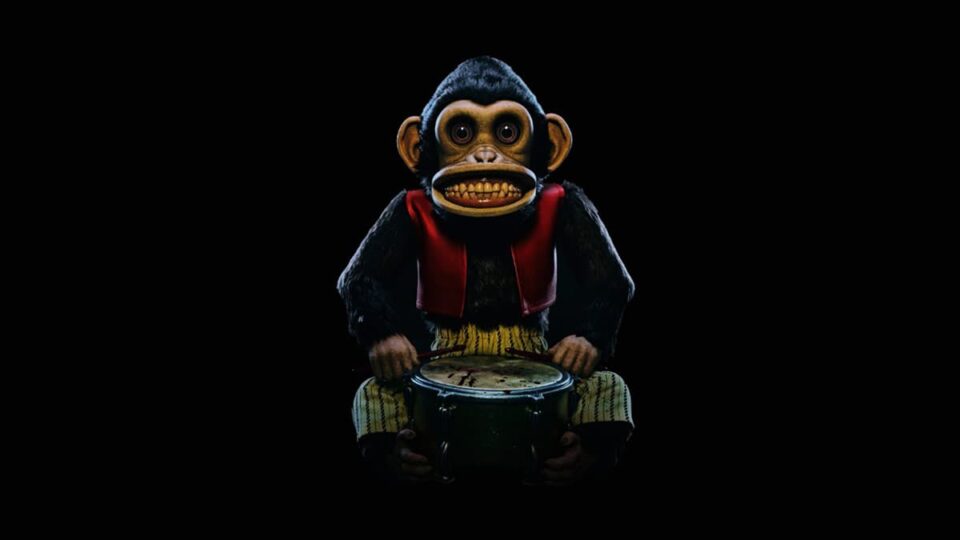
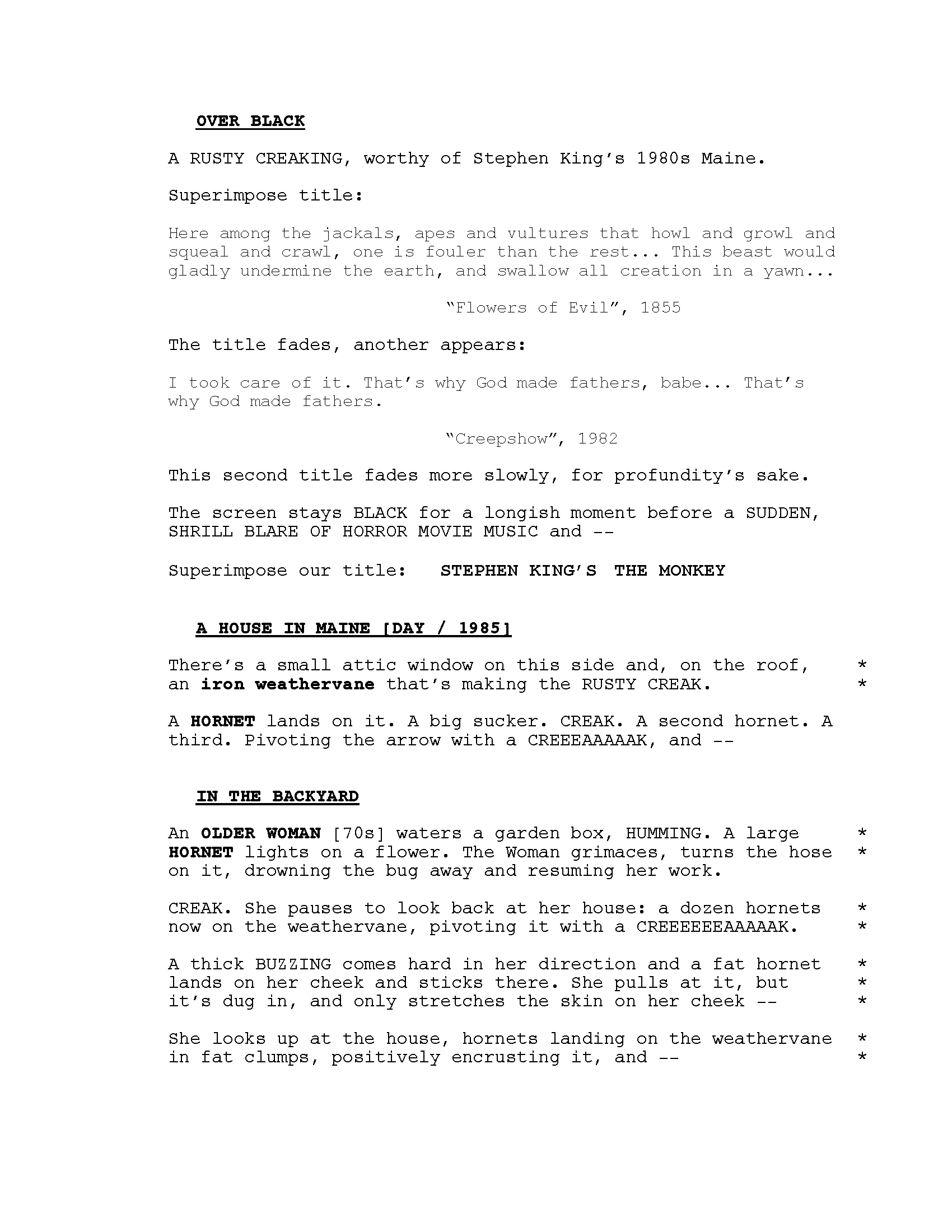
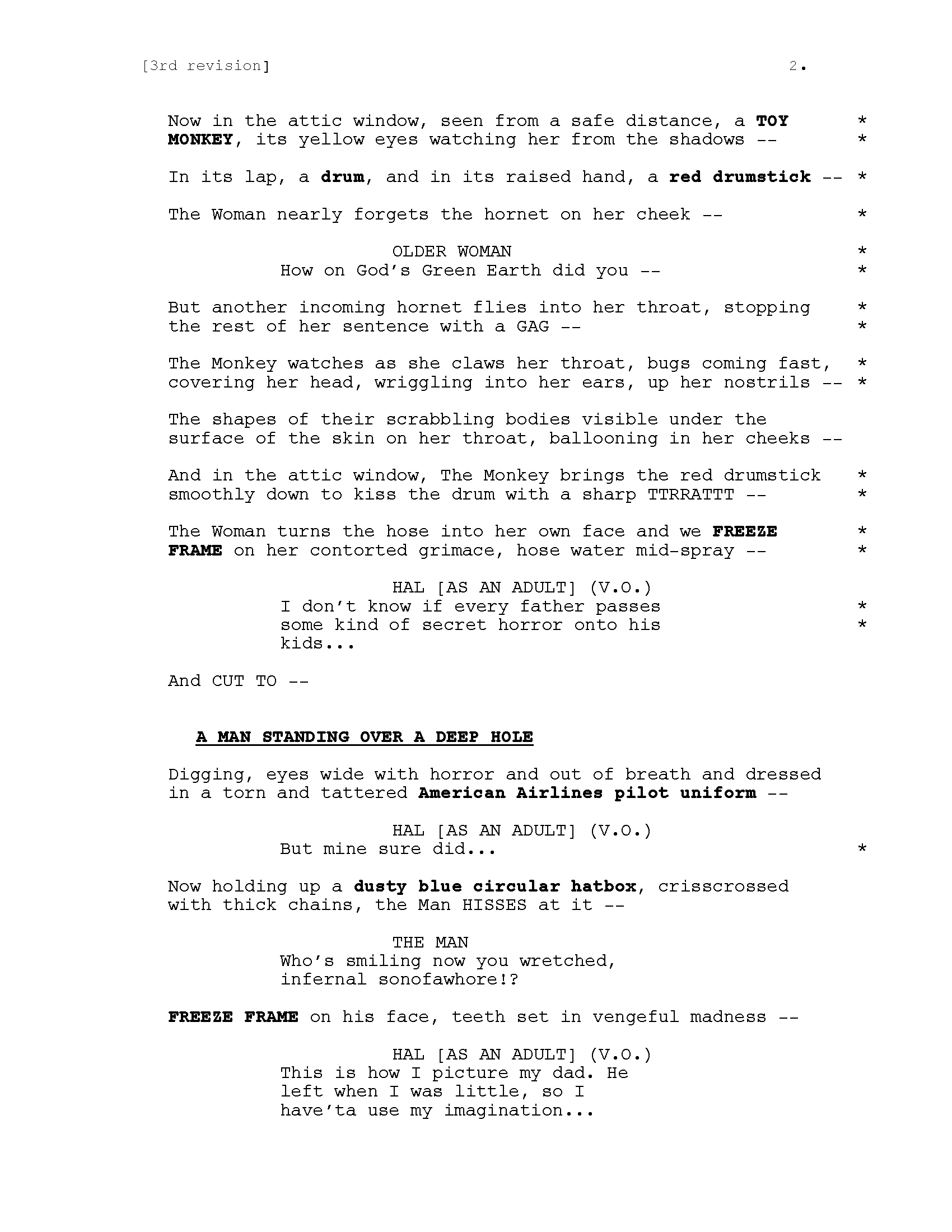
The Monkey begins with brothers Hal and Bill discovering a mechanical organ-grinder monkey among the belongings of their absent father. Turning its key raises a drumstick. When the drumstick falls, somebody dies — usually through an accident so grotesque, improbable, or absurd that understanding why it happened becomes impossible. Decades later, Hal has built his life around staying away: from the Monkey, from Bill, and increasingly from his own son, Petey. But when the deaths begin again, the family history Hal tried to bury comes clawing back into the present.
For writers and film students, Osgood Perkins' screenplay is a wonderfully strange study in horror-comedy, supernatural rules, generational trauma, thematic repetition, and emotional payoff hidden inside escalating carnage. The Monkey provides the mechanism, but the screenplay's real subject is the human need to explain random suffering. Hal runs from it. Bill turns it into a religion. Petey eventually sees something simpler: terrible things happen, and abandoning the people you love does not protect them. That gives the screenplay an emotional architecture sturdy enough to support an impressive amount of flying glass, arterial unpleasantness, vultures, hornets, and other spectacularly bad luck.
Ready to turn the key? Check out the Study Notes just below. Major story and ending spoilers ahead. When you're ready, download the The Monkey (2025) screenplay.
The Monkey Study Notes
What writers and film students can learn from this screenplay
The Monkey is useful to study because its supernatural premise operates on two levels at once. On the surface, the Monkey is a wonderfully simple horror device: turn the key, the drumstick rises, somebody dies. But the screenplay quickly removes the comforting idea that such a device can be controlled. The Monkey does not take requests. It does not explain its choices. Attempts to destroy, bury, abandon, or escape it fail. That transforms the object from a weapon into something closer to mortality itself. Hal and Bill spend their lives trying to impose meaning on what happened to them, while Petey eventually recognizes the more difficult truth: accepting that death cannot be controlled does not mean surrendering your responsibility to the people who are still alive.
Craft Focus
- Establish rules, then reveal their limits: The screenplay gives the Monkey understandable behavior — the key, the raised drumstick, the delayed death — but refuses to make those rules a complete system. We understand enough to anticipate danger without ever gaining enough knowledge to control it.
- Horror built from randomness: The deaths are elaborate, gruesome, and often absurd, but their apparent randomness is precisely the point. Characters desperately search for cause and effect because accepting meaningless tragedy is emotionally harder than believing something chose them for a reason.
- Comedy through disproportion: Perkins repeatedly contrasts enormous horror with mundane behavior, awkward dialogue, petty family resentment, and banal surroundings. The comedy does not interrupt the horror; it makes death feel stranger by refusing to give every catastrophe the dignity of a solemn response.
- Generational repetition as structure: Hal's father disappears trying to protect his children from the Monkey. Hal grows up believing he was abandoned, then attempts to protect Petey by doing essentially the same thing: staying away. The screenplay turns inherited trauma into repeated dramatic behavior rather than merely discussing it.
- Make the supernatural conflict expose the human one: Bill wants the Monkey to kill Hal, but his obsession ultimately reveals decades of grief and resentment over their mother's death and their father's disappearance. The monster does not create that wound. It gives the wound somewhere to point.
- Let the climax resolve the emotional argument: The final confrontation is not solved by discovering a magical loophole in the Monkey's rules. Hal and Bill finally acknowledge the grief they should have shared as children, Hal accepts responsibility for abandoning Petey, and Bill's final act shifts from revenge toward sacrifice.
Questions for Writers
- Why does the screenplay explain some of the Monkey's rules clearly while leaving its origin, motivation, and ultimate power unexplained?
- How does the opening movement between fathers, sons, abandonment, and the Monkey establish the screenplay's emotional subject before the adult story begins?
- What makes the deaths funny without removing their horror? Look at the relationship between setup, escalation, physical detail, and the characters' reactions afterward.
- Why is Hal's attempt to distance himself from Petey dramatically connected to his father's disappearance rather than merely being a separate parenting subplot?
- How do Hal and Bill develop opposite explanations for the same childhood trauma? What does each brother gain by believing his version?
- Why does Bill's attempt to use the Monkey as a weapon ultimately fail even though turning the key genuinely causes deaths?
- What changes when the Monkey begins drumming without anyone turning the key? How does removing human control change the meaning of the object?
- Why does the ending focus on Hal choosing to remain present in Petey's life rather than on permanently destroying the Monkey?
While reading, track the screenplay through event, explanation, behavior, repetition, choice. First identify the terrible thing that happens. Then ask what explanation the character creates for it. Watch how that belief affects the way they behave years later, particularly when Hal, Bill, their father, and Petey repeat variations of the same fear of abandonment. Finally, look for the moment somebody makes a different choice. The Monkey cannot be reasoned with, predicted, or permanently escaped. The characters can only decide what they will do while it exists. The Monkey turns that distinction into its central dramatic idea: you cannot guarantee that the people you love will be safe, but disappearing from their lives is not the same thing as protecting them.
Looking for the screenplay? Jump to the download button.
The Monkey (2025)
When twin brothers Bill and Hal find their father's old monkey toy in the attic, a series of gruesome deaths start. The siblings decide to throw the toy away and move on with their lives, growing apart over the years.
Screenplay download
Reading is open to everyone. A free account is only required to download so we can protect the library and respect rights-holder requests. Already registered? Log in and you’re set.
Read and Watch
Compare the script and movie together with 8FLiX and JustWatch.
Now that you have the screenplay, stream The Monkey and compare. We've partnered with JustWatch so you can make that happen.
Looking For Something?
If you can't find what you need, send us an email.
Looking for a specific movie or TV script that isn't listed? Let us know. 8FLiX has thousands of scripts, and not all of them are indexed yet. We’re steadily adding more, but if you’d rather not wait for the catalog to catch up, send us an email. You may still have to wait, but it’ll usually be days, not geological time.