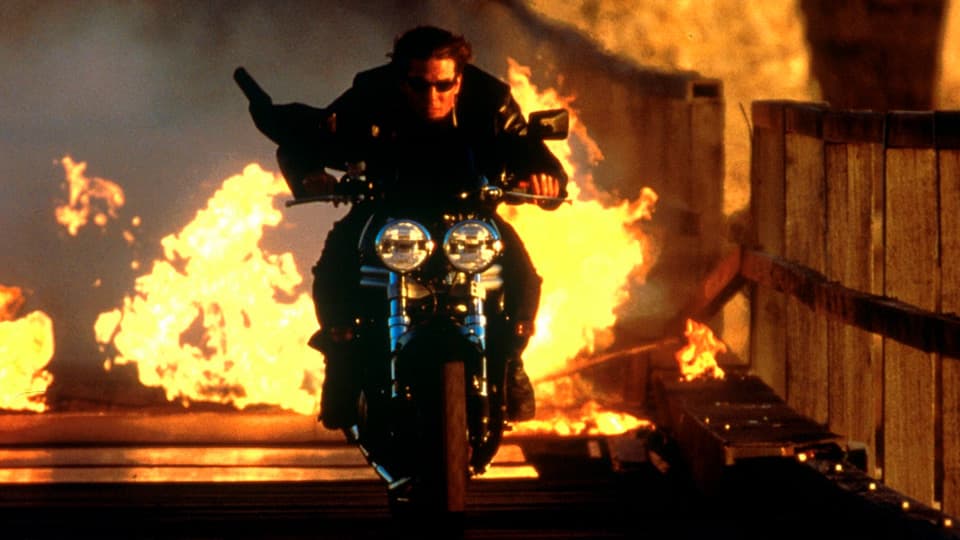
Mission: Impossible (1996) - Read, Study & Download the Screenplay
The mission is a trap, the team is dead, and Ethan Hunt has to become exactly what the CIA thinks he is to prove that he isn't.
Mission: Impossible begins with Ethan Hunt already considering whether he wants to remain in the intelligence business. Then a seemingly routine IMF operation in Prague collapses catastrophically: members of Ethan's team are killed one after another, a highly sensitive intelligence list disappears, and Ethan discovers that the mission itself was designed to expose a mole. With suspicion falling directly on him, Ethan goes underground and begins searching for the mysterious operative known as Job. His solution is wonderfully dangerous: assemble a team of disavowed agents, steal the real NOC list from inside CIA headquarters, and use it as bait to draw the actual traitor into the open.
For writers and film students, David Koepp's March 14, 1995 draft is an especially useful study in controlled information, paranoia, reversals, heist construction, and audience identification. Ethan spends much of the story acting on incomplete information, and the screenplay repeatedly encourages us to make the same assumptions he does. Characters move from ally to suspect, victim to conspirator, hunter to hunted. Even the celebrated Langley break-in works by the same principle: first establish exactly what can go wrong, then make the audience watch Ethan move through those rules one breath, sound, temperature change, and drop of sweat at a time.
Ready to accept the original mission? Check out the Study Notes just below. Major story, ending, and draft-specific spoilers ahead. When you're ready, download the Mission: Impossible (1996) screenplay.
Mission: Impossible Study Notes
What writers and film students can learn from this screenplay
Mission: Impossible is useful to study because its suspense depends less on hiding information from the audience than on controlling what that information appears to mean. Ethan watches his team die in Prague and naturally concludes that the operation has been compromised. Kittredge reveals that the operation was actually a mole hunt and naturally concludes that Ethan is responsible. Ethan discovers that Claire survived and must decide whether that makes her an ally or another piece of the trap. Jim Phelps eventually returns from the dead with an explanation that initially appears to solve the mystery before becoming the final piece that exposes it. Again and again, the facts remain visible while their meaning changes.
Craft Focus
- Align the audience with the protagonist's knowledge: The screenplay rarely gives us a comfortable omniscient view of the conspiracy. We experience Prague largely as Ethan does, so his confusion becomes our confusion and his suspicions become dramatically persuasive.
- Turn innocence into criminal behavior: Ethan's central problem creates a terrific paradox. To prove he did not betray the IMF, he must recruit disavowed operatives, negotiate with an arms broker, infiltrate CIA headquarters, and steal the very intelligence file everyone believes he wanted in the first place.
- Make every ally provisional: Claire, Luther, Krieger, Kittredge, Max, and eventually Jim Phelps occupy different positions on Ethan's trust map. The screenplay keeps asking not simply who can help Ethan, but what each person wants from him and what information they possess.
- Build a heist from rules before action: The Langley computer room establishes sound, pressure, and temperature sensitivities before Ethan enters it. Once those restrictions are understood, tiny physical events become suspenseful. A bead of sweat can carry the dramatic weight of a gunshot.
- Use revelation to rewrite earlier scenes: Jim Phelps's return does more than introduce new information. It forces Ethan to reconsider the deaths in Prague, Job's identity, Claire's survival, Krieger's involvement, and the path that led him to the NOC list. A strong reveal changes the past as well as the future.
- Let the climax combine plot and relationship: The train sequence resolves several stories at once: Ethan's pursuit of Job, Phelps's betrayal, Claire's divided loyalty, Krieger's involvement, Max's transaction, and Kittredge's hunt. The action works because all of those threads arrive at the same physical location.
Questions for Writers
- Why does the screenplay establish Ethan's fatigue with IMF work before the Prague mission begins?
- How does Kittredge remain a convincing threat to Ethan without actually being the traitor Ethan is searching for?
- At what points does the screenplay give Ethan a correct fact but encourage him to draw the wrong conclusion from it?
- Why is stealing the real NOC list a stronger dramatic choice than simply having Ethan search for evidence that proves his innocence?
- How does the Langley sequence create suspense by limiting what Ethan can do rather than increasing the number of threats around him?
- What does Claire's survival add to Ethan's investigation? How does her presence complicate the distinction between emotional trust and operational trust?
- How does Phelps's reappearance initially relieve Ethan before gradually becoming evidence against him?
- This draft allows Claire to survive the train confrontation and face arrest afterward. How does that choice affect the emotional meaning of Ethan's victory?
While reading, track each major turn through fact, assumption, action, reversal, reinterpretation. Write down what Ethan actually knows, then separately write down what he believes that information means. Watch how those two columns drift apart. The Prague operation, Kittredge's mole hunt, Claire's return, the messages from Job, the Langley theft, and Jim Phelps's resurrection all work because a fact that once supported one explanation suddenly supports another. Mission: Impossible is a useful reminder that a good espionage twist does not necessarily require withholding the truth. Sometimes the better trick is putting the truth directly in front of the audience and teaching them to read it incorrectly.
Looking for the screenplay? Jump to the download button.
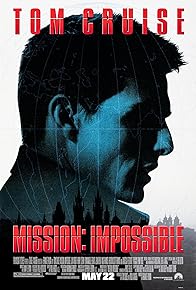
Mission: Impossible (1996)
Ethan Hunt is a secret agent framed for the deaths of his espionage team. Fleeing from government assassins, breaking into the CIA's most impenetrable vault, clinging to the roof of a speeding bullet train, Hunt races like a burning fuse to stay one step ahead of his pursuers... and draw one step closer to discovering the shocking truth.
![PREVIEW: Mission: Impossible (1996) screenplay - Title Page [v.1995.03.14]](https://8flix.com/wp-content/uploads/2026/10/Mission-Impossible-1996-by-David-Koepp-1995.03.14_Page_001-scaled.png "PREVIEW: Mission: Impossible (1996) screenplay - Title Page [v.1995.03.14]")
![PREVIEW: Mission: Impossible (1996) screenplay - Page 1 [v.1995.03.14]](https://8flix.com/wp-content/uploads/2026/10/Mission-Impossible-1996-by-David-Koepp-1995.03.14_Page_002-scaled.png "PREVIEW: Mission: Impossible (1996) screenplay - Page 1 [v.1995.03.14]")
![PREVIEW: Mission: Impossible (1996) screenplay - Page 2 [v.1995.03.14]](https://8flix.com/wp-content/uploads/2026/10/Mission-Impossible-1996-by-David-Koepp-1995.03.14_Page_003-scaled.png "PREVIEW: Mission: Impossible (1996) screenplay - Page 2 [v.1995.03.14]")
Reading is open to everyone. A free account is only required to download so we can protect the library and respect rights-holder requests. Already registered? Log in and you’re set.
Read and Watch
Compare the script and movie together with 8FLiX and JustWatch.
Now that you have the screenplay, stream Mission: Impossible and compare. We've partnered with JustWatch so you can make that happen.
Looking For Something?
If you can't find what you need, send us an email.
Looking for a specific movie or TV script that isn't listed? Let us know. 8FLiX has thousands of scripts, and not all of them are indexed yet. We’re steadily adding more, but if you’d rather not wait for the catalog to catch up, send us an email. You may still have to wait, but it’ll usually be days, not geological time.