Goodfellas (1990) — Read, Study & Download the Screenplay
A gangster drama about seduction, status, violence, betrayal, and the long fall from neighborhood royalty to witness protection.
The Goodfellas screenplay follows Henry Hill from his teenage fascination with the wiseguys across the street to his rise inside Paulie Cicero’s world of scores, favors, violence, money, and fear. With Jimmy Conway and Tommy DeVito at his side, Henry learns the rules of the life, enjoys its privileges, ignores its warnings, and eventually discovers that the same system that made him feel untouchable can turn on him without blinking.
For writers and film students, this screenplay is useful because it shows how voiceover, memory, rhythm, and criminal procedure can make corruption feel thrilling before the bill comes due. Study how Nicholas Pileggi and Martin Scorsese build Henry’s point of view through childhood awe, social-club rituals, freeze-frame emphasis, escalating violence, Karen’s perspective, the Billy Batts murder, the airport scores, drug paranoia, and the collapse of trust. It is gangster storytelling as acceleration sickness, where glamour and rot share the same table.
Ready to get to work? Check out the Study Notes just below. When you're ready, download the Goodfellas screenplay.
Goodfellas Study Notes
What writers and film students can learn from this screenplay
The Goodfellas screenplay is useful to study because it turns biography into propulsion. The script by Nicholas Pileggi and Martin Scorsese begins with murder in progress, then slams into Henry Hill’s famous childhood desire to be a gangster. That structure tells the audience exactly how to watch the film: not as a mystery about whether the life is violent, but as a seduction about why someone would choose it anyway. Henry’s narration makes the world feel glamorous, funny, efficient, and intimate, while the scenes keep showing the cost underneath: beatings, favors, bodies, debt, fear, and loyalty that lasts only until survival gets a better offer. The script’s genius is velocity with rot inside it. By the time Henry understands the trap, the audience has already enjoyed the ride.
Craft Focus
- Voiceover as seduction: Henry’s narration does not merely explain events. It recruits the audience into his worldview, making status, access, money, and danger feel intoxicating before the consequences fully arrive.
- Opening with consequence: The Billy Batts trunk sequence gives the story blood on its hands before Henry’s childhood nostalgia begins, creating tension between charm and brutality from the first pages.
- Procedural detail as world-building: Cabstands, social clubs, airport theft, tribute, stolen goods, lawyers, cops, and family dinners make the criminal system feel lived-in and operational.
- Escalation through instability: Tommy’s temper, Jimmy’s greed, Henry’s appetite, Karen’s fear, and Paulie’s rules keep tightening the story until friendship becomes threat management.
- Collapse of glamour: The script gradually shifts from privilege and access to paranoia, drugs, surveillance, betrayal, and witness protection, turning the life Henry worshipped into a shrinking room.
Questions for Writers
- How does the Billy Batts opening change the way we experience Henry’s nostalgic voiceover immediately afterward?
- Why does young Henry’s attraction to the cabstand feel emotionally understandable, even when the audience knows the world is corrupt?
- How do freeze frames, voiceover, and quick scene fragments create the feeling of memory rather than ordinary chronology?
- Where does the screenplay use everyday domestic detail, especially food, mothers, wives, kitchens, and restaurants, to make violence more disturbing?
- How does Karen’s perspective widen the story beyond Henry’s self-mythology?
- Why does Henry’s final punishment feel worse to him than prison: becoming ordinary?
While reading, pay attention to how Goodfellas controls sympathy without cleaning anyone up. The screenplay lets Henry be funny, observant, frightened, proud, and morally bankrupt, sometimes in the same paragraph. It lets the life look thrilling because that is how Henry experienced it, but it keeps planting evidence against him: the body in the trunk, Spider on the floor, Karen trapped between fear and fascination, Jimmy measuring everyone as a liability, and Paulie’s protection becoming another kind of ownership. The craft lesson is sharp as a razor blade in a garlic clove: point of view can seduce, but structure should know the truth.
Looking for the screenplay? Jump to the download button.
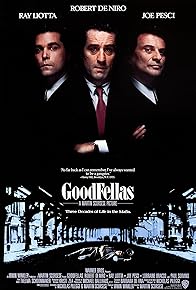
Goodfellas (1990)
The story of Henry Hill and his life in the mafia, covering his relationship with his wife Karen and his mob partners Jimmy Conway and Tommy DeVito.
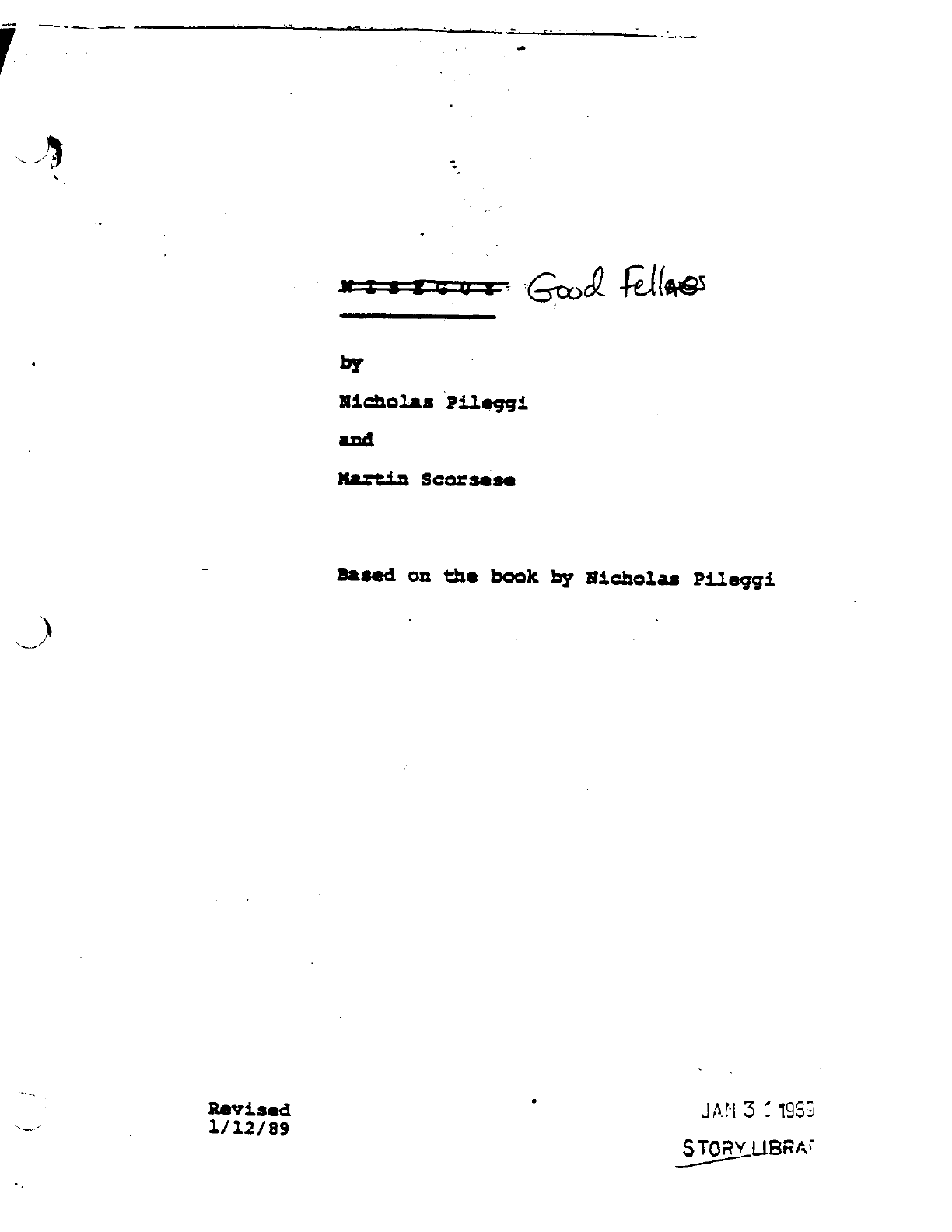
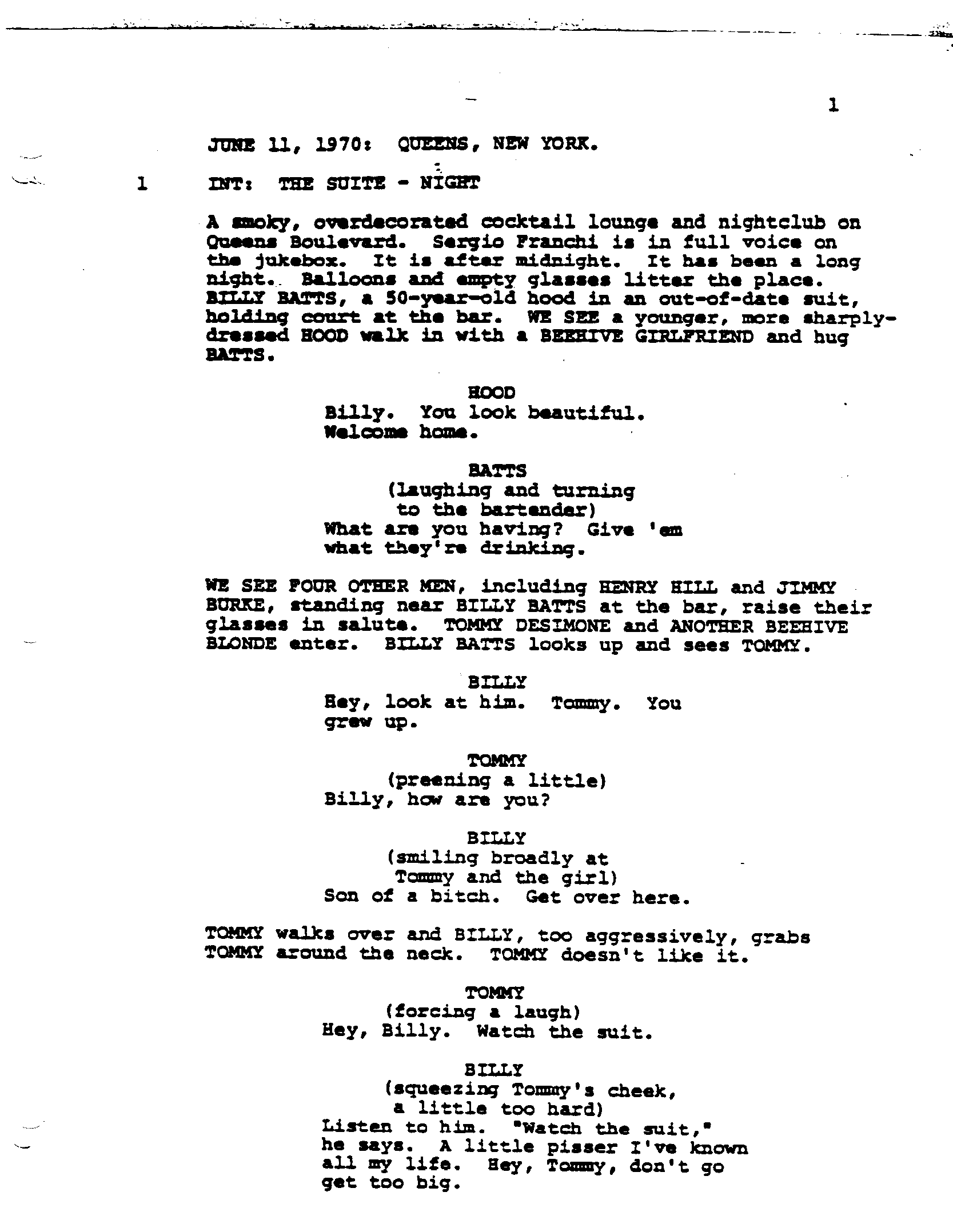
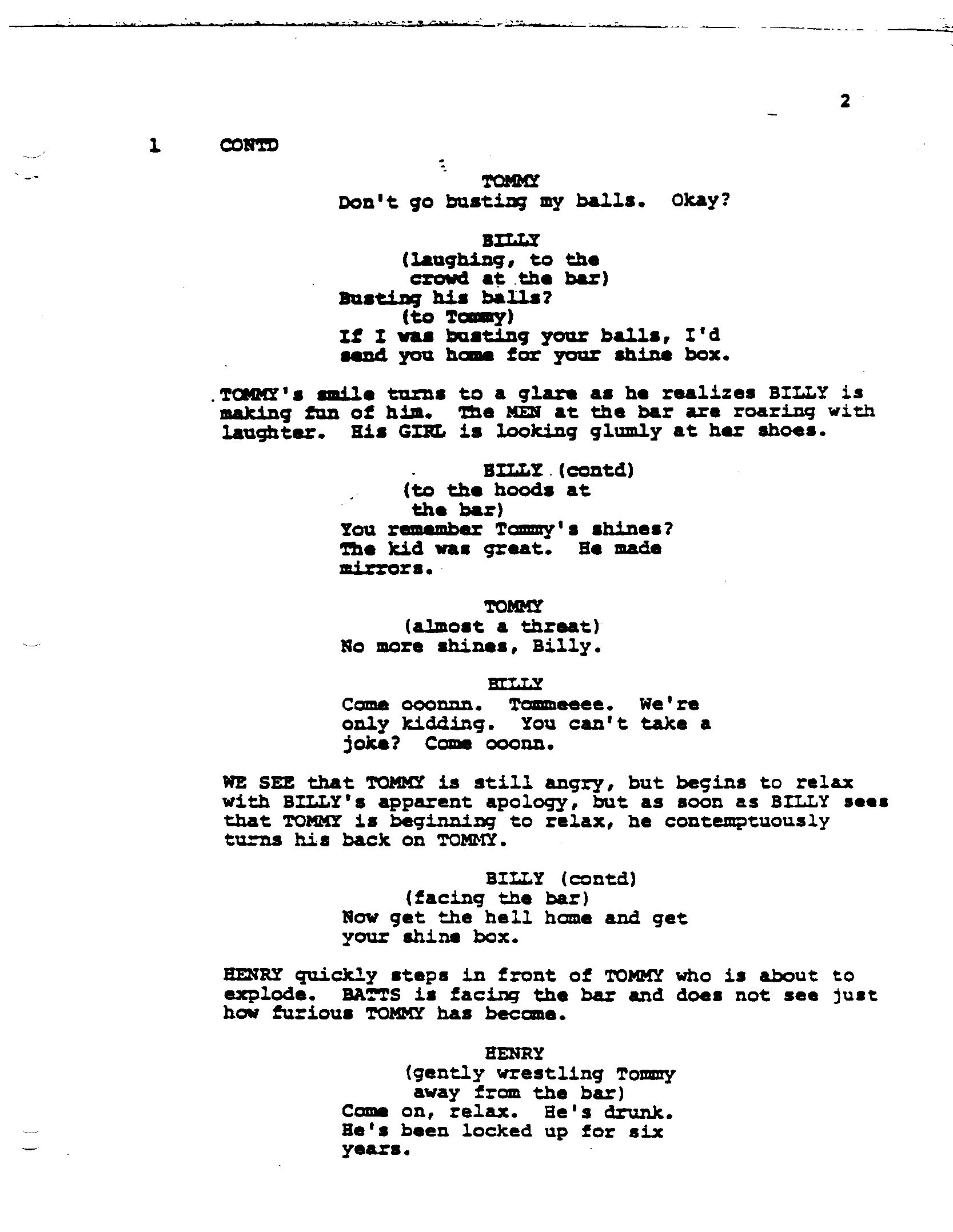
Screenplay download
Reading is open to everyone. A free account is only required to download so we can protect the library and respect rights-holder requests. Already registered? Log in and you’re set.
Read and Watch
Compare the script and movie together with 8FLiX and JustWatch.
Now that you have the screenplay, stream Goodfellas and compare. We've partnered with JustWatch so you can make that happen.
Looking For Something?
If you can't find what you need, send us an email.
Looking for a specific movie or TV script that isn't listed? Let us know. 8FLiX has thousands of scripts, and not all of them are indexed yet. We’re steadily adding more, but if you’d rather not wait for the catalog to catch up, send us an email. You may still have to wait, but it’ll usually be days, not geological time.