Toy Story 4 (2019) — Read, Study & Download the Screenplay
A bittersweet animated road adventure about purpose, lost toys, second chances, and Woody learning that loyalty can change shape without disappearing.
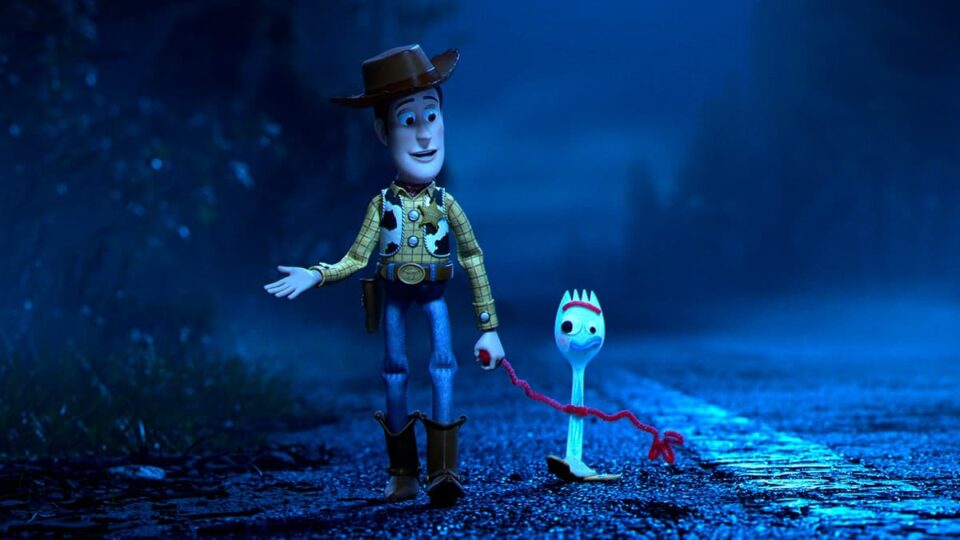
The Toy Story 4 screenplay follows Woody after Andy has passed him on to Bonnie, a child who loves her toys but no longer reaches for him the way Andy once did. When Bonnie creates Forky, a nervous little spork who believes he belongs in the trash, Woody gives himself a new mission: protect Forky at all costs because Forky has become essential to Bonnie’s first steps toward kindergarten. But a family road trip, an antique store, a carnival, and the return of Bo Peep force Woody to confront a harder question than rescue: what is a toy supposed to do when the old job is already over?
For writers and film students, this screenplay is useful because it takes a trilogy that already delivered a perfect goodbye and asks what comes after purpose. Study how the script uses Forky, Bo Peep, Gabby Gabby, Duke Caboom, Ducky and Bunny, Bonnie’s backpack, the antique store, the carnival, and Woody’s pull-string to explore identity after usefulness. The story is not simply about getting back to a kid. It is about realizing that devotion can become fear, that being lost can become freedom, and that sometimes the bravest thing a cowboy can do is stop guarding the room and ride toward the unknown.
Ready to get to work? Check out the Study Notes just below. When you're ready, download the Toy Story 4 (2019) screenplay.
Toy Story 4 Study Notes
What writers and film students can learn from this screenplay
The Toy Story 4 screenplay is useful to study because it builds a sequel around the uncomfortable aftermath of a beautiful ending. Toy Story 3 resolves Woody’s loyalty to Andy by passing him to Bonnie, but Andrew Stanton and Stephany Folsom’s screenplay asks what happens when that transfer does not restore Woody’s old identity. Bonnie loves her toys, but Woody is no longer the center of the room. He is left in the closet, passed over during play, and quietly haunted by the fact that being useful used to be effortless. Forky gives him a mission again. This makes the story cleverer than a simple lost-toy adventure: Woody is not only rescuing Forky for Bonnie. He is rescuing the feeling of being necessary. Bo Peep, now a capable lost toy, challenges the belief that a toy’s purpose must belong to one child forever. Gabby Gabby mirrors Woody from another angle, desperate for a working voice box and the chance to be chosen. The screenplay’s big craft lesson is identity after vocation. Woody has spent three films defining himself by loyalty. This film asks whether loyalty is still noble when it becomes fear of letting go.
Craft Focus
- Sequel after closure: The screenplay follows a completed emotional trilogy by shifting the question from “How do we say goodbye?” to “Who are we after goodbye?”
- Purpose as conflict: Woody, Forky, Bo, and Gabby all struggle with what they are for. The script lets each character define usefulness differently.
- Forky as comic philosophy: Forky is funny because he believes he is trash, but his confusion gives the film a direct way to ask what makes something valuable.
- Bo Peep as thematic contrast: Bo is not a rejection of toy purpose. She is a widened version of it: mobile, resourceful, self-directed, and still committed to helping kids.
- Antique store as emotional maze: Second Chance Antiques externalizes stuckness, longing, display, repair, rejection, and the fear of being left on a shelf.
- Ending as transformation: Woody’s final choice works because it does not cancel his loyalty. It evolves it from serving one child to helping many.
Questions for Writers
- How does the rainy prologue with Bo Peep establish the emotional wound that returns later in the film?
- Why does Bonnie taking Woody’s badge and giving it to Jessie say more than a speech about replacement would?
- How does Forky turn Bonnie’s anxiety about kindergarten into a physical, comic, story-driving object?
- Where does Woody’s care for Forky become inseparable from Woody’s need to feel useful again?
- How does Bo Peep challenge Woody without becoming simply “right” and Woody simply “wrong”?
- Why is Gabby Gabby more interesting because her desire is emotionally understandable, even when her methods are frightening?
- How does the carnival setting allow lost toys, prizes, rescue missions, chance encounters, and new children to collide in one bright little chaos machine?
While reading, pay attention to how Toy Story 4 keeps redefining the word “lost.” Forky feels lost because he does not understand why he exists. Gabby feels lost because she has never belonged to a child. Bo is called lost, but she may be the freest toy in the story. Woody thinks he is not lost because he still has a kid, but the screenplay gradually reveals that he has been wandering inside an old definition of himself. That is the craft lesson tucked inside the spork, the pull-string, and the carnival lights: a character arc becomes richer when the word everyone fears turns out to contain the door they need.
Looking for the screenplay? Jump to the download button.
Toy Story 4 (2019)
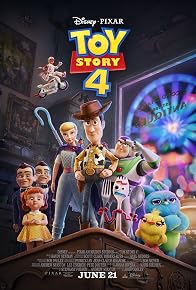
Woody has always been confident about his place in the world..and that his priority is taking care of his kid, whether that’s Andy or Bonnie. But when Bonnie adds a reluctant new toy called “Forky” to her room, a road trip adventure alongside old and new friends will show Woody how big the world can be for a toy.
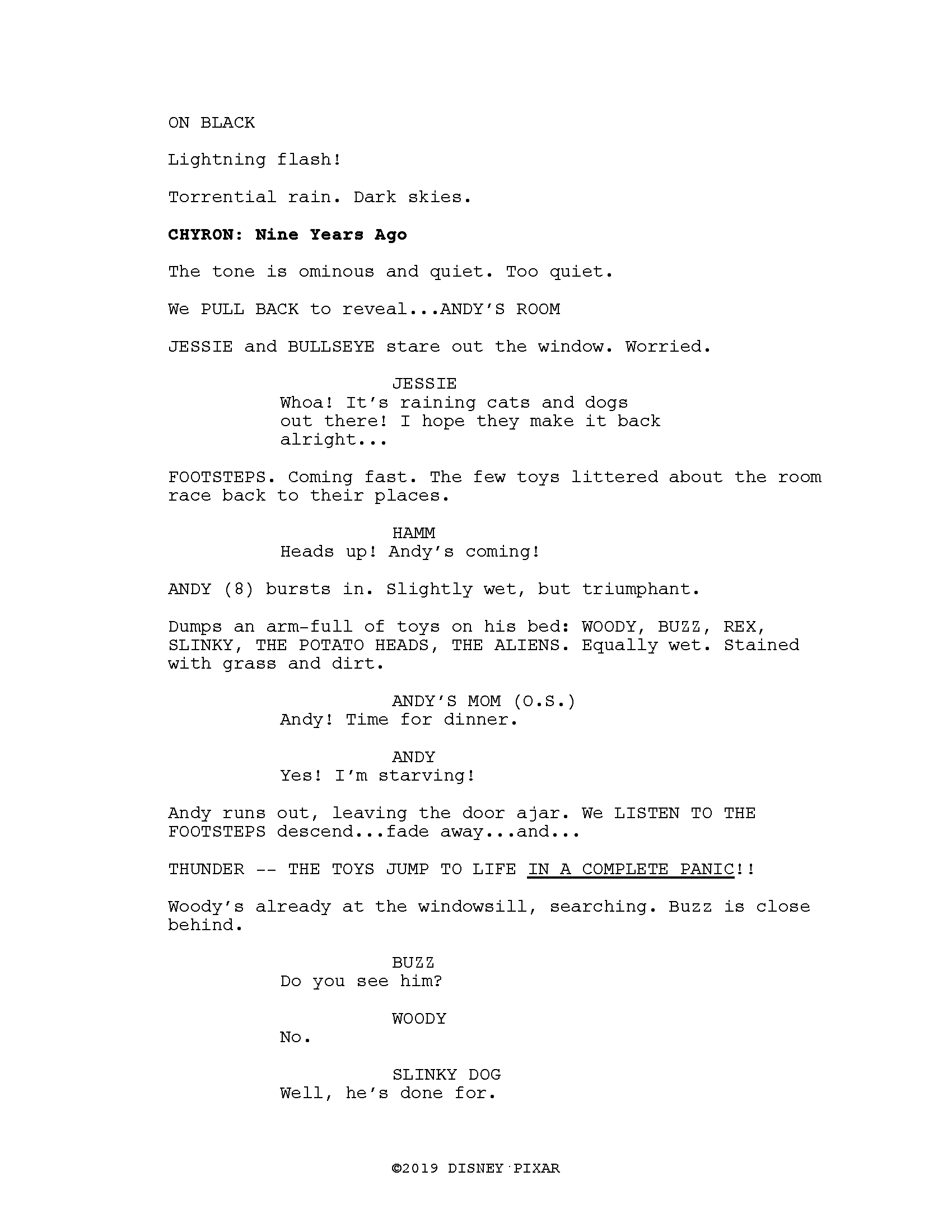
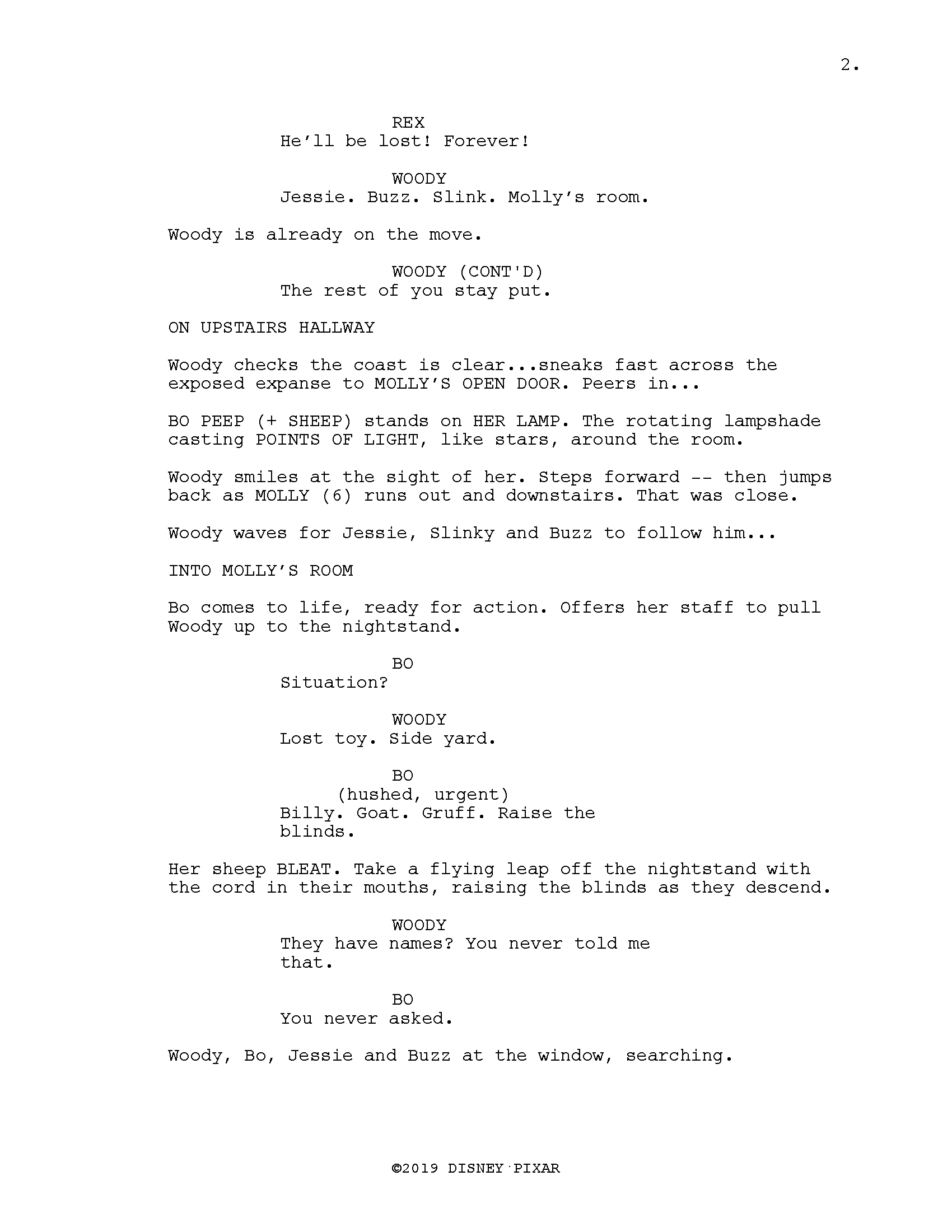
Screenplay download
Reading is open to everyone. A free account is only required to download so we can protect the library and respect rights-holder requests. Already registered? Log in and you’re set.
Read and Watch
Compare the script and movie together with 8FLiX and JustWatch.
Now that you have the screenplay, stream Toy Story 4 and compare. We've partnered with JustWatch so you can make that happen.
Looking For Something?
If you can't find what you need, send us an email.
Looking for a specific movie or TV script that isn't listed? Let us know. 8FLiX has thousands of scripts, and not all of them are indexed yet. We’re steadily adding more, but if you’d rather not wait for the catalog to catch up, send us an email. You may still have to wait, but it’ll usually be days, not geological time.