Toy Story (1995) — Read, Study & Download the Screenplay
A landmark animated adventure about jealousy, identity, friendship, and a favorite toy learning that love is not a limited resource.
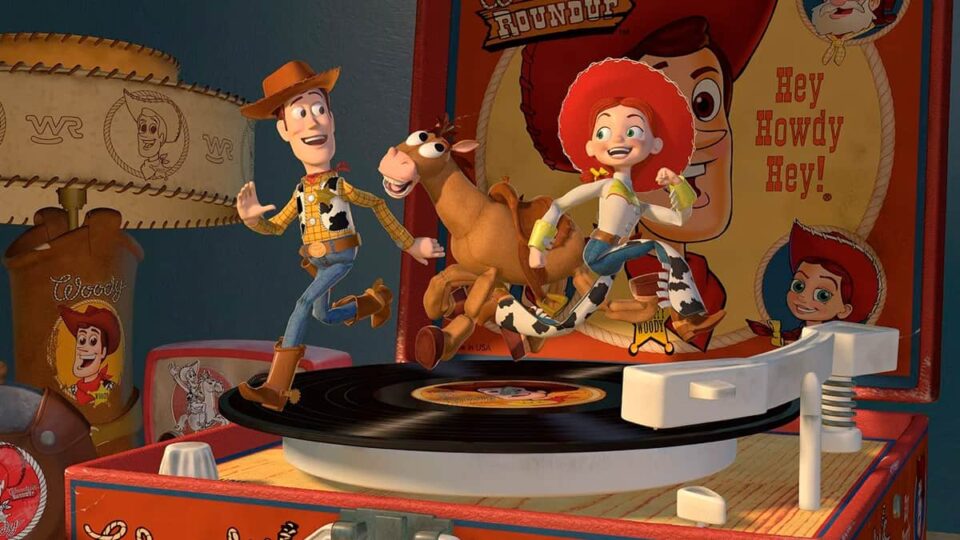
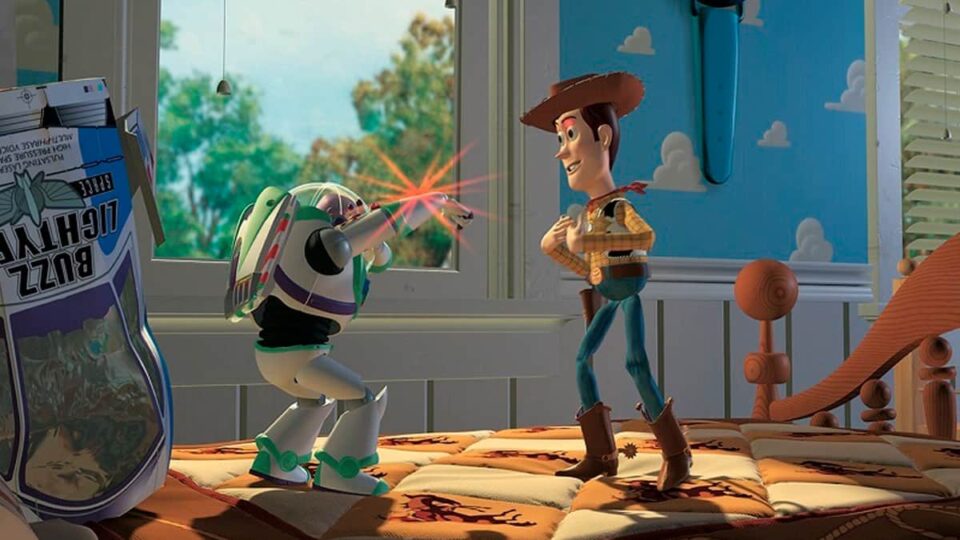
The Toy Story screenplay follows Woody, Andy’s trusted cowboy doll and the informal leader of the bedroom toys, whose entire world tilts when a flashy new space ranger named Buzz Lightyear arrives as a birthday present. Buzz does not know he is a toy, Andy adores him instantly, and Woody’s fear of being replaced sends the story tumbling from bedroom politics into lost-toy survival, Pizza Planet chaos, Sid’s house of horrors, and one of the cleanest buddy-comedy transformations in modern family storytelling.
For writers and film students, this final draft is essential because it turns an impossible premise into emotionally exact screenwriting. Study how the screenplay gives every toy a worldview, every set piece a character function, and every joke a pressure point. Woody’s problem is not that Buzz is better. Woody’s problem is that he believes love can only have one sheriff. Buzz’s problem is not that he is ridiculous. Buzz’s problem is that his identity collapses when fantasy meets evidence. The genius is in how the script makes both characters wrong, both sympathetic, and both necessary.
Ready to get to work? Check out the Study Notes just below. When you're ready, download the Toy Story (1995) screenplay.
Toy Story Study Notes
What writers and film students can learn from this screenplay
Toy Story is useful to study because it solves one of the hardest problems in fantasy writing: how to make a secret world feel funny, logical, emotional, and instantly legible. The screenplay opens inside Andy’s play imagination, then reveals that the toys have their own social order, anxieties, rituals, and workplace politics when humans leave the room. Woody begins as the confident favorite, running staff meetings, birthday surveillance, and morale management with sheriff-star authority. Then Buzz Lightyear arrives, and the story turns a child’s new present into an existential earthquake. Buzz threatens Woody’s status without meaning to, Woody responds from fear rather than malice, and the plot pushes both toys into the outside world, where their identities are stripped down. Woody must learn that leadership without generosity becomes possession. Buzz must learn that being “just a toy” is not a demotion, but a purpose. The craft magic is that every comic sequence carries emotional architecture: the birthday panic, the laser envy, Sid’s toy surgery, Buzz’s failed flight, the mutant toys’ repair scene, and the rocket chase all advance the same core idea. A toy’s worth is not measured by fantasy, novelty, or rank. It is measured by devotion.
Craft Focus
- Rules of the hidden world: The toys freeze around humans, organize themselves when alone, fear replacement, and treat being played with as both work and love.
- Jealousy as plot engine: Woody’s fear of losing Andy turns a small emotional wound into the story’s central disaster.
- Comic premise with real stakes: Buzz’s delusion is funny because he fully believes it, but it becomes moving once the truth breaks him.
- Buddy-comedy reversal: Woody and Buzz begin as rivals, become stranded together, and survive only by learning the other one’s value.
- Set pieces as character tests: The bedroom staff meeting, Pizza Planet, the claw machine, Sid’s room, and the moving van chase each force a new choice.
- Theme through objects: Andy’s name on a toy, Buzz’s wings, Woody’s pull-string, the rocket, and the moving boxes all carry emotional meaning, not just visual business.
Questions for Writers
- How does the opening play sequence introduce Andy, Woody, and the rules of the toy world before the larger plot begins?
- Why is birthday anxiety such a strong inciting pressure for characters who are technically objects?
- How does Buzz’s arrival threaten Woody emotionally before it threatens him practically?
- Where does the screenplay make Woody sympathetic even when his choices become selfish?
- How does Sid’s house transform from horror setting into a place where broken toys are misunderstood rather than monstrous?
- Why does Buzz’s realization that he cannot fly need to be painful rather than merely comic?
- How does the final rocket-and-moving-van sequence resolve both the external problem and Woody and Buzz’s emotional conflict?
While reading, pay attention to how Toy Story keeps the emotional math child-simple and adult-sharp. Woody wants to stay Andy’s favorite. Buzz wants to complete a mission that does not exist. Andy wants to love his toys without knowing they are fighting a miniature succession war under his roof. That is the craft lesson inside the plastic: high-concept stories work best when the fantasy rules are fresh, but the emotional rules are ancient. Everyone understands the terror of being replaced. Everyone understands the ache of discovering you are not who you thought you were. The screenplay just gives those feelings a cowboy hat, a space helmet, and a room full of witnesses pretending not to move.
Looking for the screenplay? Jump to the download button.
Toy Story (1995)
Led by Woody, Andy's toys live happily in his room until Andy's birthday brings Buzz Lightyear onto the scene. Afraid of losing his place in Andy's heart, Woody plots against Buzz. But when circumstances separate Buzz and Woody from their owner, the comically-mismatched duo eventually learn to put aside their differences, and they find themselves on a hilarious adventure-filled mission where the only way they can survive is to form an uneasy alliance.
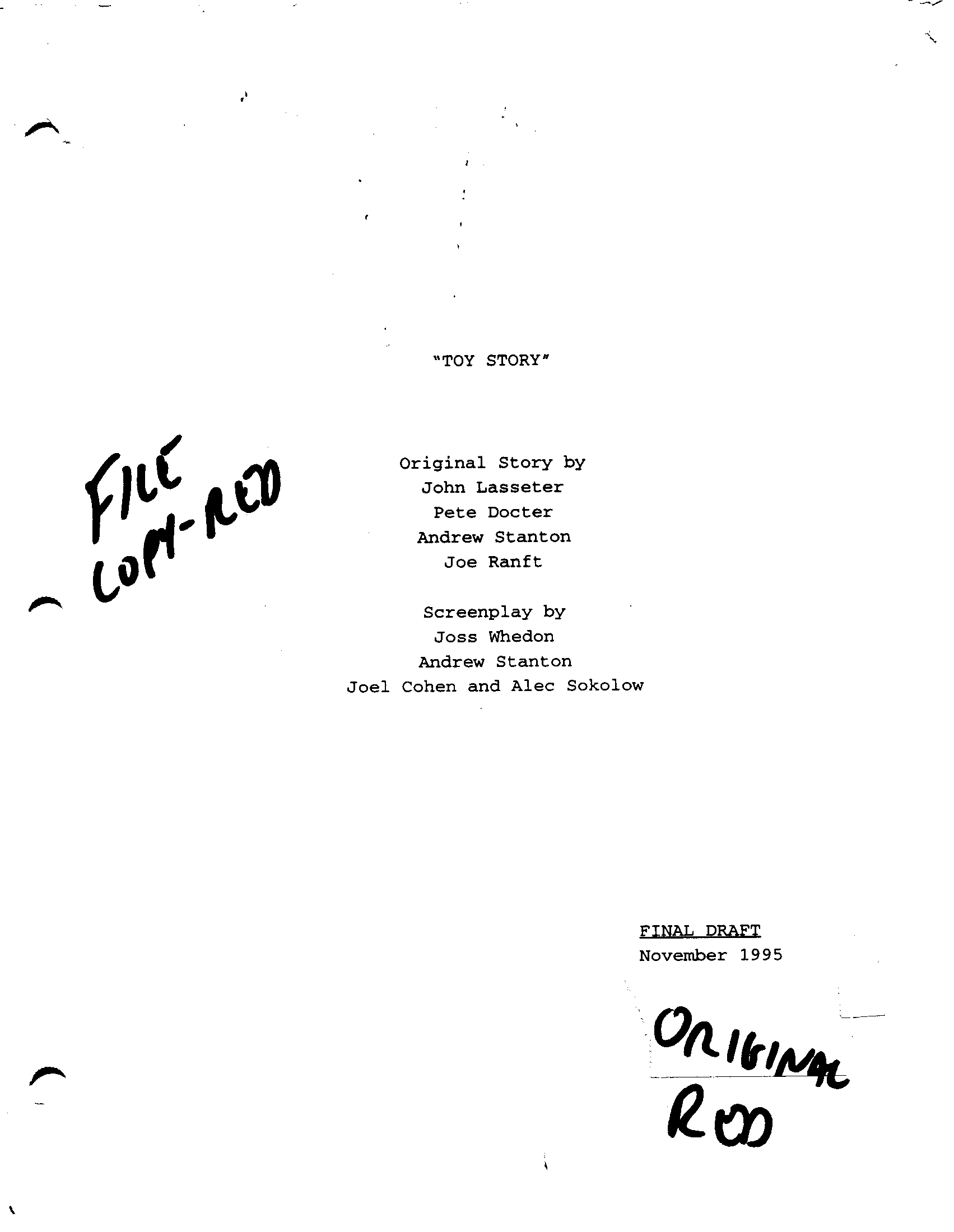
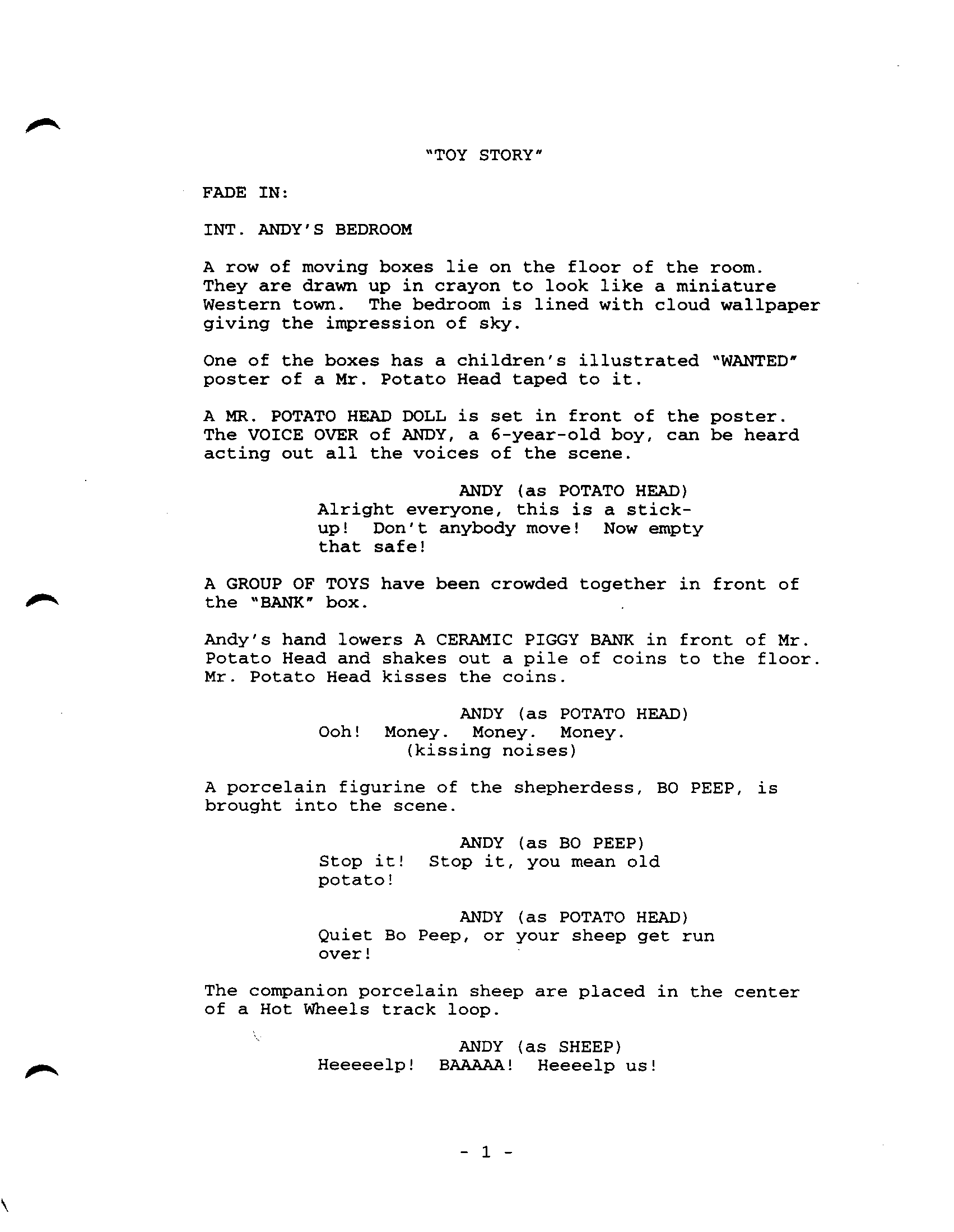
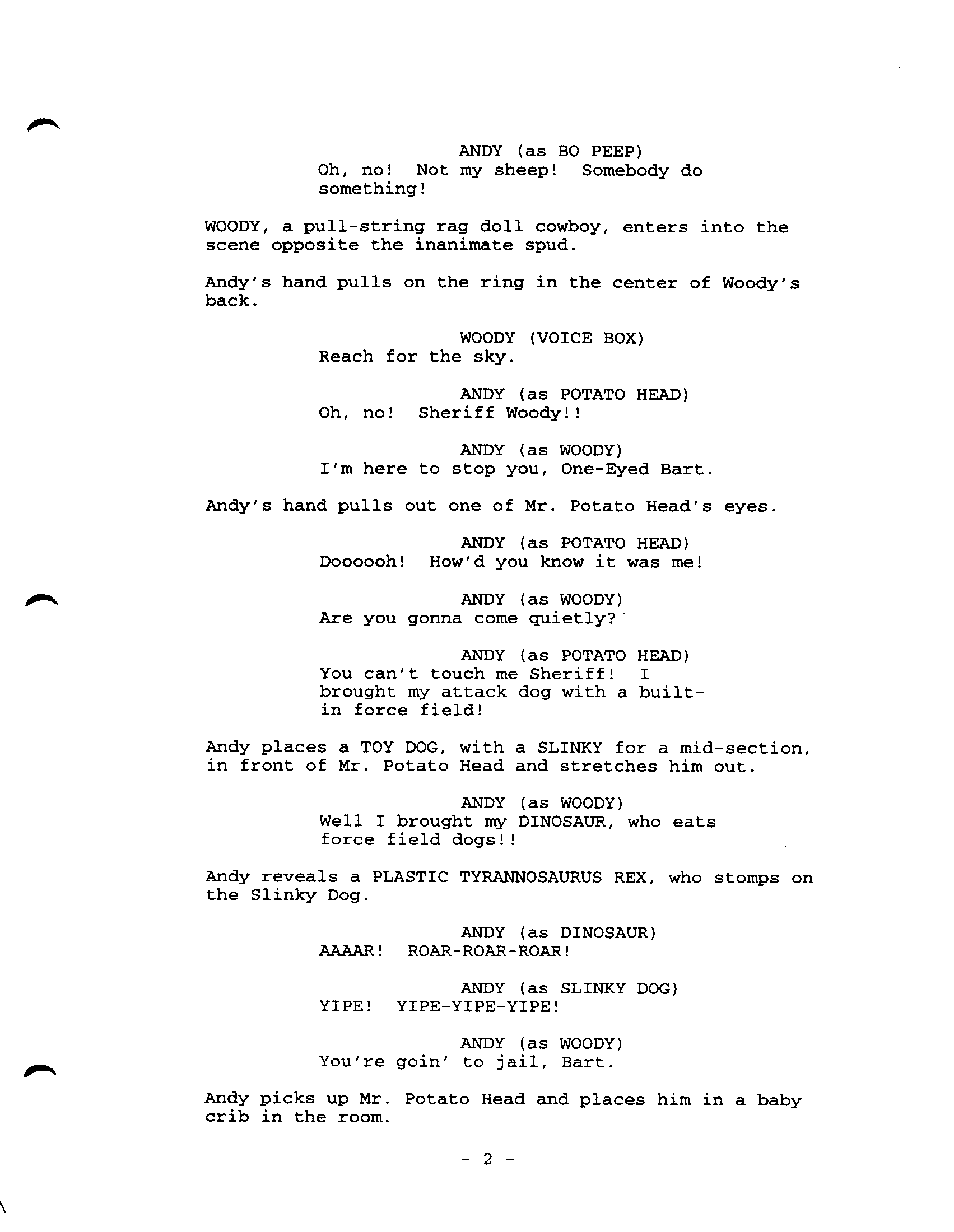
Screenplay download
Reading is open to everyone. A free account is only required to download so we can protect the library and respect rights-holder requests. Already registered? Log in and you’re set.
Read and Watch
Compare the script and movie together with 8FLiX and JustWatch.
Now that you have the screenplay, stream Toy Story and compare. We've partnered with JustWatch so you can make that happen.
Looking For Something?
If you can't find what you need, send us an email.
Looking for a specific movie or TV script that isn't listed? Let us know. 8FLiX has thousands of scripts, and not all of them are indexed yet. We’re steadily adding more, but if you’d rather not wait for the catalog to catch up, send us an email. You may still have to wait, but it’ll usually be days, not geological time.