
Inception (2010) — Read, Study & Download the Screenplay
A dream-heist thriller about guilt, architecture, buried ideas, and a thief trying to build his way back home through someone else’s subconscious.
The Inception screenplay follows Dom Cobb, an expert extractor who steals secrets from inside dreams, as he is offered the impossible job that could return him to his children: plant an idea in Robert Fischer’s mind so deeply that Fischer believes it is his own. To pull it off, Cobb assembles a team: Arthur the point man, Ariadne the architect, Eames the forger, Yusuf the chemist, and Saito the client riding along to verify the result. Their target is not a vault, a file, or a code. It is a feeling powerful enough to reshape a man’s life.
For writers and film students, Christopher Nolan’s screenplay is essential because it turns exposition into machinery. Study how the script teaches dream rules through set pieces: the spinning top, the kick, the loaded die, the Penrose stairs, the folding city, the projections, the sedative, and the stacked dream levels all become tools of suspense. This is a heist movie where every floor is emotional plumbing, every clock is running at a different speed, and the deepest safe belongs not to Fischer, but to Cobb himself.
Ready to get to work? Check out the Study Notes just below. When you're ready, download the Inception screenplay.
Inception Study Notes
What writers and film students can learn from this screenplay
Inception is useful to study because it makes a complicated premise feel like a physical job. Christopher Nolan begins with a man washed onto a beach, a spinning top, an old Saito, and the sense that the story is already buried several layers deep. Then the screenplay rewinds into a dream-theft operation that teaches the audience its rules through failure: Saito detects the wrong carpet, Mal sabotages the extraction, Nash’s architecture gives the game away, and Cobb’s guilt proves more dangerous than the mark. From there, the script becomes a clean heist engine wrapped around an unstable emotional core. The mission is to implant an idea in Fischer, but the real suspense comes from whether Cobb can stop living inside the idea he planted in Mal.
Craft Focus
- Exposition as demonstration: The screenplay explains dream-sharing through action, not lectures alone. The failed Saito job, Ariadne’s test, the folding Paris street, and the Penrose stairs make the rules visible.
- Heist structure with emotional stakes: Each team member has a function, but Cobb’s guilt keeps contaminating the plan. The external job and internal wound are locked together.
- Layered time pressure: The dream levels create different speeds of time, letting one van fall, one hotel lose gravity, one mountain fortress stage an assault, and one limbo story unfold in parallel.
- Architecture as psychology: Ariadne does not simply design spaces. She designs controlled emotional traps where Fischer can discover a feeling that appears to come from himself.
- Totems and uncertainty: The spinning top, Arthur’s loaded die, and Ariadne’s private object turn reality testing into character work. The tools matter because everyone in the film is vulnerable to wanting the wrong world to be true.
Questions for Writers
- How does the opening old-Saito frame create mystery before the audience understands dream levels, limbo, or inception?
- Why does the “idea as parasite” speech work as both premise explanation and warning label?
- How does Ariadne function as the audience’s guide without becoming passive?
- Where does the screenplay make the heist goal emotionally specific, especially through Fischer’s relationship with his father?
- How does Mal operate as antagonist, memory, grief, and Cobb’s self-punishment all at once?
- Why does the final spinning top remain powerful even if the emotional ending has already landed?
While reading, pay attention to how Inception keeps translating abstraction into playable action. An idea becomes a seed. A memory becomes a room. Guilt becomes a projection. A kick becomes a deadline. A maze becomes protection. That is the craft lesson inside the dream-share briefcase: high-concept writing becomes audience-friendly when every rule creates a problem characters can solve, exploit, or tragically misunderstand. The dream may be infinite, but the scene still needs a locked door, a ticking clock, and someone desperate enough to go one level deeper.
Looking for the screenplay? Jump to the download button.
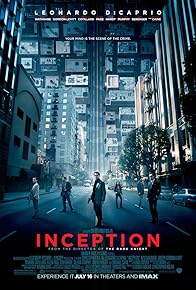
Inception (2010)
A thief who steals corporate secrets through the use of dream-sharing technology is given the inverse task of planting an idea into the mind of a CEO, but his tragic past may doom the project and his team to disaster.
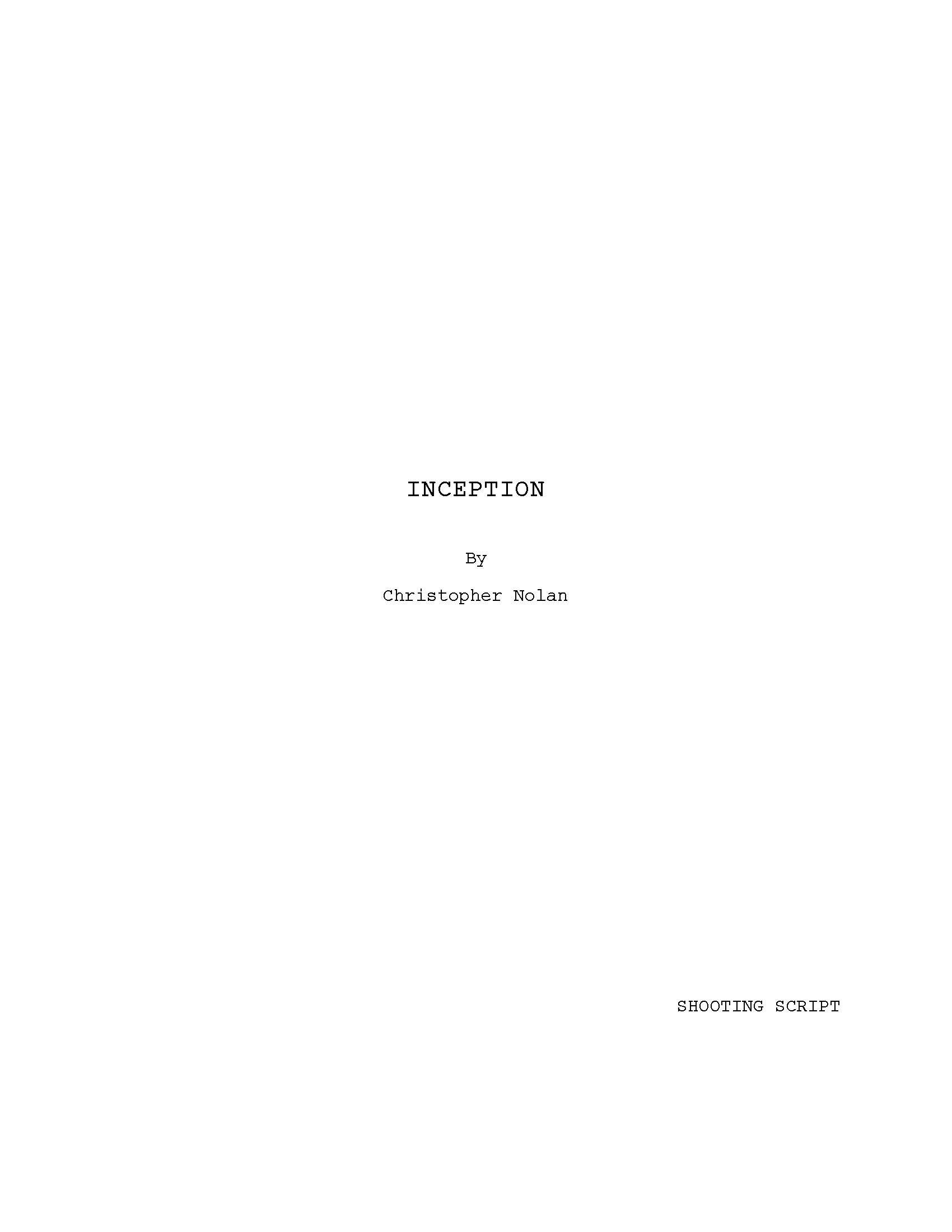
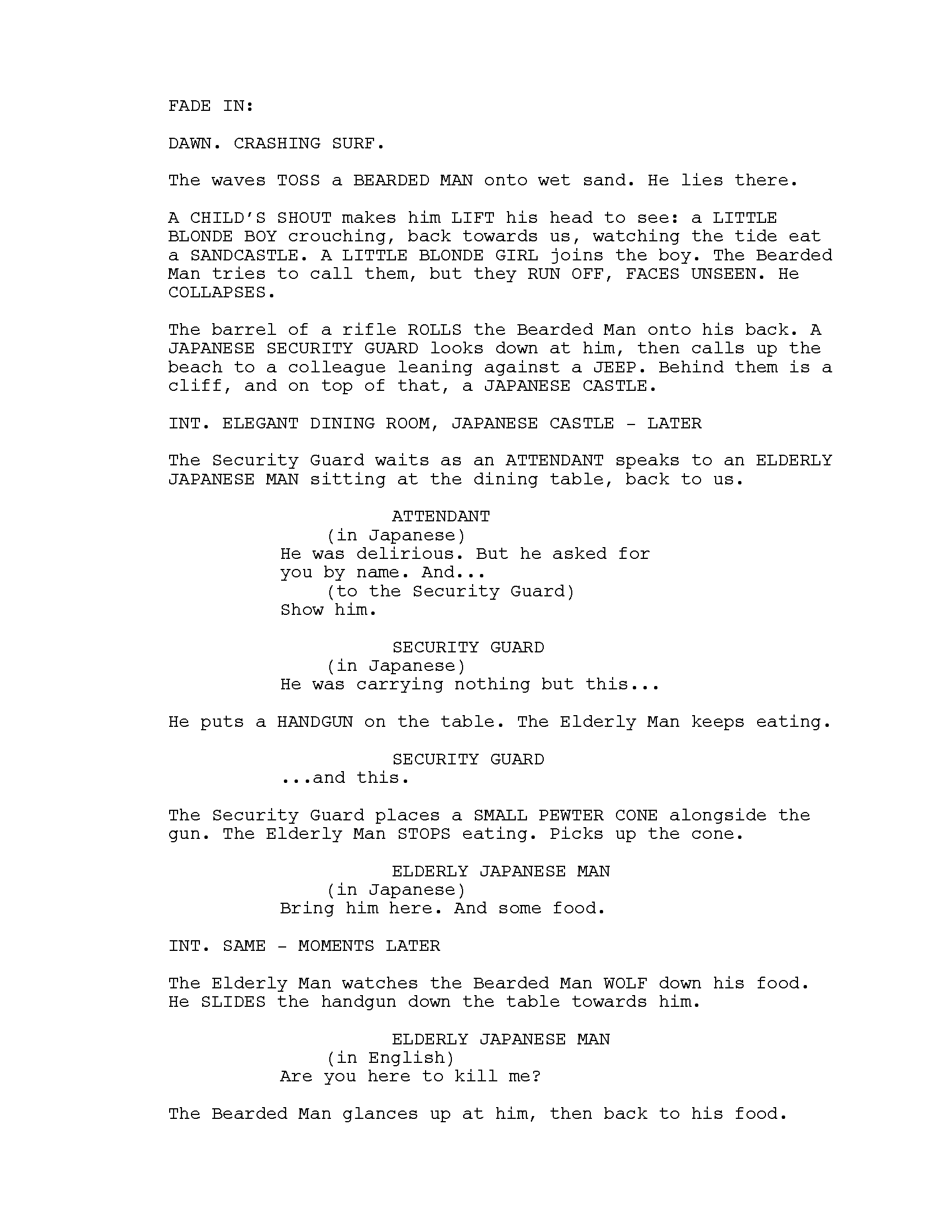
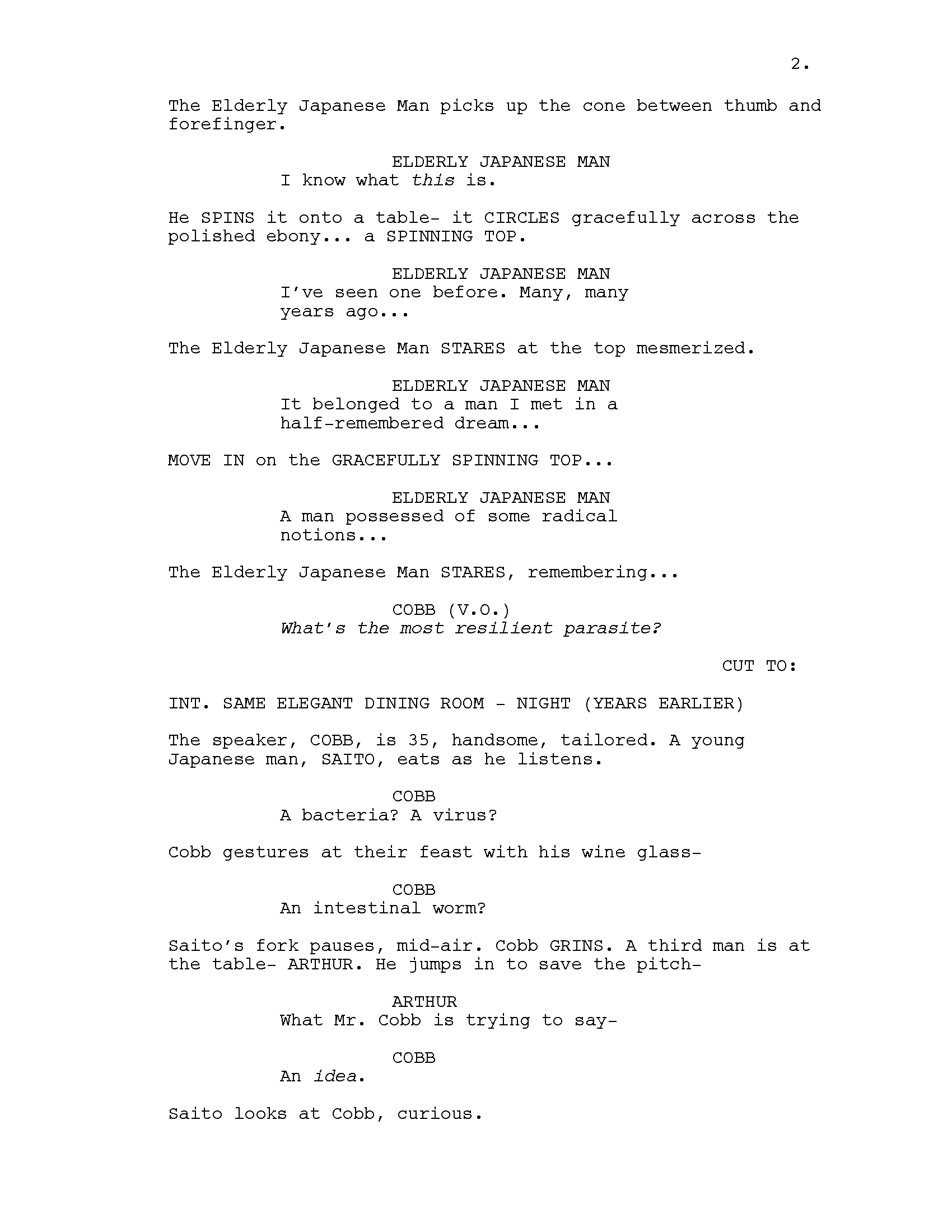
Screenplay download
Reading is open to everyone. A free account is only required to download so we can protect the library and respect rights-holder requests. Already registered? Log in and you’re set.
Read and Watch
Compare the script and movie together with 8FLiX and JustWatch.
Now that you have the screenplay, stream Inception and compare. We've partnered with JustWatch so you can make that happen.
Looking For Something?
If you can't find what you need, send us an email.
Looking for a specific movie or TV script that isn't listed? Let us know. 8FLiX has thousands of scripts, and not all of them are indexed yet. We’re steadily adding more, but if you’d rather not wait for the catalog to catch up, send us an email. You may still have to wait, but it’ll usually be days, not geological time.