The Godfather: Part II (1974) — Read, Study & Download the Screenplay
A sequel that turns family legacy into a tragic double exposure.
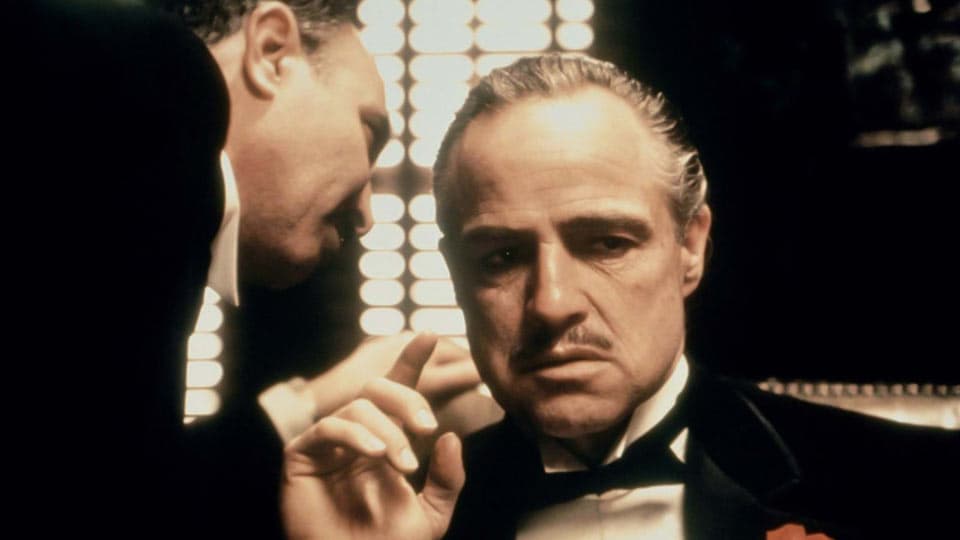
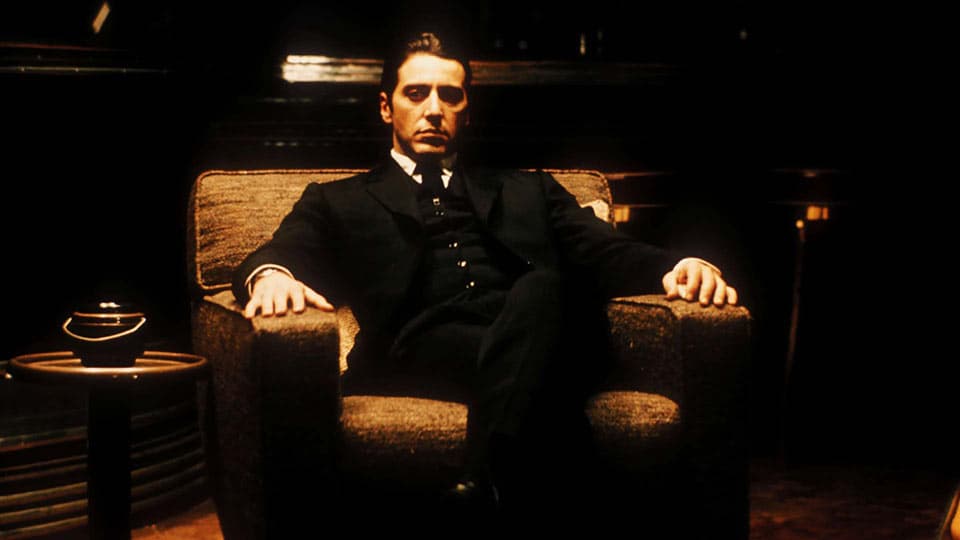
The Godfather Part II is a legit masterclass in parallel structure. The screenplay moves between Vito Corleone’s immigrant origins and Michael Corleone’s expanding empire, using the past and present to measure what has been gained, lost, inherited, and corrupted. Young Vito rises by protecting his family and community. Michael rules by control, suspicion, and isolation.
For writers, this screenplay is essential study material for dual timelines, character contrast, generational theme, restrained dialogue, and the rare sequel that deepens the original instead of merely extending it.
Ready to get to work? Check out the Study Notes just below. When you're ready, download The Godfather: Part II screenplay.
The Godfather Part II Study Notes
What writers and film students can learn from this screenplay
One of the greatest films of all time, The Godfather Part II screenplay is useful to study because it uses two timelines to tell one moral story. Young Vito Corleone’s rise in early twentieth-century New York is placed against Michael Corleone’s rule in 1958, creating a powerful contrast between family built from poverty and family damaged by power. The screenplay does not simply continue the first film. It interrogates it. Every echo between father and son makes Michael’s success feel colder, lonelier, and more tragic.
Craft Focus
- Parallel structure: The screenplay cuts between Vito’s origin and Michael’s reign, letting the audience compare two men without needing anyone to explain the comparison directly.
- Character contrast: Vito gains power by becoming necessary to others. Michael keeps power by making others afraid of him. The difference turns legacy into tragedy.
- Family as political system: Communions, parties, marriages, favors, betrayals, and business meetings all reveal how private family life and public power have become inseparable.
- Silence and withholding: Michael’s emotional life is often expressed through pauses, exclusions, closed doors, and who is allowed into the room. The script makes absence feel active.
Questions for Writers
- How does the screenplay use Vito’s childhood and immigration story to deepen the meaning of Michael’s present-day choices?
- Where does Michael mistake control for protection?
- How do family ceremonies, especially Anthony’s First Communion, function as public image, emotional contrast, and business cover?
- How does the script make betrayal feel inevitable without making the characters feel mechanically plotted?
While reading, pay attention to how The Godfather Part II builds meaning through echoes. A child named Vito loses his family in Sicily. Decades later, Michael stands surrounded by family and still becomes increasingly alone. Vito’s story moves from vulnerability toward belonging; Michael’s moves from authority toward isolation. That is the craft trick: the sequel does not just ask what happens next. It asks what the original victory cost.
Looking for the screenplay? Jump to the download button.
The Godfather: Part II (1974)
Follows Michael Corleone, now in his 60s, as he seeks to free his family from crime and find a suitable successor to his empire.
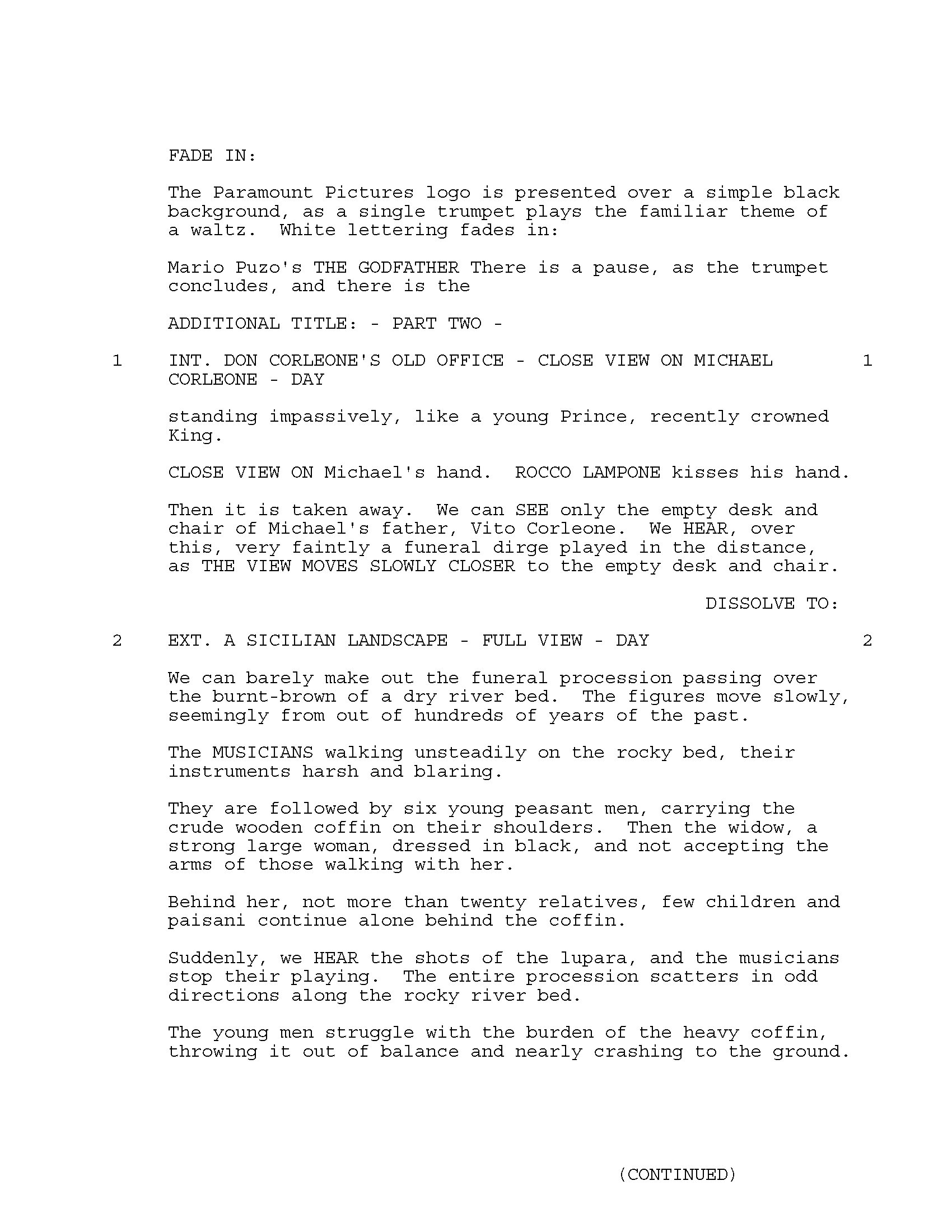
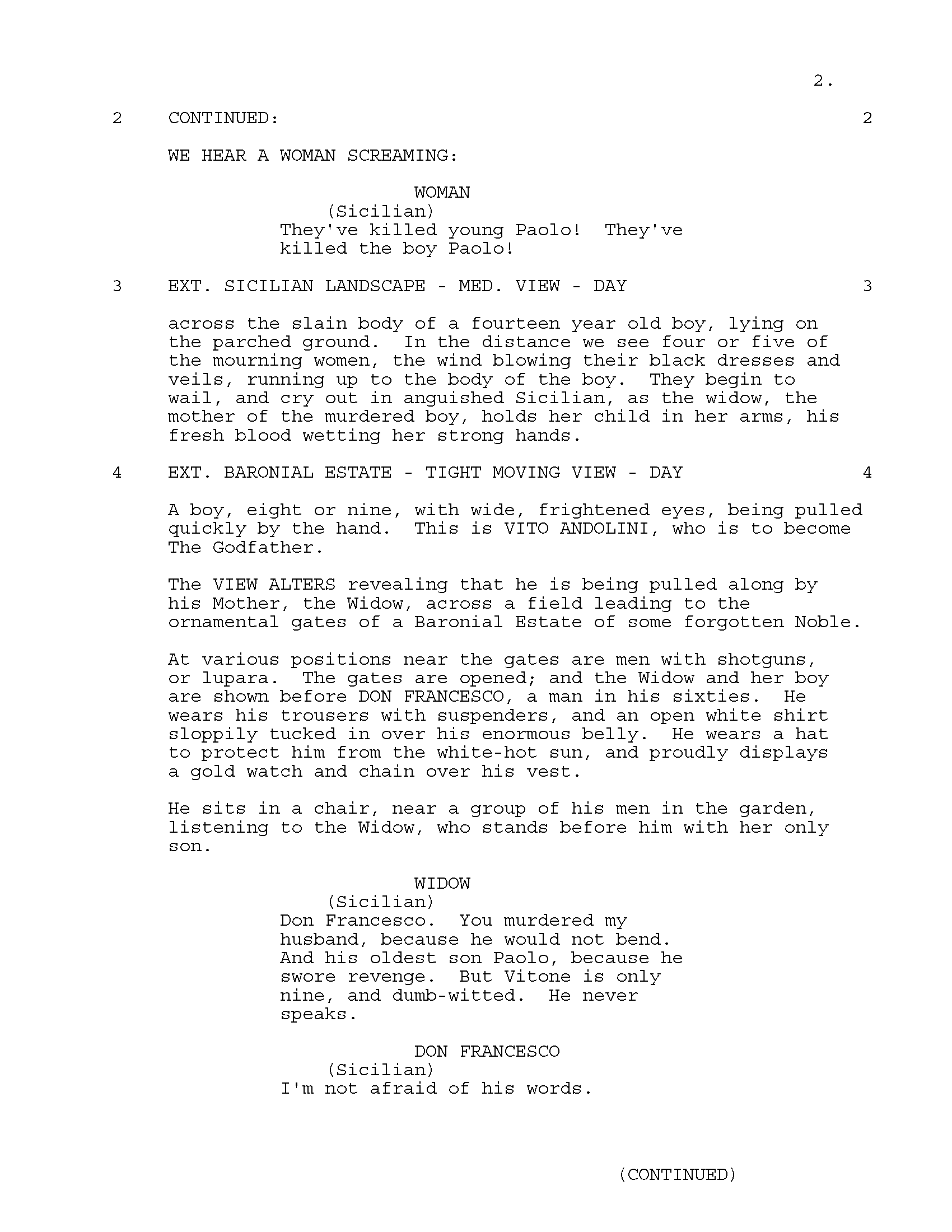
Screenplay download
Reading is open to everyone. A free account is only required to download so we can protect the library and respect rights-holder requests. Already registered? Log in and you’re set.
Read and Watch
Compare the script and movie together with 8FLiX and JustWatch.
Now that you have the screenplay, stream The Godfather: Part II and compare. We've partnered with JustWatch so you can make that happen.
Looking For Something?
If you can't find what you need, send us an email.
Looking for a specific movie or TV script that isn't listed? Let us know. 8FLiX has thousands of scripts, and not all of them are indexed yet. We’re steadily adding more, but if you’d rather not wait for the catalog to catch up, send us an email. You may still have to wait, but it’ll usually be days, not geological time.