Tenet (2020) — Read, Study & Download the Screenplay
A time-bending espionage thriller about inversion, sacrifice, hidden wars, and a dead man learning he may already be the architect of his own mission.
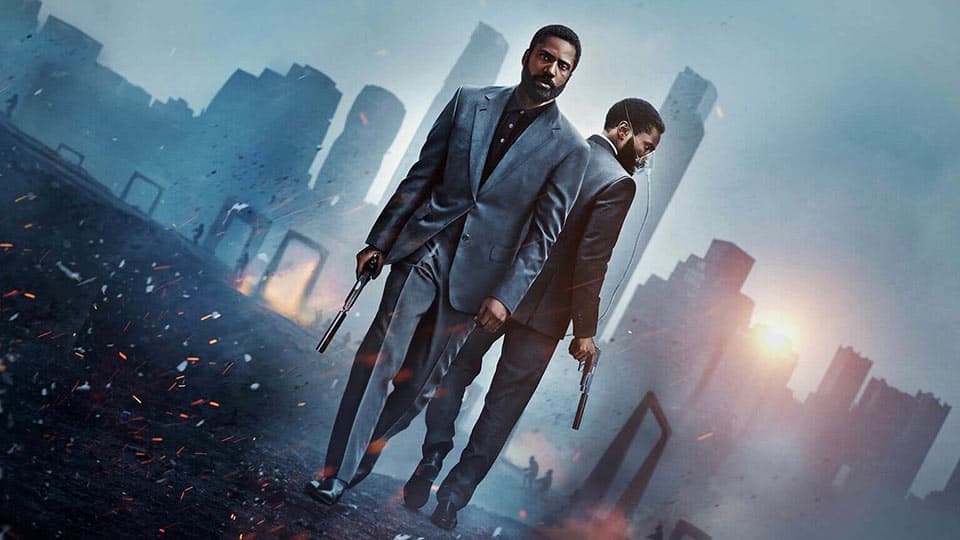
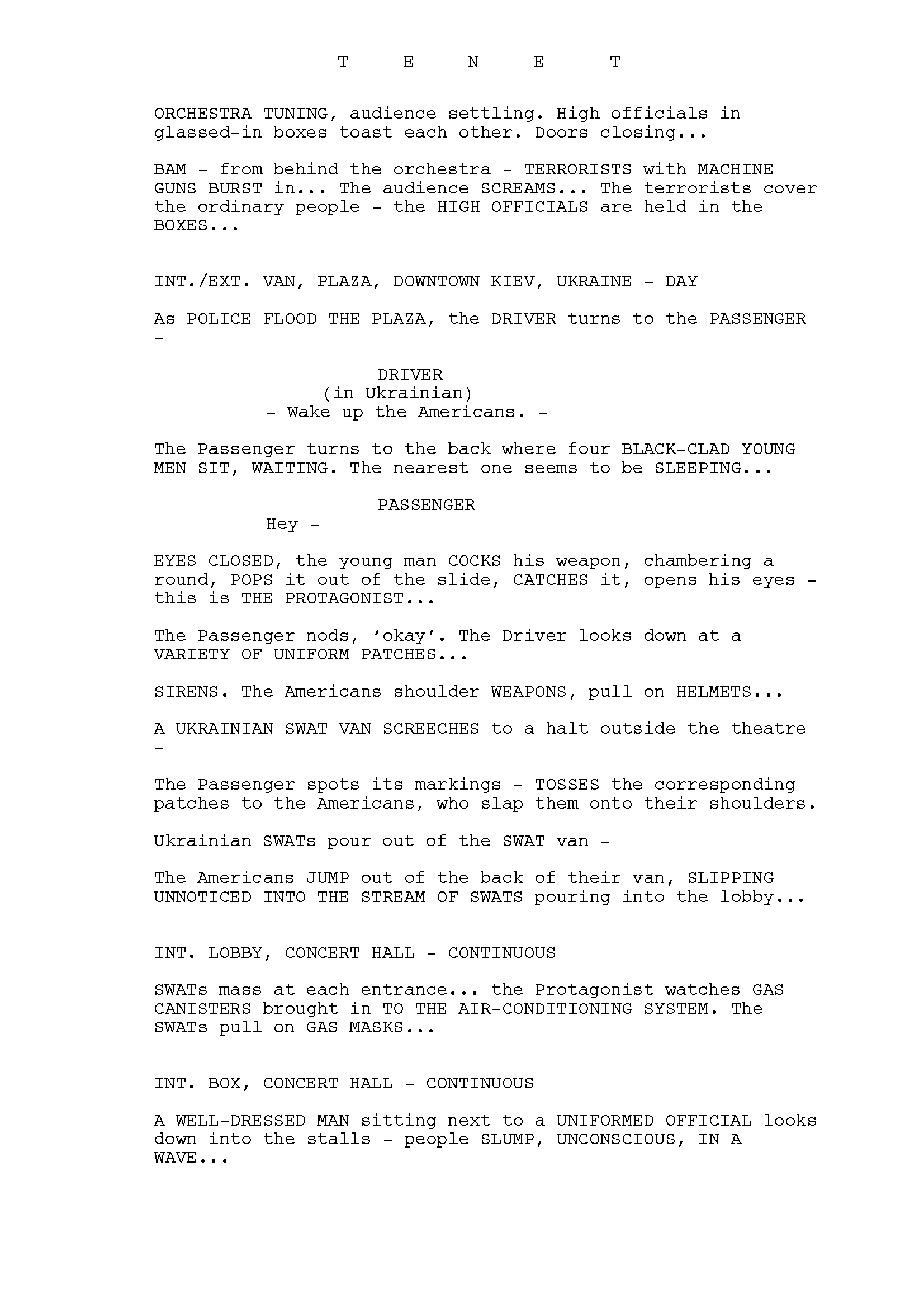
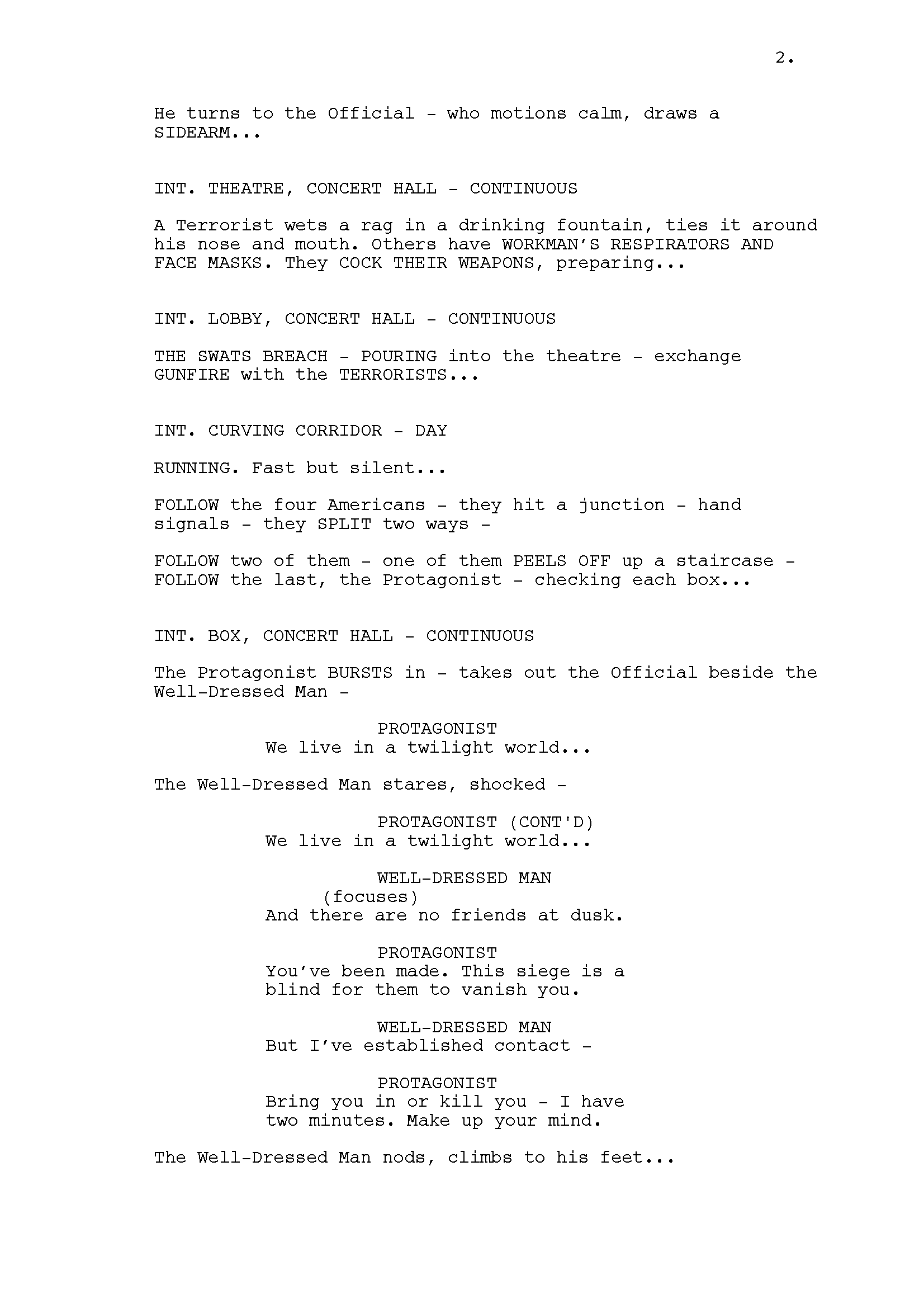
The Tenet screenplay follows a CIA operative known only as the Protagonist after a siege at a Kyiv opera house reveals a war stranger than anything in conventional intelligence. Recruited into a secret organization with a single word and a hand gesture, he enters a world of inverted bullets, future-made weapons, temporal pincer movements, and an arms dealer named Andrei Sator who may be communicating with people who have not been born yet. The mission begins as espionage. It becomes causality with a gun.
For writers and film students, Christopher Nolan’s screenplay is useful because it turns structure into spectacle. Study how the script teaches its rules through action instead of lecture: a bullet is caught before it is fired, a fight happens forwards and backwards at once, a heist becomes an inverted return trip, and the final battle is staged as two teams moving through the same event in opposite temporal directions. It is spy fiction folded into an origami knife, where the plot keeps cutting from both ends of time.
Ready to get to work? Check out the Study Notes just below. When you're ready, download the Tenet screenplay.
Tenet Study Notes
What writers and film students can learn from this screenplay
Tenet is useful to study because it treats time not as backstory, twist, or gimmick, but as the screenplay’s main action language. Christopher Nolan opens with an opera-house siege that already contains the movie’s secret shape: false uniforms, hidden objectives, civilians as collateral, a mysterious inverted bullet, and a stranger saving the Protagonist before the Protagonist knows what game he is playing. From there, the script teaches the audience to read cause and effect differently. Bullets are caught. A fight is both attack and retrieval. A car chase runs through information the villain already has. A final battle becomes a temporal pincer, with one team moving forward while another moves backward through the same ten minutes. The emotional key is quieter but just as important: the Protagonist thinks he is being recruited into someone else’s operation, only to learn that the maze may have been built by his future self.
Craft Focus
- Concept as structure: Inversion is not only a science-fiction rule. It shapes scenes, reveals, action choreography, character knowledge, and the entire final-act battle plan.
- Exposition under pressure: Nolan rarely lets characters explain the rules in a static vacuum. The script moves from shooting range to heist to turnstile to freeway to battlefield, making each lesson operational.
- Protagonist as function: The unnamed lead is not empty. He is designed as a mission-driven figure whose morality emerges through choices: saving civilians, protecting Kat, lying under pressure, and refusing easy sacrifice of others.
- Villain as apocalypse broker: Sator is powerful because his domestic cruelty, plutonium past, future contact, and dead-man switch all express the same worldview: if he cannot possess the world, no one should inherit it.
- Friendship revealed backwards: Neil’s arc is one of the screenplay’s strongest emotional time-loops. The Protagonist meets him at the beginning of their friendship, while Neil is moving toward its end.
Questions for Writers
- How does the opera siege function as a miniature version of the whole film’s hidden war?
- Why does the “don’t try to understand it, feel it” lesson matter for both the Protagonist and the audience?
- Where does the screenplay use confusion productively, and where does it risk leaving emotion behind?
- How does Kat’s captivity under Sator give the global plot a human pressure point?
- Why does the Oslo freeport sequence work as both a heist and a tutorial for the movie’s central mechanism?
- How does Neil’s final reveal reframe earlier scenes without stopping the story to explain every thread?
While reading, pay attention to how Tenet makes cause and effect feel like choreography. A bullet hole appears before the shot. A man fights himself before he knows it. A failed extraction becomes a future rescue. A friendship ends before it begins. That is the craft lesson inside the turnstile: high-concept writing works best when the rules do not sit on top of the story like homework. They should infect the verbs. In Tenet, characters do not merely discuss time. They punch it, shoot it, chase it, betray it, and finally trust it.
Looking for the screenplay? Jump to the download button.
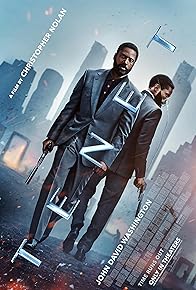
Tenet (2020)
Armed with only the word "Tenet," and fighting for the survival of the entire world, CIA operative, The Protagonist, journeys through a twilight world of international espionage on a global mission that unfolds beyond real time.
Screenplay download
Reading is open to everyone. A free account is only required to download so we can protect the library and respect rights-holder requests. Already registered? Log in and you’re set.
Read and Watch
Compare the script and movie together with 8FLiX and JustWatch.
Now that you have the screenplay, stream Tenet and compare. We've partnered with JustWatch so you can make that happen.
Looking For Something?
If you can't find what you need, send us an email.
Looking for a specific movie or TV script that isn't listed? Let us know. 8FLiX has thousands of scripts, and not all of them are indexed yet. We’re steadily adding more, but if you’d rather not wait for the catalog to catch up, send us an email. You may still have to wait, but it’ll usually be days, not geological time.