Fury (2014) — Read, Study & Download the Screenplay
A brutal World War II tank drama about survival, command, moral corrosion, and a clerk typist learning what the inside of a war machine really costs.
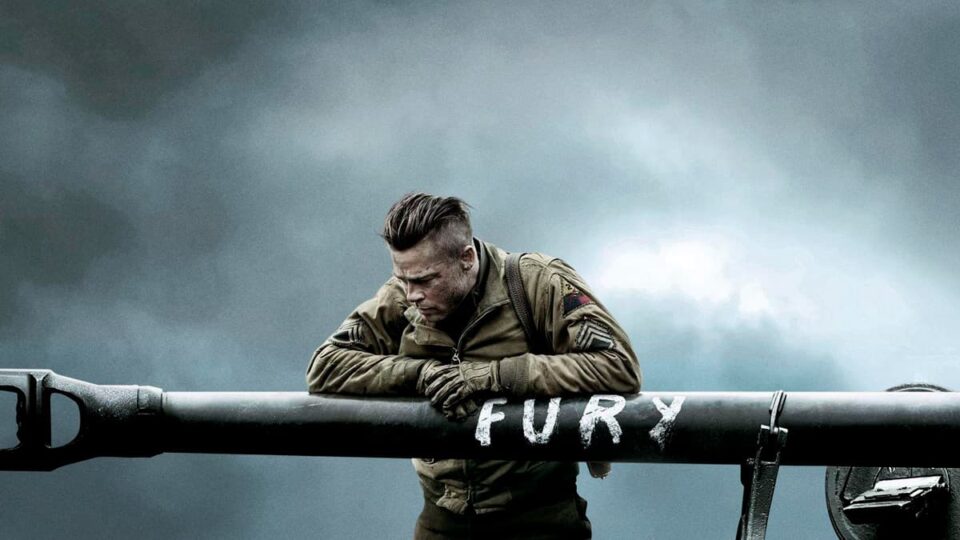
Fury follows Don “Wardaddy” Collier and the battle-scarred crew of an American Sherman tank pushing through Germany in the final weeks of World War II. Their machine, Fury, is cramped, filthy, damaged, and held together by habit, rage, faith, alcohol, and the grim competence of men who have stayed alive too long to believe in luck. When Norman Ellison, a young clerk typist with no combat experience, is assigned as the tank’s new assistant driver, he is dropped into a steel coffin where the front is everywhere and innocence has no room to sit down.
For writers and film students, David Ayer’s screenplay is useful because it treats war not as spectacle, but as pressure that deforms language, leadership, faith, humor, and mercy. Study how the script uses the tank interior, the dead bow gunner’s seat, the refugee road, the hanged children, the beet field assault, the German town, the Tiger engagement, and the crossroads last stand to compress an entire moral education into one brutal day. The craft engine is simple and merciless: Norman enters Fury as a civilian soul in uniform, and the story keeps asking what must be broken before he can survive.
Ready to get to work? Check out the Study Notes just below. When you're ready, download the Fury (2014) screenplay.
Fury Study Notes
What writers and film students can learn from this screenplay
This Fury screenplay is useful to study because it builds a war story around enclosure. David Ayer’s script begins in April 1945, when the Third Reich is nearly finished but the killing has not loosened its grip. Wardaddy emerges from fog and wreckage already shaped by combat into something almost mineral: hard, sharp, alert, and exhausted beyond ordinary feeling. The tank named Fury becomes the story’s central dramatic chamber. Inside it are Bible, Gordo, Grady, the body of Red, and eventually Norman Ellison, a clerk typist forced into a role he is not trained for and a moral universe he cannot understand. That is the screenplay’s strongest craft engine. The war is not presented as a large historical abstraction. It is filtered through hatches, periscopes, ammunition racks, oil, blood, cramped movement, battlefield chatter, and the terrifying fact that every man inside the tank depends on every other man doing his job instantly. Norman’s arc gives the audience a way in, but the script does not protect him. He is not invited to become brave through inspiration. He is hammered into usefulness through shock, guilt, shame, violence, and the need to keep the crew alive. By the crossroads climax, Fury is no longer just a vehicle. It is bunker, coffin, altar, family home, and last witness.
Craft Focus
- Contained worldbuilding: The tank interior gives the screenplay a physical grammar: cramped space, limited sightlines, shared danger, mechanical failure, and emotional claustrophobia.
- Innocence under pressure: Norman’s lack of combat experience turns routine tanker behavior into horror, letting the audience feel how normalized brutality has become for the crew.
- Leadership as burden: Wardaddy is protective, cruel, competent, damaged, and necessary. The script makes command feel like an act of love performed with a fist.
- War as moral erosion: Prisoners, civilians, child soldiers, looting, mercy killings, and revenge all complicate the easy language of heroism.
- Action through procedure: The beet field assault, tank tactics, ammunition calls, periscope views, gun loading, maneuvering, and battlefield communication make combat legible without making it clean.
- Final stand as character summary: The crossroads battle works because every crew member’s function, fear, loyalty, and damage has already been established inside Fury’s metal walls.
Questions for Writers
- How does the opening with the German officer, the horse, and Wardaddy establish beauty, violence, mercy, and savagery in one sequence?
- Why is Norman’s first task inside Fury so important for introducing him to the true cost of replacing Red?
- How does the screenplay use the tank as both workplace and family system?
- Where does Wardaddy’s harsh treatment of Norman cross from cruelty into survival training, and where does it remain morally troubling?
- How do the periscope shots limit Norman’s understanding of battle while increasing the audience’s tension?
- Why does the script spend time on the crew’s arguments, jokes, faith, drinking, and insults before major action sequences?
- How does the final crossroads sequence transform Fury from a damaged machine into the crew’s last shared identity?
While reading, pay attention to how Fury keeps forcing Norman to revise the meaning of “doing the job.” At first, the job sounds mechanical: sit in the bow, fire the gun, follow orders, keep up. But the screenplay keeps widening that definition until it includes killing, watching, obeying, resisting panic, protecting the crew, burying fear, and living with the memory afterward. That is the craft lesson grinding beneath the tracks: a combat story becomes more powerful when the external objective is clear, but the internal cost keeps changing shape. Fury moves forward through Germany, but Norman’s real journey is downward, into the belly of the beast, where survival and innocence cannot both fit through the hatch.
Looking for the screenplay? Jump to the download button.
Fury (2014)
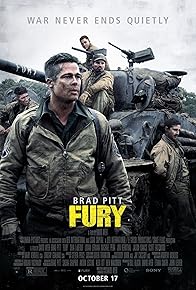
April, 1945. As the Allies make their final push in the European Theatre, a battle-hardened army sergeant commands a Sherman tank and her five-man crew on a deadly mission behind enemy lines.
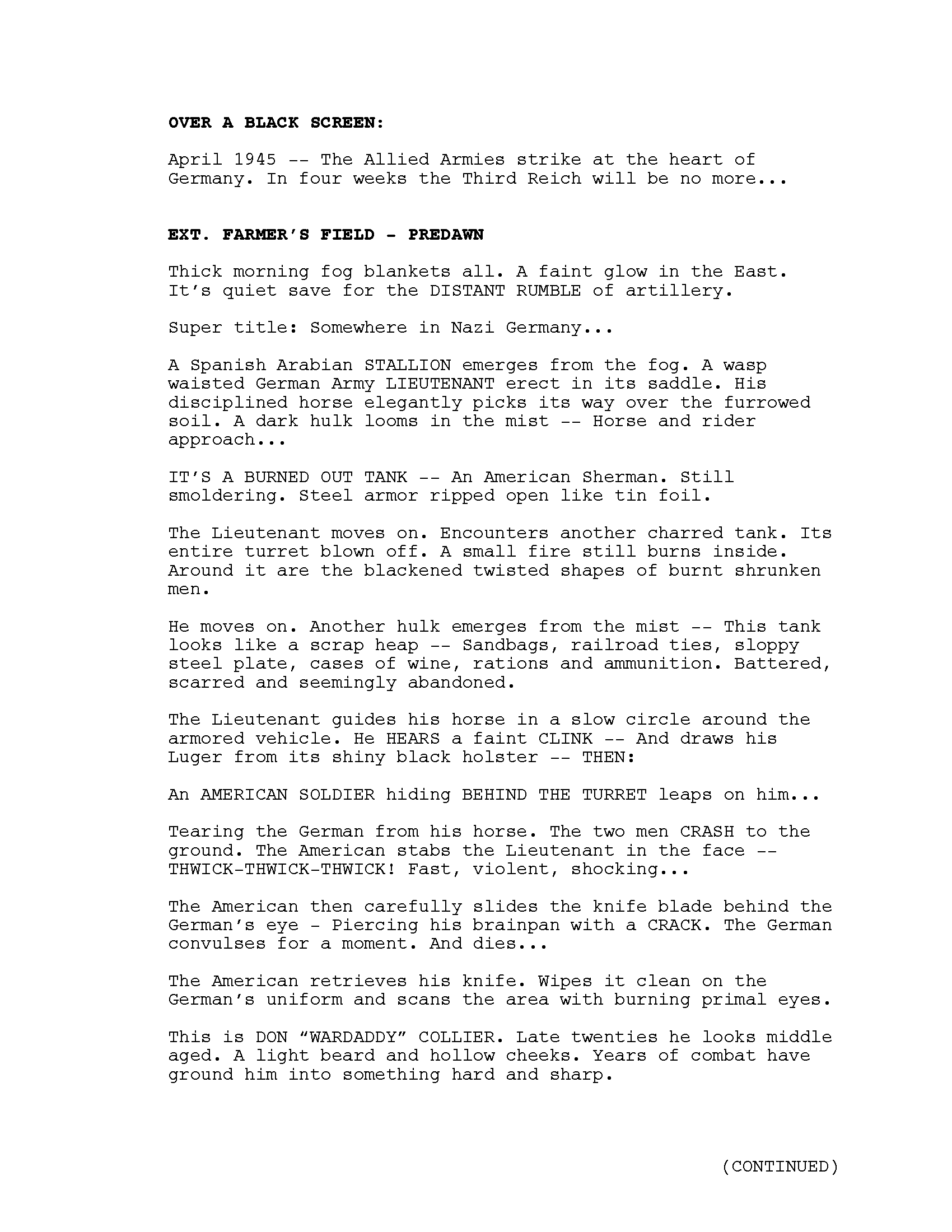
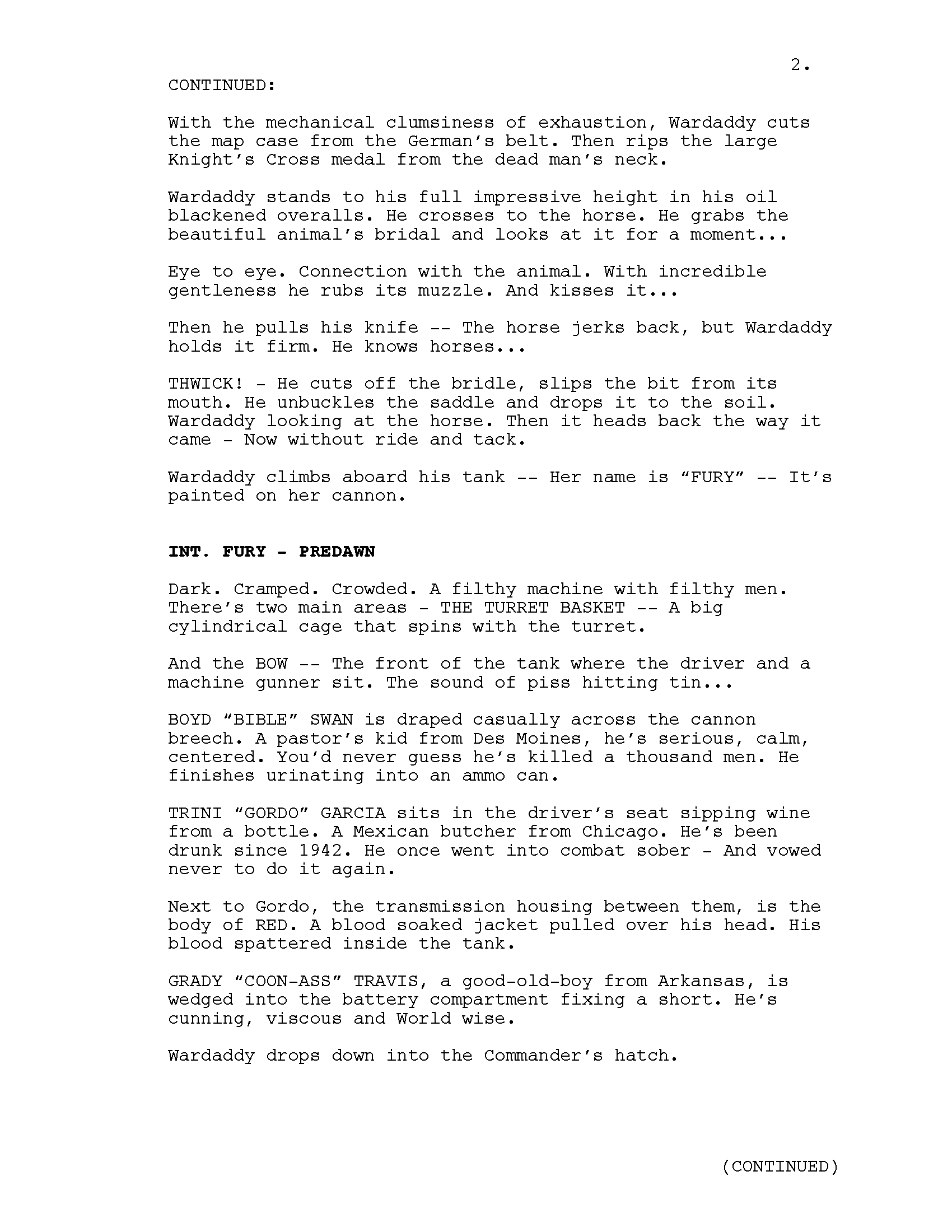
Screenplay download
Reading is open to everyone. A free account is only required to download so we can protect the library and respect rights-holder requests. Already registered? Log in and you’re set.
Read and Watch
Compare the script and movie together with 8FLiX and JustWatch.
Now that you have the screenplay, stream Fury and compare. We've partnered with JustWatch so you can make that happen.
Looking For Something?
If you can't find what you need, send us an email.
Looking for a specific movie or TV script that isn't listed? Let us know. 8FLiX has thousands of scripts, and not all of them are indexed yet. We’re steadily adding more, but if you’d rather not wait for the catalog to catch up, send us an email. You may still have to wait, but it’ll usually be days, not geological time.