Django Unchained (2012) — Read, Study & Download the Screenplay
A revenge western about freedom, performance, mythmaking, and a man writing himself back into history.
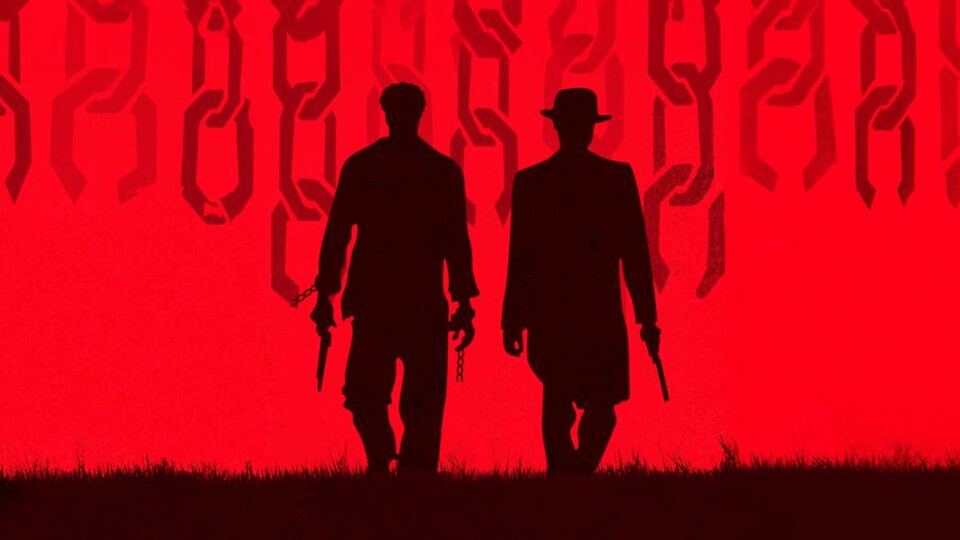
Django Unchained follows Django, an enslaved man freed by bounty hunter Dr. King Schultz, as he learns to navigate, manipulate, and eventually destroy the violent system that separated him from his wife, Broomhilda. The screenplay begins in chains, then turns Django’s liberation into a genre collision: spaghetti western, revenge epic, rescue mission, buddy road movie, and grotesque satire of American slavery all riding the same horse through hell with a loaded pistol.
For writers and film students, this screenplay is useful because it shows how genre can be used as both entertainment engine and moral weapon. Tarantino frames Django’s journey through heightened dialogue, theatrical reversals, explosive violence, and role-playing: valet, bounty hunter, buyer, outlaw, husband, avenger. Study how the script uses performance as survival, spectacle as confrontation, and revenge structure as a way to transform a brutal historical landscape into a mythic liberation story.
Ready to get to work? Check out the Study Notes just below. When you're ready, download the Django Unchained screenplay.
Django Unchained Study Notes
What writers and film students can learn from this screenplay
The Django Unchained screenplay is useful to study because it builds a revenge story around transformation through performance. Django begins the script as a man literally chained in a line, identified as property by others. Schultz frees him, but the screenplay’s real propulsion comes from Django learning how to use disguise, language, violence, and theatrical confidence to move through a world designed to deny him agency. Every new role he plays gets him closer to Broomhilda and further from the identity imposed on him. The result is a revenge western where costume, dialogue, posture, and genre iconography become tools of liberation.
Craft Focus
- Genre as empowerment: The screenplay borrows the visual and structural language of spaghetti westerns, bounty-hunter tales, and rescue myths to recast Django as a mythic hero rather than a passive victim of history.
- Performance as survival: Django survives by learning roles: Schultz’s associate, a valet, a bounty hunter, a ruthless buyer, and finally his own self-authored avenger. The “act” becomes the plot engine.
- Dialogue as domination: Tarantino’s long exchanges are not decorative. Characters negotiate power, test masks, bait enemies, and reveal hidden violence through language before guns settle the matter.
- Escalation by location: The journey moves from chain gang to town, plantations, bounty work, and eventually Candyland, each setting increasing the moral pressure and theatrical danger.
- Heroic clarity inside moral chaos: Schultz is conflicted, the system is grotesque, and the violence is extreme, but Django’s central objective remains clean: find Broomhilda and get her free.
Questions for Writers
- How does the screenplay turn Django’s first appearance in chains into the starting point for a full mythic reversal?
- Where does Schultz function as mentor, liberator, employer, and moral complication all at once?
- How does the script use costume and presentation to show Django gaining control over how others see him?
- What makes Candyland an effective final arena for the story’s central conflicts around power, performance, and cruelty?
- How does the rescue mission keep the story emotionally focused amid the screenplay’s digressions, set pieces, and genre fireworks?
- Where does the script use shocking tonal shifts to confront the audience rather than simply decorate the action?
While reading, pay attention to how Django Unchained weaponizes theatricality. Schultz understands paperwork, performance, law, and spectacle. Django learns quickly that survival requires more than courage; it requires reading the room, playing the part, and knowing when the part has outlived its usefulness. The craft lesson rides in wearing sunglasses it definitely bought too early in history: revenge stories hit harder when the hero is not only defeating enemies, but reclaiming authorship over the story everyone else tried to write for him.
Looking for the screenplay? Jump to the download button.
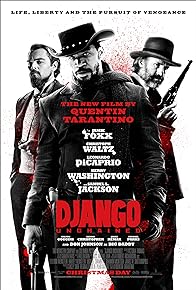
Django Unchained (2012)
With the help of a German bounty-hunter, a freed slave sets out to rescue his wife from a brutal plantation owner in Mississippi.
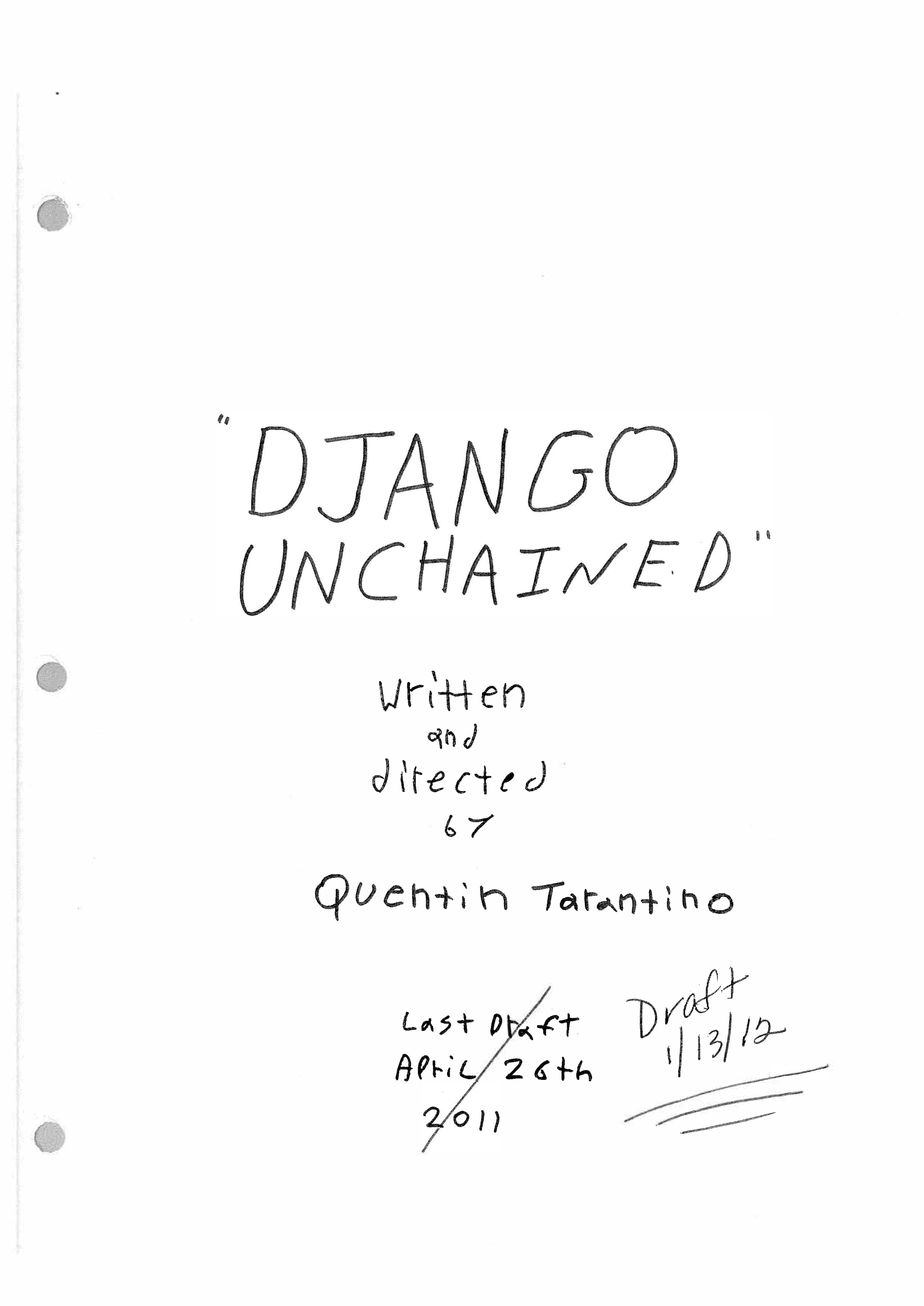
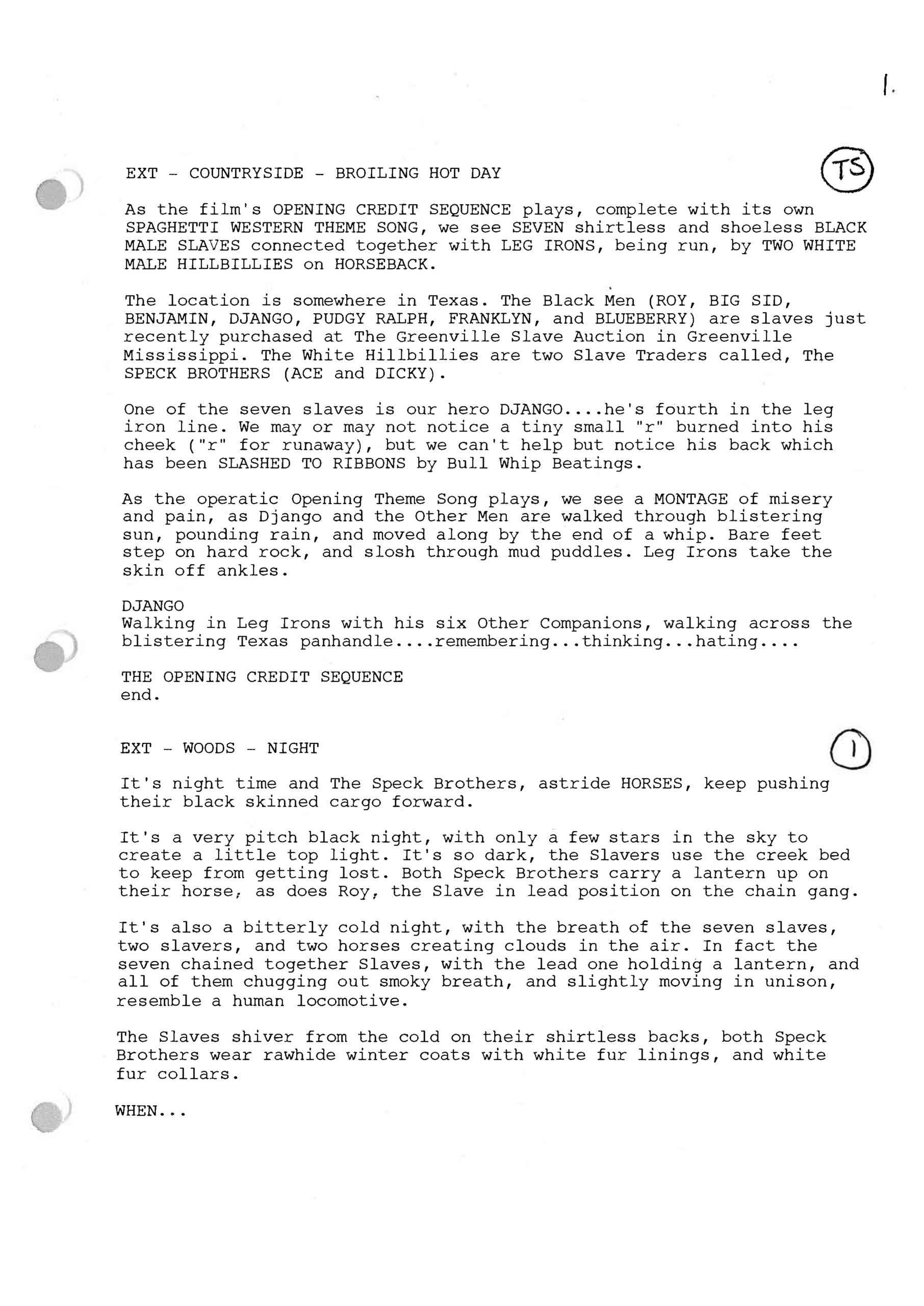
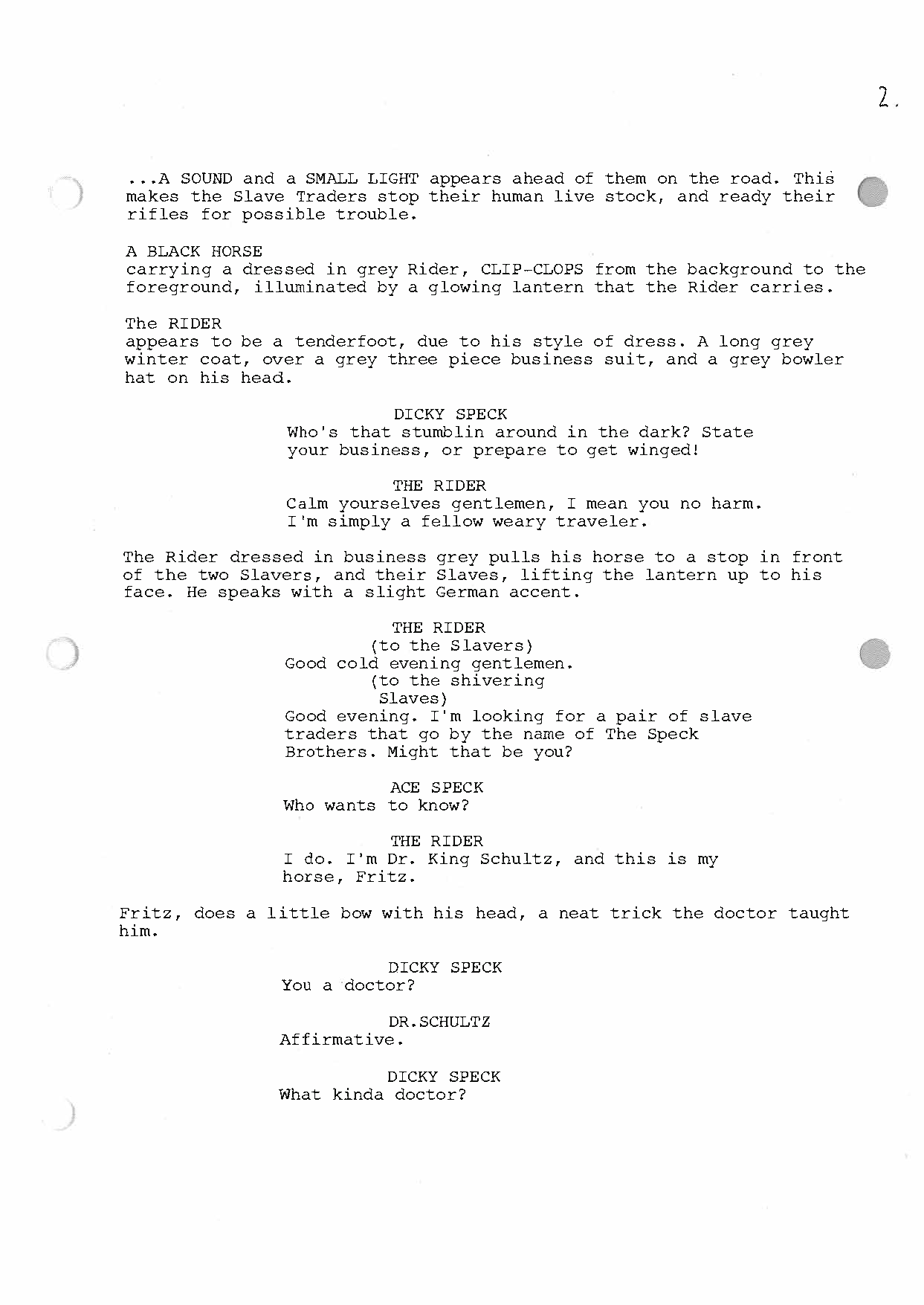
Screenplay download
Reading is open to everyone. A free account is only required to download so we can protect the library and respect rights-holder requests. Already registered? Log in and you’re set.
Read and Watch
Compare the script and movie together with 8FLiX and JustWatch.
Now that you have the screenplay, stream Django Unchained and compare. We've partnered with JustWatch so you can make that happen.
Looking For Something?
If you can't find what you need, send us an email.
Looking for a specific movie or TV script that isn't listed? Let us know. 8FLiX has thousands of scripts, and not all of them are indexed yet. We’re steadily adding more, but if you’d rather not wait for the catalog to catch up, send us an email. You may still have to wait, but it’ll usually be days, not geological time.