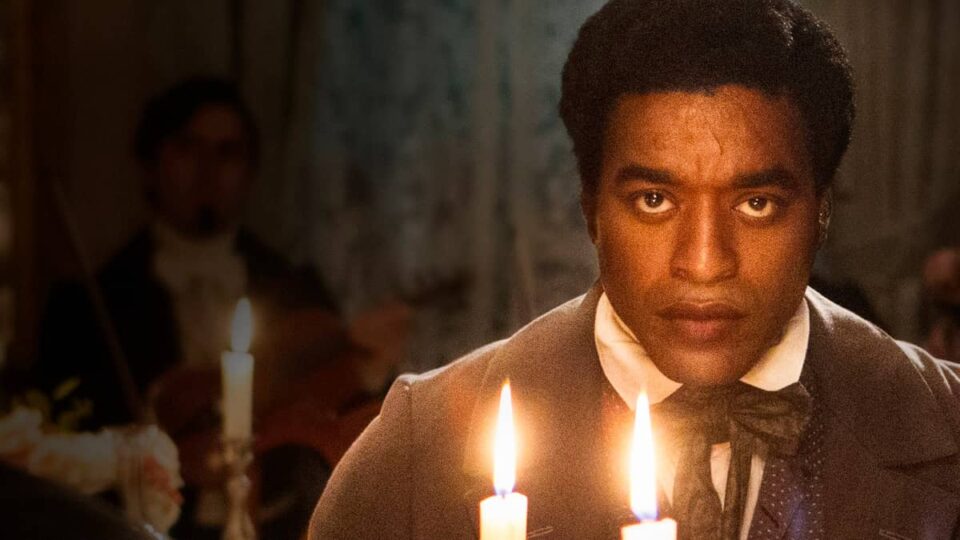
12 Years a Slave (2013) — Read, Study & Download the Screenplay
A harrowing true story of stolen freedom, endurance, and the machinery of American slavery.
The 12 Years a Slave screenplay follows Solomon Northup, a free Black husband, father, musician, and citizen of Saratoga, New York, whose life is violently stolen after he is deceived, kidnapped, and sold into slavery in the American South. Adapted by John Ridley from Solomon Northup’s memoir, the script traces not only the brutality Solomon endures, but the systematic erasure of his name, family, rights, and identity. His struggle is not framed as a conventional escape story. It is a sustained act of survival inside a world designed to deny his humanity.
For writers and film students, this screenplay is an essential study in adaptation, point of view, moral restraint, and historical drama without sentimental escape valves. Notice how the script begins with Solomon’s dignity, family life, music, and freedom before forcing the audience to witness their removal. That structural choice matters. The story’s emotional power comes from understanding exactly what has been taken, and from watching Solomon preserve his inner self when nearly every surrounding institution insists he no longer has one.
12 Years a Slave Study Notes
What writers and film students can learn from this screenplay
At its core, 12 Years a Slave is about identity under assault. Solomon Northup begins the screenplay as a complete man: husband, father, musician, worker, reader, citizen, and free person. Ridley’s adaptation takes time to establish that fullness before the kidnapping, which gives the story its devastating architecture. When Solomon is renamed “Platt,” the act is not merely administrative. It is a narrative wound. The screenplay understands slavery not only as physical captivity, but as a system of language, commerce, violence, law, religion, and custom arranged to make personhood disappear. Solomon’s central conflict is therefore larger than endurance. He must survive without allowing the system to define what is true about him.
Craft Focus
- Identity as structure: The screenplay begins by showing Solomon’s freedom, family, artistry, and social standing so the audience feels the full scale of what is stolen.
- Adaptation with moral clarity: Ridley compresses Northup’s memoir into dramatic movements while preserving the story’s witness-like authority.
- Point of view discipline: The audience experiences slavery largely through Solomon’s changing understanding of survival, silence, resistance, and compromise.
- Names as violence: Solomon being forced to answer to “Platt” becomes one of the screenplay’s most important dramatic symbols: the theft of identity made verbal.
- Systems over incidents: The script does not treat cruelty as isolated behavior. Markets, documents, overseers, buyers, plantations, patrols, and courts all form the machinery of enslavement.
- Endurance without simplification: Solomon’s survival is not romanticized. The screenplay allows fear, calculation, grief, rage, and self-preservation to coexist.
Questions for Writers
- Why does the screenplay spend meaningful time with Solomon’s family before the kidnapping?
- How does music function as both livelihood and identity throughout Solomon’s journey?
- What changes once Solomon realizes that truth alone cannot protect him?
- How does the screenplay dramatize an entire social system rather than relying only on individual villains?
- Why is silence often as important as dialogue in Solomon’s survival?
- How does Patsey’s storyline deepen the film’s understanding of power, gender, violence, and endurance?
- What makes the ending emotionally powerful without becoming simple or triumphant?
Looking for the screenplay? Jump to the download button.
12 Years a Slave (2013)
In the pre-Civil War United States, Solomon Northup, a free black man from upstate New York, is abducted and sold into slavery.
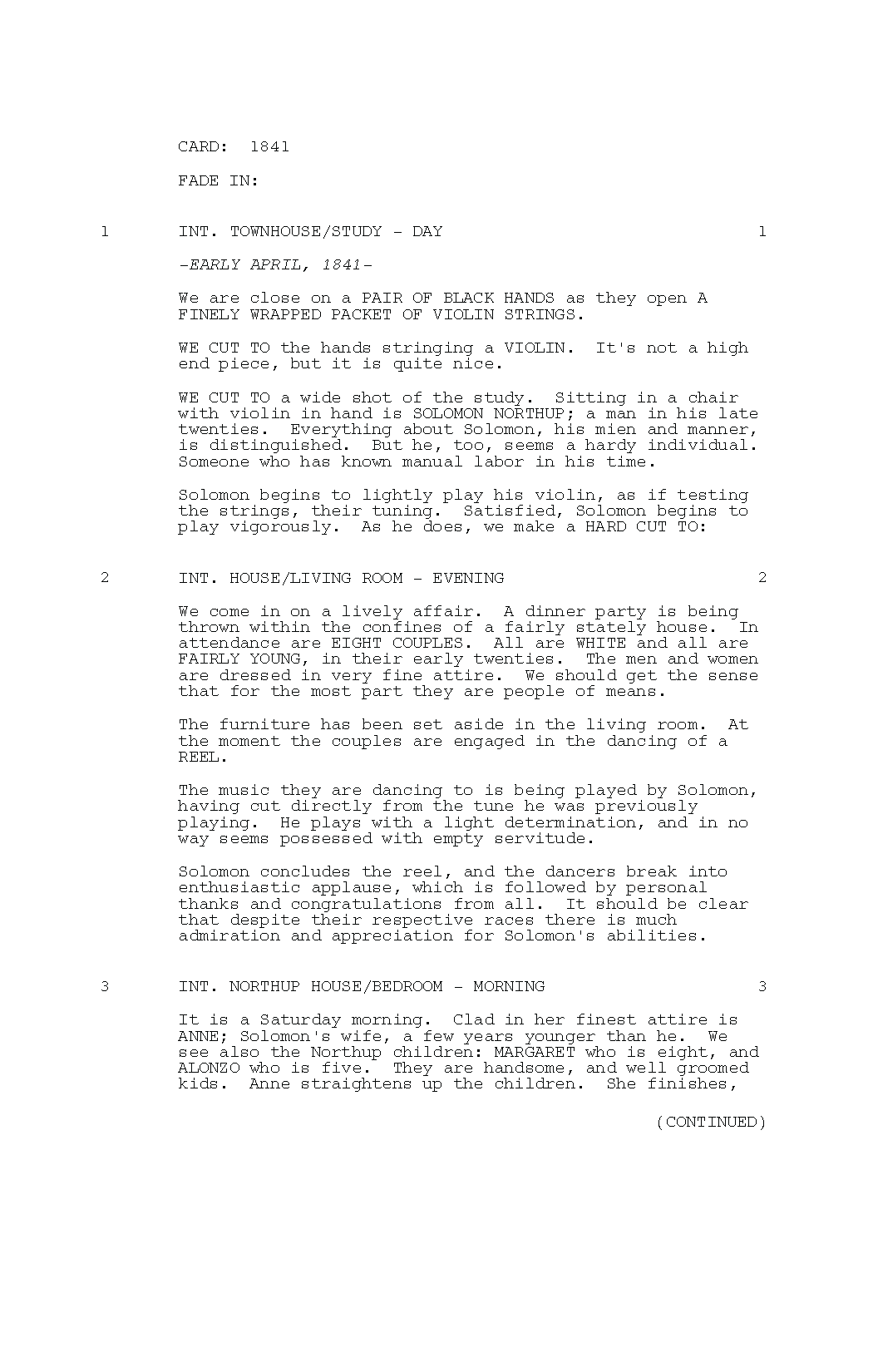
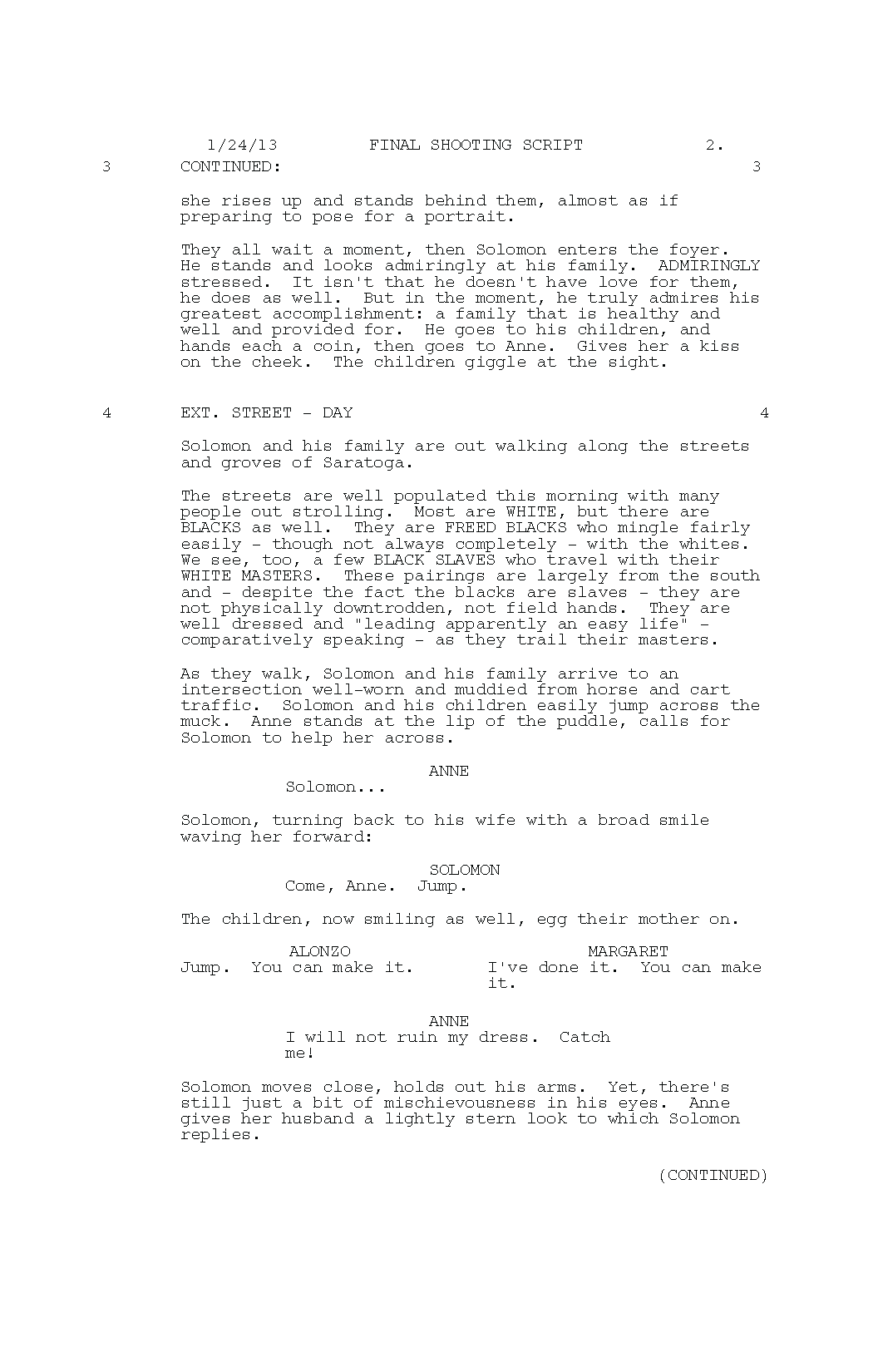
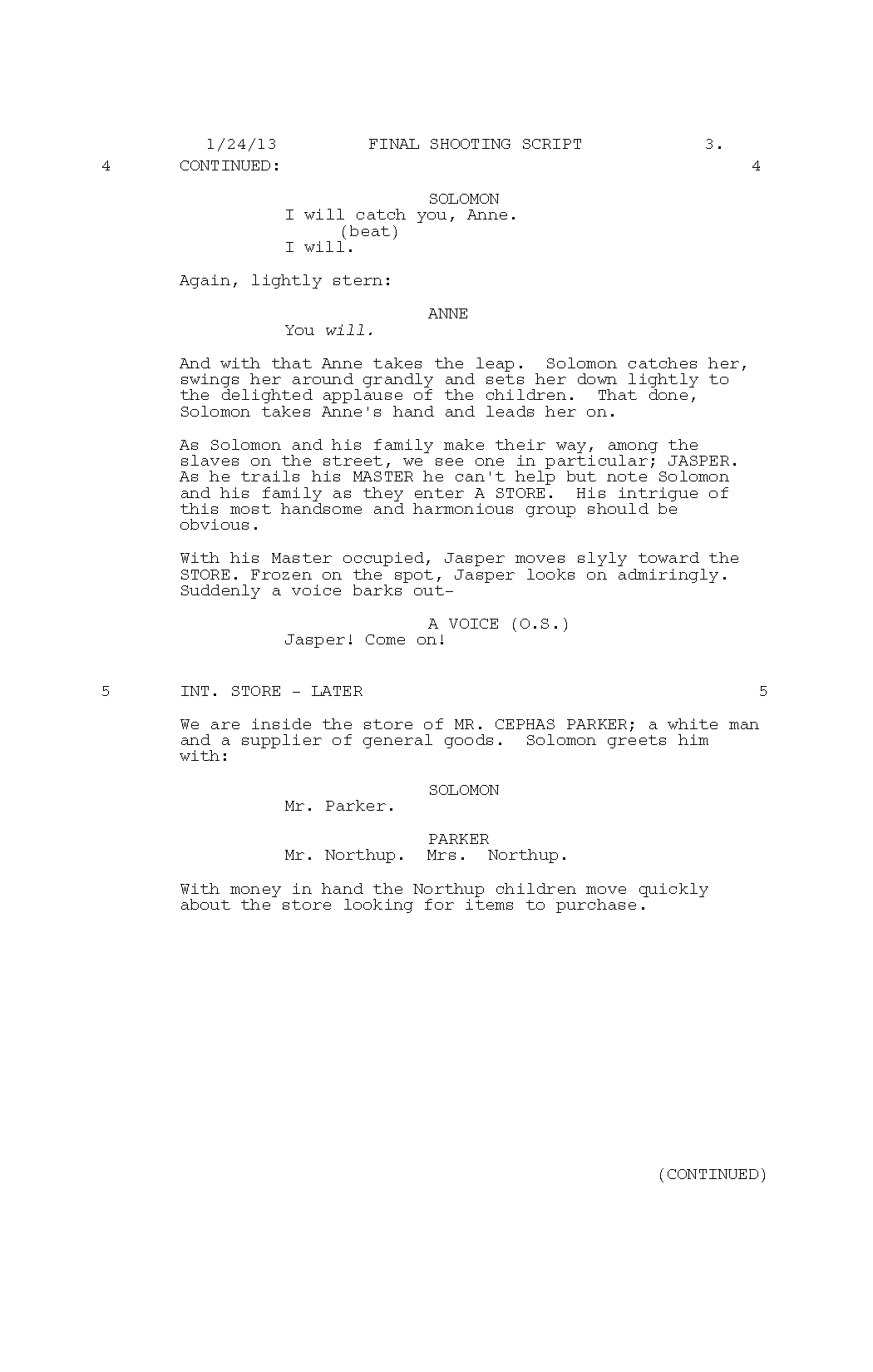
Screenplay download
Reading is open to everyone. A free account is only required to download so we can protect the library and respect rights-holder requests. Already registered? Log in and you’re set.
Read and Watch
Compare the script and movie together with 8FLiX and JustWatch.
Now that you have the screenplay, stream 12 Years a Slave and compare. We've partnered with JustWatch so you can make that happen.
Looking For Something?
If you can't find what you need, send us an email.
Looking for a specific movie or TV script that isn't listed? Let us know. 8FLiX has thousands of scripts, and not all of them are indexed yet. We’re steadily adding more, but if you’d rather not wait for the catalog to catch up, send us an email. You may still have to wait, but it’ll usually be days, not geological time.